
Careful room planning is vital for your VR arcade to guarantee player safety and an engaging experience. Proper layout provides enough space for free movement, preventing injuries and accidents. It also keeps obstacles out of the play area and allows for smooth shifts between gameplay and waiting zones. Plus, organized equipment placement and safety measures enhance comfort and reduce fatigue. Pay attention to environmental controls and layout details, and you’ll create a safer, more enjoyable environment—more tips await if you continue exploring.
Key Takeaways
- Proper room planning ensures sufficient space for free movement, reducing the risk of injuries during gameplay.
- It helps prevent accidents by eliminating obstacles and hazards in the play area.
- Effective layout facilitates easy supervision, maintenance, and quick access to safety features.
- Adequate environmental controls enhance comfort, safety, and user engagement during VR sessions.
- Careful planning optimizes space utilization, promoting safety, efficiency, and a positive user experience.

Planning your VR arcade room carefully is essential to creating a safe and immersive experience for players. When you design the space thoughtfully, you ensure that players can fully enjoy the virtual environment without feeling cramped or risking injury. Proper space optimization is key here; you need enough room for players to move freely while avoiding obstacles or hazards. A cramped setup can lead to accidents, broken equipment, or discomfort, which diminishes the overall experience. By accurately measuring your available space and allocating areas specifically for gameplay, waiting, and equipment storage, you create a smooth flow that enhances user engagement and safety. Additionally, understanding spatial awareness is crucial for designing an effective VR environment that minimizes risk and maximizes comfort.
Safety protocols should be a top priority in your planning process. You must establish clear guidelines for players before they dive into the VR experience. This includes instructions on how to use the headsets and controllers correctly, as well as safety measures like removing sharp objects or obstacles from the play area. Installing safety padding or barriers around the perimeter of the play zone can prevent injuries if players stumble or lose balance. Additionally, make sure to have easily accessible emergency shut-off buttons or areas where staff can intervene quickly if needed. These safety protocols serve as your first line of defense in preventing accidents and ensuring a secure environment. Incorporating occupational safety standards into your planning can further improve safety and compliance.
Furthermore, you should consider the layout of your VR arcade to facilitate easy supervision and maintenance. Positioning equipment in a way that allows staff to monitor multiple players simultaneously helps prevent unsafe behaviors or collisions. Regularly inspecting and maintaining your VR gear is equally important; malfunctioning headsets or controllers can pose safety risks and disrupt gameplay. Also, plan for proper ventilation and lighting to keep the environment comfortable and alert, which contributes to overall safety and user satisfaction. Ensuring proper environmental controls are in place can greatly enhance safety and comfort during gameplay. Remember, incorporating ergonomic considerations into your setup can also reduce fatigue and prevent strain injuries among players.
In essence, the success of your VR arcade hinges on meticulous planning. Space optimization ensures players have enough room to move naturally, while safety protocols protect everyone involved. When you prioritize these elements during the setup, you create a welcoming, secure environment where players can focus on having fun without worry. Investing time in detailed room planning pays off by reducing accidents, enhancing user experience, and making your arcade a popular destination for VR enthusiasts. Remember, a well-designed space isn’t just about aesthetics—it’s about safety, efficiency, and delivering unforgettable virtual adventures.
As an affiliate, we earn on qualifying purchases.
Frequently Asked Questions
How Much Space Is Ideal for Each VR Arcade Station?
For each VR arcade station, you should allocate around 6 to 8 feet of space in all directions. This guarantees proper equipment placement and maximizes player comfort. Adequate room allows players to move freely without feeling cramped or risking injury. Remember, providing enough space also enhances the immersive experience, making gameplay more enjoyable and reducing the likelihood of accidents. Proper planning is key for a successful VR arcade setup.
What Safety Measures Should Be Implemented in the Room?
Think of your VR room as a fortress of safety. You should install clear emergency exits and keep pathways clutter-free, like a well-tended garden. To prevent motion sickness and accidents, add padding around walls and furniture, and use safety barriers. Regularly inspect equipment for hazards. These measures shield players from harm, ensuring their immersive experience stays fun and worry-free, like sailing smoothly on calm waters.
How Can I Optimize Airflow and Ventilation?
You can optimize airflow and ventilation by designing effective airflow patterns that circulate fresh air throughout the room. Install high-quality ventilation systems to guarantee proper air exchange, reducing heat and humidity buildup. Position vents strategically to avoid dead zones, and consider adding exhaust fans near equipment to draw out stale air. Regularly maintain your ventilation systems to keep the environment comfortable and safe, enhancing user experience and equipment longevity.
What Lighting Conditions Are Best for VR Experiences?
You should aim for ambient lighting that’s soft and evenly distributed to reduce glare and eye strain during VR experiences. Bright, harsh lights can cause discomfort, so keep lighting at a comfortable level to enhance eye comfort. Use dimmable lights or indirect lighting to create an ideal environment. This helps players focus on the virtual world without distractions, ensuring a more immersive and comfortable experience.
How Should Wiring and Cables Be Managed Safely?
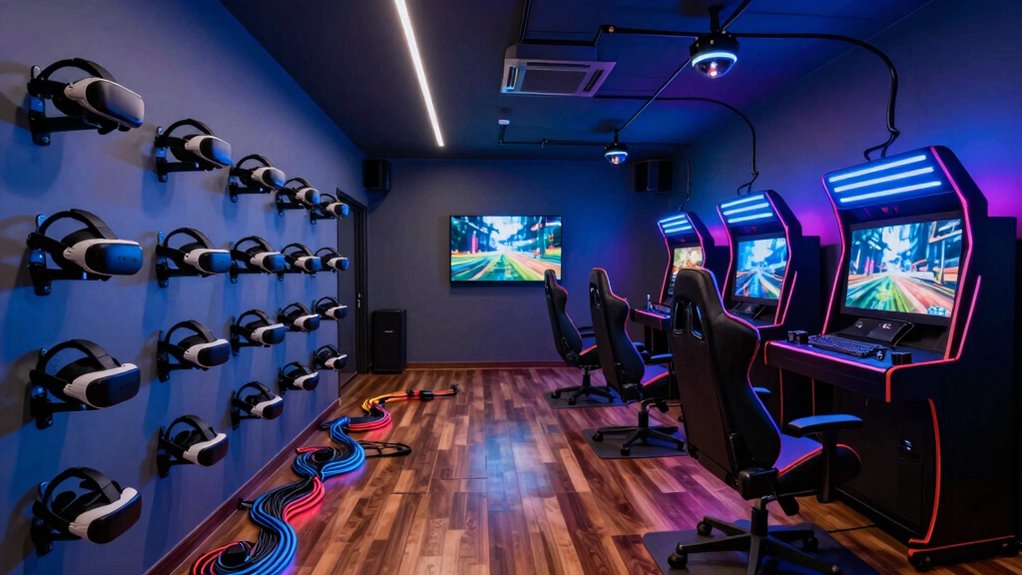
You should prioritize wire management and cable organization to keep your VR arcade safe and efficient. Use cable clips, sleeves, or raceways to secure wires along walls or floors, preventing tripping hazards. Regularly check connections for wear or damage, and keep cables out of walkways. Proper cable management guarantees smooth gameplay, minimizes accidents, and prolongs equipment life, creating a safer, more professional environment for players.
Conclusion
If you don’t plan your VR arcade room carefully, it’s like trying to navigate a maze without a map — chaos will follow. Thoughtful layout ensures safety, smooth gameplay, and happy players enthusiastic to return. Remember, a well-designed space isn’t just a room; it’s the foundation for an immersive experience that transports your guests beyond the ordinary. So, take the time now, or face the frustration of a house of cards ready to topple.