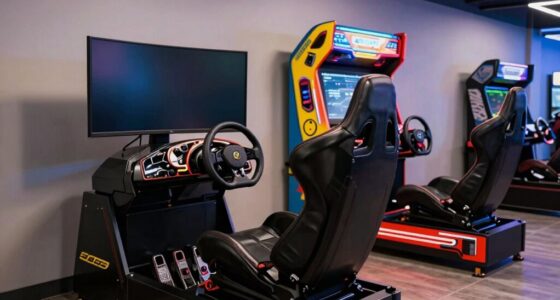

Arcades stand out from console gaming by emphasizing physicality through tactile controls like joysticks, pinball flippers, and motion-based setups. These hands-on experiences make gameplay more immediate, immersive, and visceral, creating a stronger emotional connection. They also tap into nostalgia and encourage social interaction through shared physical activities. By focusing on tangible, movement-based fun, arcades offer unique, memorable moments that consoles can’t easily replicate. Keep exploring to discover even more ways arcade experiences engage your senses.

Play games on Amazon Luna for your game nights, included with Prime
- A rotating selection of games, no download needed
- Play on TV, laptop or phone
- Fast, free delivery for your gear, too
Key Takeaways
- Arcades offer tactile controls like pinball flippers and joysticks that provide immediate, visceral feedback absent in consoles.
- Physical gameplay involving movement and coordination creates immersive, full-body experiences that consoles can’t replicate.
- Tactile elements and mechanical sounds evoke nostalgia, fostering emotional connections and attracting diverse audiences.
- Social interactions are enhanced through physical engagement, encouraging community building and shared excitement.
- The tangible, sensory-rich environment helps arcades stand out amid digital-only gaming options, maintaining relevance and appeal.

As arcade owners seek to differentiate themselves in a crowded entertainment landscape, they’re turning to physicality to create more engaging experiences. This shift taps into the tactile nature of arcade games, offering a level of interaction that console gaming simply can’t replicate. When you step into an arcade, you’re not just pushing buttons or tapping screens—you’re physically involved in the game. This hands-on approach sparks a sense of immediacy and excitement, making each play feel more real and visceral. It’s this physicality that helps arcades stand out, especially as digital gaming becomes more immersive but often more solitary. Moreover, the tactile feedback from physical controls enhances the emotional connection players feel during gameplay. Pinball nostalgia plays a significant role in this strategy. The classic pinball machine, with its shiny surfaces, flashing lights, and mechanical sounds, evokes fond memories for many players. By maintaining and upgrading these machines, arcade owners tap into a collective sense of nostalgia, inviting players to relive past experiences while enjoying modern twists. These machines aren’t just relics; they’re dynamic, physical platforms that demand skill and coordination. The tactile feedback of hitting the flippers or controlling the tilt creates a satisfying connection between player and game. This physical engagement makes pinball a timeless arcade staple and a perfect example of how physicality can evoke emotion and draw in diverse audiences. Beyond pinball, arcade owners are increasingly focusing on immersive experiences. They’re designing games that involve more than just pressing buttons—they require movement, coordination, and physical presence. Virtual reality setups, motion-controlled games, and interactive attractions blur the line between digital and physical worlds. You might find yourself ducking, jumping, or swinging to influence the game, transforming gameplay into a full-body experience. This physical involvement increases engagement and fosters a sense of community, as players cheer each other on or compete in real-time. The appeal lies in the tangible nature of these experiences, which enhances social interaction and encourages players to connect. Unlike console gaming, where your interaction is confined to controllers and screens, arcade physicality invites you to feel the game. The weight of a pinball, the force of a joystick, or the motion of your body in a dance game all contribute to a more memorable, visceral encounter. Arcades understand that, by emphasizing physicality, they can offer something consoles and mobile games can’t—an experience that’s immediate, social, and deeply engaging. It’s this focus on physical interaction that keeps arcades relevant and exciting in today’s digital age, especially as they leverage tactile engagement to stand out.
Popular right now

De’Longhi Classic Matte Black Espresso Machine with Milk Frother

Breville Barista Pro Espresso Machine with Grinder, Brushed Stainless Steel

Ninja Luxe Café Mini Plus Espresso and Drip Coffee Machine with AutoFroth, Stainless Steel, ES351
As an affiliate, we earn on qualifying purchases.
Frequently Asked Questions
How Do Arcade Machines Differ From Home Console Setups?
Arcade machines differ from home consoles by emphasizing physical interaction. You step into immersive experiences with virtual reality headsets and use motion sensors to control gameplay, making it more engaging. Unlike a typical console setup, arcades focus on tactile, active participation, encouraging you to move around and physically interact with the game environment. This physicality creates a more visceral, social experience that consoles can’t easily replicate at home.
What Safety Measures Are Implemented in Arcade Physicality Features?
Like a vigilant guardian, arcades safeguard their players with robust safety compliance measures, ensuring injury prevention is a priority. You’ll find padded barriers, ergonomic controls, and clearly marked hazard zones that act as shields against harm. Regular maintenance and staff training keep safety protocols sharp. These measures create a secure environment where your focus stays on fun, not fear, allowing you to enjoy the physical thrill without worry.
How Does Physicality Enhance Player Engagement in Arcades?
Physicality enhances your engagement by providing tactile feedback and immersing you in realistic environments. When you interact with arcade games physically, you feel more connected, making gameplay intense and exciting. The tactile sensations heighten your senses, while immersive environments transport you into the game world. This active participation keeps you engaged longer, creating a memorable experience that consoles alone can’t replicate, making arcades uniquely compelling and fun.
Are There Specific Age Restrictions for Physically Intense Arcade Games?
Think of safety regulations as the gatekeepers to fun. Yes, there are age restrictions for physically intense arcade games, typically set to protect younger players. These restrictions are in place to make certain of safety, especially for children and teens. Always check specific game labels and arcade policies, as age restrictions vary. Prioritizing safety doesn’t limit fun; it guarantees that everyone can enjoy the thrill responsibly.
How Do Arcade Physicality Trends Compare Globally?
You’ll find that global arcade physicality trends increasingly incorporate virtual reality and motion sensors, creating immersive experiences worldwide. In regions like Asia and Europe, arcades emphasize cutting-edge VR setups and motion-based games to attract diverse audiences. These trends reflect a shift towards more physically engaging gameplay, blending technology with active participation. Overall, arcades everywhere are embracing physicality to stand out, offering dynamic, tech-driven experiences that appeal across age groups.
Conclusion
While console gaming offers convenience and vast libraries at your fingertips, arcades thrive on the thrill of physicality—where every button press and joystick move immerses you in the game. It’s a stark contrast: one lets you game from your couch, the other demands your presence and energy. In a world of screens, arcades stand out by pulling you into a tangible, sensory experience that consoles simply can’t replicate. That’s their secret weapon.