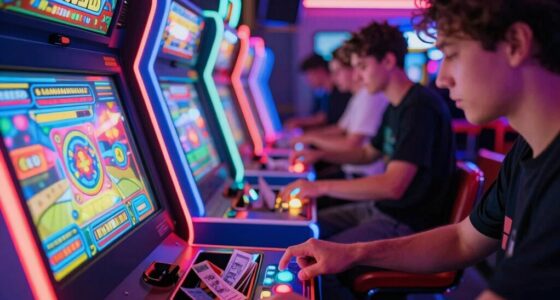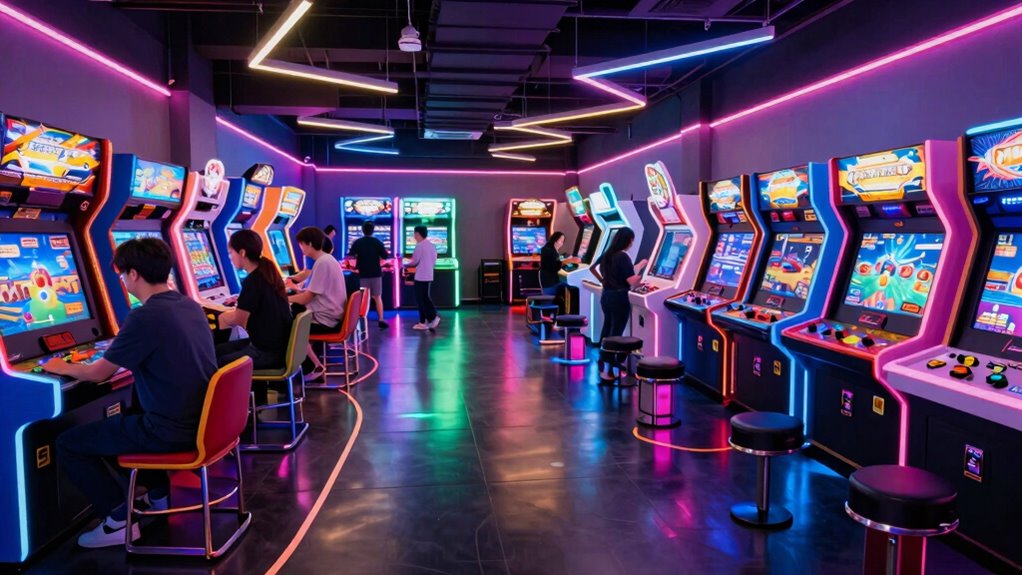

Modern arcades guide your movement by strategically placing popular games near the entrance and using visual cues like lighting, signage, and open sightlines to direct flow. They organize spaces into themed zones and carefully arrange pathways to encourage exploration without backtracking. Narrow walkways and clusters create excitement, while open areas help prevent congestion. If you keep exploring, you’ll discover how these design principles keep your experience dynamic and engaging at every turn.

Play games on Amazon Luna for your game nights, included with Prime
- A rotating selection of games, no download needed
- Play on TV, laptop or phone
- Fast, free delivery for your gear, too
Key Takeaways
- Strategic placement of high-energy games near the entrance encourages deeper exploration into the arcade.
- Visual cues like lighting, signage, and open sightlines direct players along natural pathways.
- Zone organization by game types or themes facilitates intuitive navigation and transitions.
- Designing narrow walkways and clustering games create intimacy and excitement while preventing congestion.
- Maintaining a steady flow with smooth pathways maximizes engagement and minimizes backtracking or confusion.
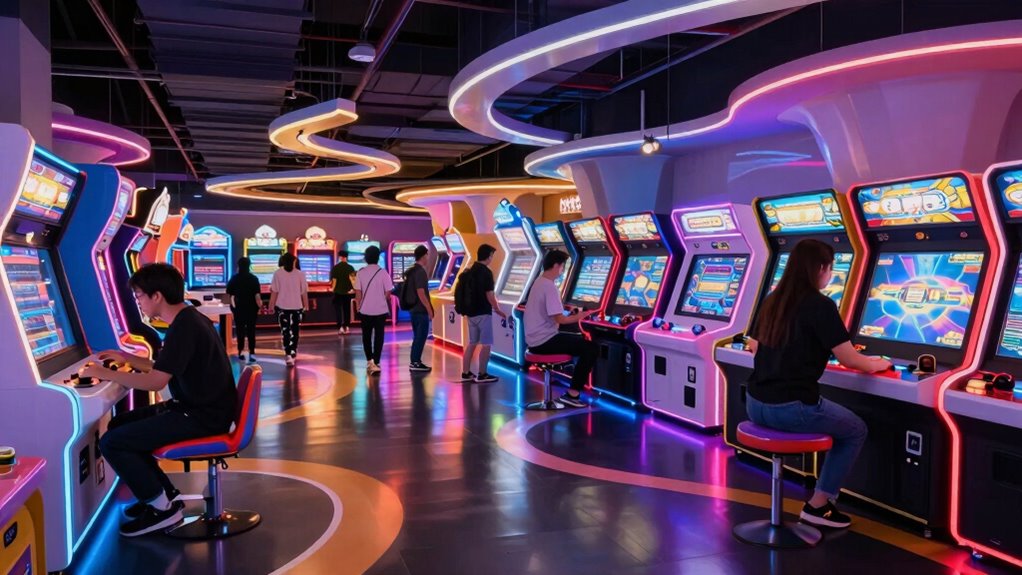
Have you ever wondered how arcade layouts influence the way players move through a space? It’s a fascinating aspect of design that often goes unnoticed but plays a vital role in keeping the energy high and the flow seamless. When you walk into a modern arcade, you’re likely to notice that the arrangement of games isn’t random. Instead, it’s carefully crafted to guide your movement naturally, encouraging you to explore different areas while maintaining a steady, engaging rhythm. This is where the principles of player flow and spatial design come into play.
Designers strategically position popular or high-energy games near the entrance to immediately grab your attention and set the tone for your visit. From there, the layout often encourages you to move deeper into the space, following a path that balances variety with ease of access. They often use visual cues like lighting, signage, or even the arrangement of games themselves to subtly direct your attention toward specific zones. This guides your movement without making you feel forced, creating an intuitive experience that invites you to explore more of what the arcade has to offer.
Strategically placed games and visual cues guide your flow, making exploration intuitive and engaging.
Spatial design is essential in shaping how you navigate the environment. Open areas or clear sightlines help you see the entire arcade, making it easier to choose your next game without feeling lost or overwhelmed. Narrow walkways or clusters of games can create a sense of intimacy or excitement, encouraging you to linger or try different machines. The layout also considers flow by preventing bottlenecks near popular attractions, ensuring you don’t get stuck in crowded spots. Instead, it encourages a smooth, continuous movement that keeps the energy flowing and your experience enjoyable. Additionally, incorporating biodiversity principles, such as varied zones and natural pathways, can make the space feel more engaging and less monotonous. Implementing these principles also enhances wayfinding, making it more intuitive for players to navigate the environment with ease.
Modern arcades also integrate zones based on game types or themes, which helps you mentally organize the space. For example, a section dedicated to racing games might be placed near a lounge area, inviting you to relax after a competitive round. The overall spatial design aims to optimize player flow, so you’re naturally guided from one game to the next without unnecessary backtracking or confusion. This thoughtful arrangement maximizes engagement and ensures that every part of the arcade feels accessible and inviting, encouraging you to spend more time playing.
In essence, the layout of a modern arcade is more than just a collection of machines; it’s a carefully orchestrated environment designed to enhance your experience. By understanding and applying principles of player flow and spatial design, designers create spaces that feel dynamic, intuitive, and fun—keeping you moving, exploring, and enjoying every moment inside.
Popular right now

Bose QuietComfort True Wireless Earbuds with Active Noise Cancellation, Black

De'Longhi La Specialista Arte Evo Espresso Machine with Grinder

Shark Navigator Lift-Away Upright Vacuum Cleaner, White (NV356E)
As an affiliate, we earn on qualifying purchases.
Frequently Asked Questions
How Do Arcade Layouts Influence Player Engagement?
Arcade layouts directly influence your engagement by shaping player flow and spatial organization. When designers strategically arrange games, they keep you moving smoothly from one attraction to the next, preventing bottlenecks and boredom. Clear pathways and well-placed game zones make it easy for you to explore, stay engaged, and enjoy a seamless experience. Effective spatial organization guarantees you remain immersed, encouraging longer visits and repeated play.
What Design Elements Are Most Effective in Guiding Movement?
You find that visual cues like bright lights, directional signage, and distinct floor patterns effectively guide your movement through the arcade. Spatial organization, such as placing popular games near entrances and creating clear pathways, also helps you navigate smoothly. These design elements work together to draw your attention, encourage exploration, and keep you engaged, ensuring a seamless flow that enhances your overall experience in the arcade.
How Do Arcade Layouts Accommodate Different Game Types?
You notice how arcade layouts cleverly accommodate different game types through thematic zones, each designed for specific experiences. As you move through these zones, the spatial flow guides you seamlessly from fast-paced action games to more relaxed, skill-based challenges. This thoughtful arrangement keeps players engaged, ensuring each game type gets the attention it deserves while maintaining a dynamic atmosphere that invites exploration and excitement.
What Role Does Lighting Play in Directing Players?
Lighting plays a vital role in guiding you through the arcade. Ambient illumination creates a welcoming atmosphere, making the space inviting, while focal lighting highlights specific game areas, drawing your attention. Bright, dynamic lights on popular machines attract you naturally, encouraging movement toward them. By strategically using ambient and focal lighting, arcades subtly direct your path, ensuring you explore different game zones and stay engaged throughout your visit.
How Do Arcade Layouts Adapt for Accessibility?
Arcade layouts adapt for accessibility by incorporating visual accessibility features and embracing inclusive design. You’ll notice wider pathways for easier navigation, clear signage with high contrast, and accessible game controls for all players. These thoughtful arrangements guarantee everyone, regardless of ability, can enjoy the arcade experience comfortably. By prioritizing inclusive design, arcades create welcoming environments that promote fun and participation for everyone.
Conclusion
As you navigate a modern arcade, it’s no coincidence how the layout subtly guides your every move. Every pathway, game placement, and lighting choice is designed to keep you engaged and exploring, almost as if the space itself anticipates your next step. So next time you find yourself drawn deeper into the arcade’s maze, remember—it’s not just chance, but intentional design guiding your journey, making every visit feel like a perfectly orchestrated adventure.