

The ‘quarter’ economy shaped game design by encouraging quick, engaging gameplay that keeps players coming back for more. It promoted immediate action with every coin inserted, fueling competition and high scores. Developers focused on simple controls, rewarding skill, and replayability to maximize each quarter’s value. This approach fostered a sense of urgency and excitement, laying the foundation for modern gaming principles. To explore how these strategies still influence games today, keep exploring further insights.

Play games on Amazon Luna for your game nights, included with Prime
- A rotating selection of games, no download needed
- Play on TV, laptop or phone
- Fast, free delivery for your gear, too
Key Takeaways
- Arcade pricing encouraged quick, engaging gameplay to maximize value from each quarter played.
- Pay-per-play models promoted simple, accessible mechanics with high replayability to attract repeated coin insertions.
- Immediate feedback and score systems motivated players to optimize their performance within limited sessions.
- The economic structure fostered competitive social environments, driving players to outscore each other for more playtime.
- The quarter-based economy influenced modern game design by emphasizing quick engagement, reward loops, and user motivation.
As an affiliate, we earn on qualifying purchases.
How the Quarter Model Shaped Early Arcade Game Design
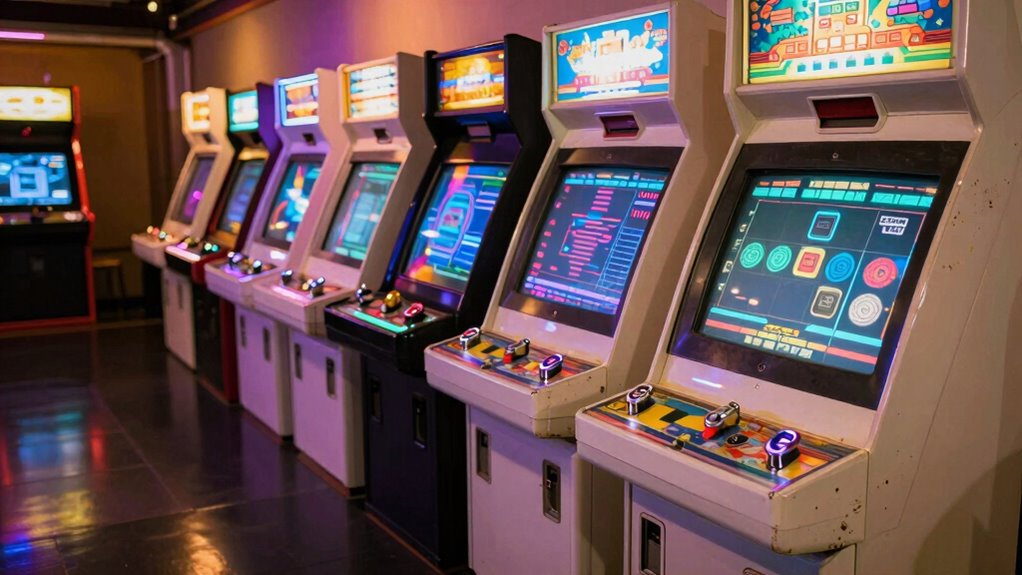
The quarter model, where players paid a small fee for a limited amount of game time, fundamentally influenced how early arcade games were designed. This coin op culture thrived on this pay-per-play setup, encouraging quick, engaging gameplay that kept players coming back. The token economy emerged as a flexible alternative, allowing players to buy tokens in bulk and insert them into machines, which streamlined the experience and reduced coin handling. Developers focused on creating games that delivered immediate gratification, knowing players had limited time and money. This approach also fostered a competitive environment, where players aimed to maximize their gameplay within their budget. Additionally, high refresh rates in arcade game displays ensured smooth motion, enhancing the fast-paced experience and keeping players immersed. The reliance on a quarter-based payment system also influenced the social dynamics of arcades, as players competed and shared strategies within this economic framework. Moreover, the pay-per-play model incentivized developers to design games that were easy to learn but difficult to master, increasing the replay value. Overall, the quarter-based approach shaped game design to prioritize fast-paced, addictive experiences, reinforcing the economic and social fabric of early arcade culture.
Core Mechanics of Quarter-Based Arcade Games

What makes quarter-based arcade games so engaging? It’s the core mechanics driven by coin insertion and score accumulation. Every quarter you insert triggers the game to start, immediately immersing you in gameplay. As you play, your goal becomes clear: rack up points efficiently to maximize your playtime. The mechanics encourage quick decision-making and skillful execution, since each coin adds to your total score and extends your session. You’re constantly motivated to beat your high score, making each playthrough a personal challenge. These systems turn simple actions—like inserting coins and aiming for high scores—into compelling gameplay loops. The design guarantees players stay engaged, driven by the desire to improve their score with each quarter, fueling the addictive nature of these games. Additionally, the reward systems employed in quarter-based games reinforce player motivation and foster a competitive atmosphere that keeps players returning. Proper game design ensures the challenge remains balanced, encouraging continued play without causing frustration.
How Quarter Play Influenced Player Psychology and Engagement

Playing quarter-based arcade games shapes how players think and feel about gaming. You learn to develop coin insertion strategies that maximize your playtime while managing limited resources. This creates a sense of urgency and encourages quick decision-making, heightening engagement. Developers used player retention techniques like offering small rewards or escalating challenges to keep you invested, making each quarter feel more valuable. The immediate feedback from inserting coins fosters a cycle of anticipation and satisfaction, reinforcing your desire to keep playing. These tactics tap into your psychology, making you more competitive and encouraging repeated play. Additionally, the design of these games often incorporated psychological cues that heightened emotional responses, deepening your connection to the game. For example, visual and auditory cues could trigger emotional responses that kept players engaged longer. Recognizing the importance of game design principles helps explain how these strategies effectively fostered emotional investment and prolonged engagement. Game designers also utilized reward schedules to reinforce positive behaviors and sustain interest throughout gameplay. The use of player psychology in these strategies was crucial in creating a compelling and immersive experience that encouraged players to continue inserting quarters. As a result, players often felt a sense of control and excitement, which deepened their emotional connection to the game experience and kept them coming back for more quarters.
The Legacy of the Quarter Model in Arcades and Modern Gaming

Although the quarter model originated in classic arcades, its influence continues to shape modern gaming experiences. You can still feel arcade nostalgia in today’s games, where the spirit of coin op innovation lives on. This model inspired developers to create engaging, repeatable gameplay loops that attract players and encourage longer play sessions. It pushed designers to balance challenge and reward, a principle still crucial today. Moreover, the early detection strategies developed for arcade games have influenced how modern titles incorporate tutorials and adaptive difficulty to retain players. These foundational concepts highlight the enduring game design principles rooted in arcade history. Additionally, advancements in appliance maintenance and energy efficiency echo the importance of optimizing performance and user experience that originated in arcade game programming. The emphasis on player engagement remains a core element in contemporary game development, ensuring games are both enjoyable and sustainable.
Lessons Modern Developers Can Learn From the Quarter Economy

The quarter economy’s success lay in its ability to motivate players to keep coming back through small, manageable stakes. Modern developers can learn from this by designing monetization systems that prioritize player engagement over aggressive sales. The microtransactions evolution shows a shift toward offering value without overwhelming players, much like arcade quarters encouraged repeated play. Incorporate simple, accessible player retention strategies, such as rewarding consistent participation or providing incremental goals. Avoid making transactions feel like a barrier; instead, integrate them seamlessly into gameplay. This approach builds trust and encourages ongoing involvement. Understanding the quarter economy’s appeal and the balance of risk and reward that it achieved, you can craft monetization models that foster long-term loyalty and a more satisfying player experience. Recognizing the importance of player motivation can help developers create systems that naturally promote continued engagement and satisfaction.
Frequently Asked Questions
How Did Quarter Pricing Impact Arcade Game Revenue Models?
Quarter pricing directly impacts your arcade game revenue models by creating a coin economy that encourages you to spend more to extend your playtime. As a player, you’re incentivized to insert coins repeatedly, which boosts revenue. Arcade designers optimize game difficulty and incentives to maximize your coin spending, ensuring a steady flow of income. This approach makes the game financially sustainable, aligning player engagement with revenue generation.
What Were the Most Innovative Game Designs Inspired by Quarter-Based Play?
You’re in for a treat when exploring coin op innovations inspired by quarter-based play. These designs pushed arcade gameplay evolution, introducing features like timed challenges and skill-based mechanics that kept players hooked, quarter after quarter. Games like Pac-Man and Donkey Kong showcased inventive gameplay, making each quarter spent feel rewarding. This approach turned simple mechanics into pioneering experiences, proving that a little innovation can go a long way in mesmerizing players.
Did Quarter Economics Influence Home Console or PC Game Development?
Yes, quarter economics influenced home console and PC game development by inspiring developers to adopt monetization strategies reminiscent of arcade to home shift. The quarter model legacy pushed designers to create engaging, replayable games that maximize value and player retention. This legacy encouraged the rise of free-to-play models and in-game purchases, reflecting arcade priorities of continuous engagement and revenue generation, shaping modern gaming business models considerably.
How Did Quarter Mechanics Affect Game Difficulty and Player Satisfaction?
Imagine a clock ticking toward your last quarter—your motivation to conquer grows intense. Quarter mechanics forced you to face difficulty balancing, making each game a delicate dance between challenge and reward. This design kept players engaged, fueling frustration or triumph. You felt the thrill of mastery, knowing your skill determined your success. The pressure pushed you to improve, transforming gameplay into a compelling pursuit of satisfaction amid relentless difficulty.
Were There Regional Differences in Quarter Arcade Game Adaptations Worldwide?
Yes, regional cultural variations and economic disparities influenced quarter arcade game adaptations worldwide. You’ll find that game difficulty, payout rates, and game themes often varied to suit local tastes and economic conditions. In regions with lower disposable income, arcade operators adjusted prices and game challenges to attract players, making gameplay more accessible or rewarding. These adaptations helped arcade games resonate with local audiences, ensuring their popularity across diverse cultural and economic landscapes.
Conclusion
Remember, every game you design or play is a journey shaped by its economy. The quarter model taught us to craft engaging, addictive experiences that keep players coming back, much like a well-tended fire that warms all who gather around. By understanding how small investments can create big thrills, you can build games that resonate deeply and stand the test of time. In gaming, as in life, it’s the little things that often make the biggest difference.
Halloween Picks
halloween
As an affiliate, we earn on qualifying purchases.