To develop arcade games, you should choose tools and engines suited for both visual design and hardware integration. Popular options like Unity and Unreal Engine offer robust features for creating engaging gameplay and visuals. For hardware communication, platforms like Arduino or Raspberry Pi help with input controls and display integration. Combining these tools allows you to design smooth mechanics and seamless hardware-software interaction. Keep exploring to discover how to perfect your arcade game development process.
Key Takeaways
- Popular game engines like Unity and Unreal Engine offer robust tools for arcade game development.
- Specialized frameworks such as Phaser and Godot simplify 2D arcade game creation.
- Hardware integration tools facilitate communication between controllers, buttons, and game software.
- Visual and UI design tools help craft engaging arcade-style graphics and user interfaces.
- Asset management and physics engines optimize game performance and realism for arcade experiences.
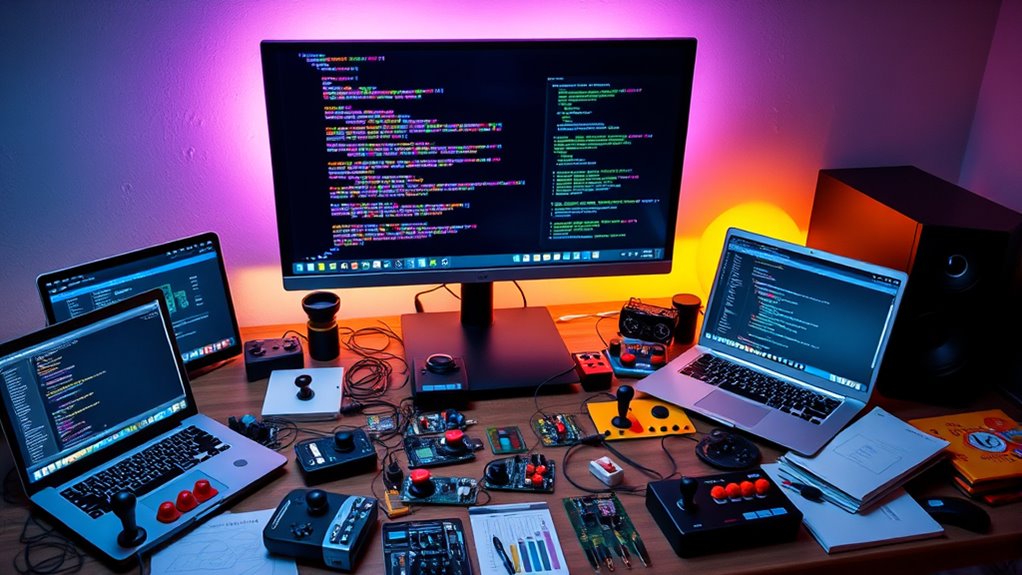
Developing arcade games is an exciting process that combines creativity with technical skill. When you dive into creating an arcade game, one of the first things you’ll focus on is game design. This involves conceptualizing the core gameplay mechanics, visual style, and overall user experience. You’ll want to craft engaging challenges that keep players hooked while maintaining a balance between difficulty and fun. Good game design also means thinking about how players interact with your game, from controls to visual cues, ensuring the experience is intuitive and rewarding.
As you develop your arcade game, hardware integration becomes just as vital as game design. Arcade machines often rely on specialized hardware components like joysticks, buttons, and display screens, which need to work seamlessly with your game’s software. You’ll need to select appropriate hardware that matches your game’s requirements and make sure your code communicates effectively with these components. This might involve working with microcontrollers or embedded systems, ensuring that input devices respond accurately and that the game’s visuals and audio sync perfectly with the hardware. Proper hardware integration guarantees a smooth, responsive experience that feels professional and polished. Additionally, understanding the hardware-software interaction is essential for optimizing performance and ensuring compatibility across different arcade setups.

Merchant Ambassador Retro Arcade Electronic: Pinball - Tabletop Game, Vibrating Bumpers, LED Lights, Sound Effects, 1 Player, Ages 6+
Just like the large arcade version.
As an affiliate, we earn on qualifying purchases.
Frequently Asked Questions
What Are the Best Free Tools for Beginners?
You should try free tools like Piskel for pixel art and Bfxr for sound design, perfect for beginners. Piskel lets you create and animate pixel art easily, while Bfxr offers simple sound effects to enhance your game. Both are user-friendly and require no coding experience. These tools help you develop your arcade game with appealing visuals and engaging sound effects, making your project more professional and fun to build.
How Do I Optimize Game Performance?
To enhance your game performance, focus on graphics optimization and code profiling. Streamline graphics by reducing unnecessary details, compress images, and use sprite sheets for efficiency. Conduct code profiling regularly to identify bottlenecks, optimize algorithms, and eliminate lagging processes. By fine-tuning graphics and analyzing your code, you create smoother gameplay, faster load times, and a better experience for players. Keep testing and refining to achieve maximum performance.
Which Engines Support Multi-Platform Deployment?
Many engines support multi-platform deployment, giving you cross-platform compatibility. For example, Unity and Unreal Engine are popular choices because they allow you to develop once and deploy across multiple platforms like PC, consoles, and mobile devices. They also offer flexible engine licensing options, making it easier to manage costs. By choosing these engines, you guarantee your arcade game reaches a wider audience without sacrificing performance or quality.
What Are Common Licensing Considerations?
Think of licensing considerations as the map guiding your game’s journey. You need to navigate intellectual property rights carefully and understand licensing agreements to avoid pitfalls. Always check if assets, code, or tools you use require specific licenses or permissions. By doing so, you safeguard your game from legal storms and ensure you’re compliant with creators’ rights, making your development voyage smoother and more secure.
How Can I Implement Multiplayer Features?
To implement multiplayer features, you should focus on network synchronization to keep game states consistent across players. Use real-time data exchange and optimize code to minimize latency, which is vital for smooth gameplay. Implement latency mitigation techniques like client-side prediction and lag compensation to improve responsiveness. Also, choose a reliable networking framework compatible with your game engine, and thoroughly test multiplayer interactions to guarantee a seamless experience.

New Era Pinball Game Black – Interactive Tabletop or Floor Arcade Pinball Machine for Kids & Adults – LED Scoring, Lights & Sounds, Fast & Fun 3-Ball Launch Game – Ideal Gift for Birthdays & Christmas
INTERACTIVE MINI PINBALL GAME: Engage in fast-paced fun with the New Era Pinball Game. Launch 1, 2, or...
As an affiliate, we earn on qualifying purchases.
Conclusion
Now that you know the tools and engines available, you’re ready to create arcade games that could rival the classics. With your newfound knowledge, your skills will skyrocket faster than a rocket ship reaching the stars! Don’t hold back—dive into development with confidence and turn your ideas into reality. Remember, the only limit is your imagination. So go on, make the next big arcade hit and leave players in awe!

OLEOCA Space Pinball Machine — Tabletop Arcade Game with Obstacles, Pull-Rod Launcher, Flippers, UFO Targets & Astronaut Theme, 1-2 Player Mini Pinball for Kids
SPACE PINBALL TABLETOP CHALLENGE: Launch with the pull rod, flip past UFO targets and astronaut bumpers, and rack...
As an affiliate, we earn on qualifying purchases.
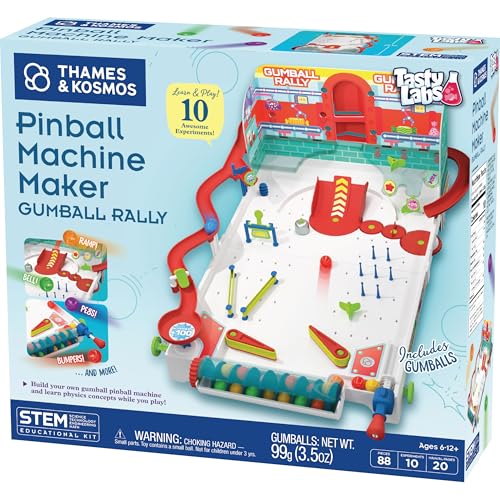
Thames & Kosmos Pinball Machine Maker STEM Experiment Kit Toy of the Year Finalist - Build a Reconfigurable Pinball Machine, Explore Physics, Force, Motion, Gravity, Simple Machines, Gumballs Included
Build your own customizable pinball machine that uses edible gumballs as the pinballs!
As an affiliate, we earn on qualifying purchases.