
The real appeal of cooperative arcade play is how it turns solitary gaming into lively social fun. You bond over shared victories, tactile controls, and energetic environments that encourage teamwork and communication. This form of play brings people together, creating memories filled with excitement, camaraderie, and spontaneous cheer. The design of arcade machines makes it easy for everyone to jump in, making each session memorable and timeless. If you want to explore what makes these experiences so engaging, keep going.

Get games and gaming gear delivered free — and shop member deals
- Fast, free delivery on millions of items
- Access to Prime Big Deal Days deals on October 6–7
- Prime Video, Amazon Music and more included
Key Takeaways
- Cooperative arcade play fosters social bonding through teamwork, communication, and shared victories.
- Classic arcade design with tactile controls encourages physical interaction and spontaneous social engagement.
- Multiplayer-friendly layouts lower barriers for new players, promoting inclusive, unstructured fun.
- The visceral thrill and simple mechanics create memorable, timeless experiences that unite players.
- The lively environment and tactile feedback enhance excitement and camaraderie among friends and strangers.
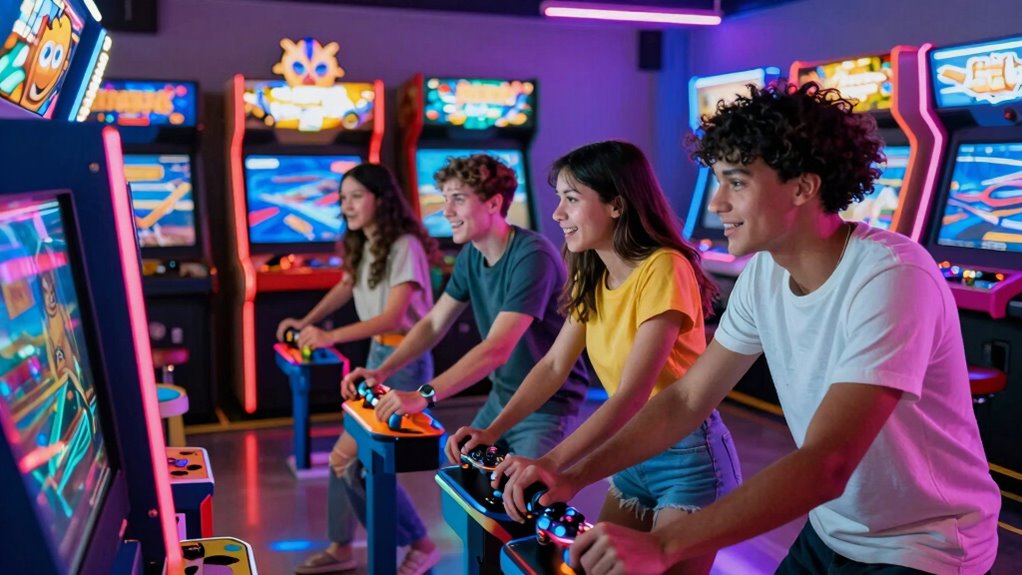
Have you ever wondered what makes cooperative arcade play so engaging? It’s a question that taps into a deep-rooted sense of nostalgia and the clever design of arcade machines. When you step into a classic arcade, you’re transported back to a time when gaming was more than just a solitary activity — it was a shared experience. Many players feel a rush of single player nostalgia, recalling moments of intense focus and triumph on arcade machines designed to enthrall and challenge. Yet, what truly elevates these experiences is playing together. Cooperative play transforms the game from a solo challenge into a social event, where teamwork, quick communication, and shared victories create a sense of camaraderie that’s hard to replicate elsewhere.
Arcade machine design plays an essential role in this dynamic. From the layout of controls to the placement of multiplayer ports, every element is crafted to facilitate interaction. Unlike modern games that often focus on individual experiences, classic arcade machines encourage collaboration through their design. For example, many machines feature two sets of controls, inviting friends or strangers to team up effortlessly. This design not only lowers barriers to entry but also amplifies the fun, making it easy for players to jump in and start cooperating immediately. The physicality of the controls — joysticks, buttons, and trackballs — adds a tactile dimension that’s inherently social, encouraging players to cheer each other on or strategize together. The design of arcade machines further enhances the social aspect by promoting spontaneous, unstructured play that feels natural and inviting. Incorporating social interaction cues into arcade design amplifies the communal experience, making each session more memorable. Additionally, the game mechanics are often intentionally simple to foster easy participation and immediate engagement. When you’re immersed in a cooperative game, you’re not just competing against the machine; you’re engaging with your friends, or even strangers, in a lively, energetic environment. That sense of connection, combined with the visceral thrill of arcade gameplay, is what makes cooperative arcade play such a timeless and enthralling activity. Recognizing the importance of game design elements reveals how thoughtfully crafted mechanics and controls enhance social bonding in these shared experiences. Furthermore, the tactile controls encourage physical interaction that naturally promotes social bonds among players.
arcade multiplayer game controllers
As an affiliate, we earn on qualifying purchases.
As an affiliate, we earn on qualifying purchases.
Frequently Asked Questions
How Does Cooperative Arcade Play Impact Long-Term Player Engagement?
Cooperative arcade play boosts your long-term engagement by making the experience more dynamic and social. When you team up, you tackle single-player challenges together, which keeps the game fresh and exciting. The competitive dynamics between players encourage you to improve and stay invested. This shared effort and interaction create a sense of community, motivating you to return often and enjoy the game longer than solo play alone.
Are There Specific Genres That Benefit Most From Cooperative Arcade Gameplay?
You’ll find that genres like beat ‘em ups, shooters, and sports games shine brightest with cooperative arcade gameplay. These genres thrive on teamwork and bring players together, breaking the mold of single-player focus. The competitive elements add a spark, turning friendly rivalry into a roaring fire of excitement. Cooperative play transforms these genres from solo pursuits into shared adventures, making every session more engaging and memorable.
What Are the Best Strategies for Coordinating With Friends in Arcade Co-Ops?
To coordinate effectively in arcade co-ops, prioritize clear team communication, like signaling moves or sharing updates quickly. Focus on shared objectives, such as defeating bosses or accumulating points together. Assign roles based on each player’s strengths, and keep a positive attitude to boost teamwork. Regularly check in with your friends to adapt strategies and stay synchronized, ensuring everyone is working towards the same goal for a more successful and fun experience.
How Do Arcade Co-Op Experiences Differ Across Age Groups?
You’ll find that arcade co-op experiences differ across age groups by blending retro nostalgia with social bonding. Younger players often enjoy modern twists on classic games, while older gamers cherish the nostalgic feel of vintage cabinets. Regardless of age, these experiences foster camaraderie and shared fun. You’ll notice that, across generations, arcade co-ops create a unique space where nostalgia sparks conversations, and social bonds deepen through collaborative play.
What Technological Advancements Are Shaping Future Cooperative Arcade Games?
Imagine stepping into a portal where virtual reality and motion controls transform your gameplay. These advancements shape future cooperative arcade games by immersing you fully, making interactions more intuitive and engaging. Virtual reality offers a sense of presence, while motion controls enable natural collaboration. Together, they create dynamic experiences, turning arcade play into a shared adventure that feels almost real, pushing the boundaries of what cooperative gaming can achieve.
Conclusion
You might think solo victories are more satisfying, but cooperative arcade play offers a different thrill—shared laughter, collective struggles, and teamwork. It’s a reminder that sometimes, winning isn’t about the highest score but about the bonds you build along the way. In a world obsessed with individual achievement, playing together creates moments that stand out, proving that the real appeal isn’t just the game, but the connection you forge within it.
Halloween Picks
halloween
As an affiliate, we earn on qualifying purchases.