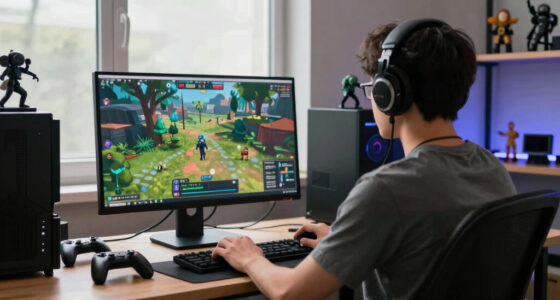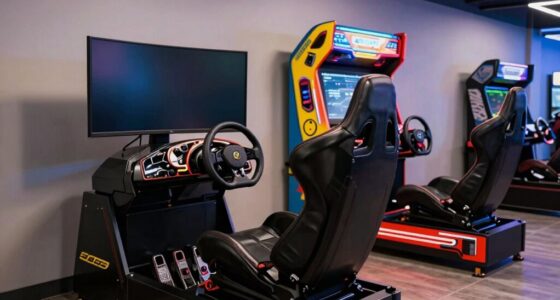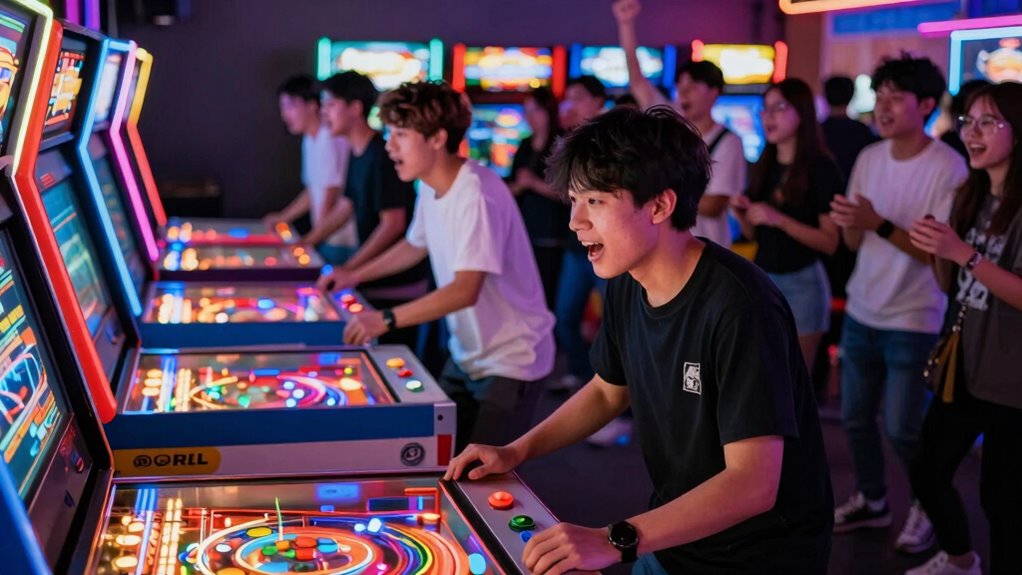
Arcades turn competition into social theater by encouraging spontaneous interactions and shared experiences, rather than just winning. As you play, you’ll connect with others through multiplayer gaming and collaborative challenges, creating a lively social atmosphere. The physical space promotes conversation and camaraderie, making every game session a communal event. These environments foster social skills like communication and teamwork, making gaming more personal and engaging. Keep exploring to see how these social dynamics transform arcade experiences even further.

Play games on Amazon Luna for your game nights, included with Prime
- A rotating selection of games, no download needed
- Play on TV, laptop or phone
- Fast, free delivery for your gear, too
Key Takeaways
- Arcades shift focus from individual scores to shared social experiences, fostering community and spontaneous interactions.
- VR technology immerses players, encouraging collaborative play and natural social interactions.
- Multiplayer gaming in arcades promotes spontaneous communication and strengthens social bonds.
- Arcade layouts facilitate physical proximity, enhancing communication and camaraderie among players.
- Gaming fosters social skills like teamwork, communication, and confidence through collaborative gameplay.
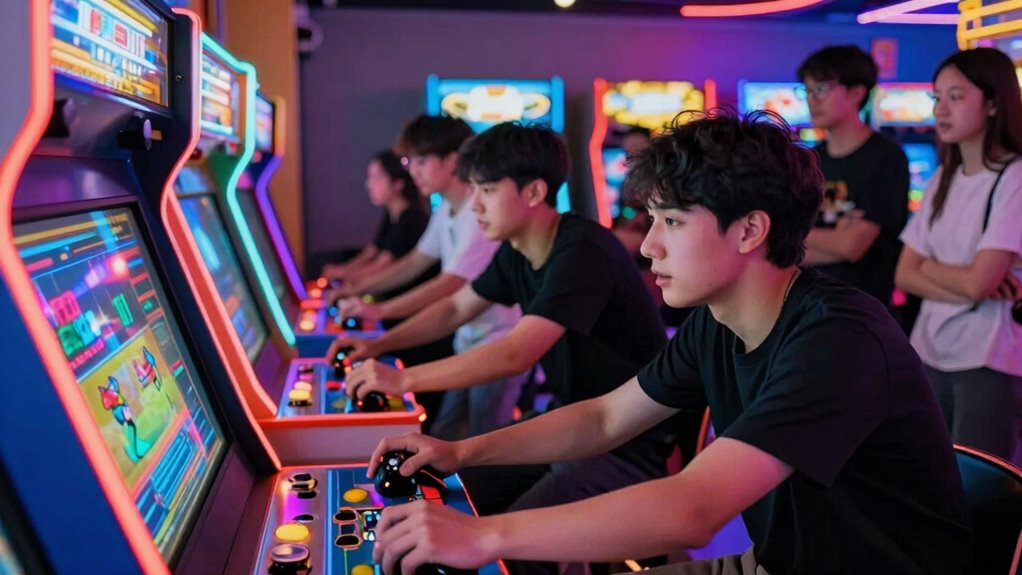
Arcades are transforming competitive gaming into a vibrant social experience, where the focus shifts from just winning to engaging with others. Step inside, and you’ll notice how modern arcades foster connections through innovative technologies like virtual reality and multiplayer dynamics. Virtual reality (VR) takes gaming beyond the screen, immersing you in worlds that make every move feel real. With VR headsets and motion-tracking, you’re not just controlling a character; you’re stepping into their shoes. This heightened sense of presence encourages players to interact more naturally and socially, breaking down barriers that traditional games often create. When you and your friends gear up for a VR session, it becomes less about individual scores and more about shared experiences, laughter, and friendly competition. Additionally, the social potential of multiplayer gaming is amplified in arcade settings, encouraging spontaneous interactions and community building. The physical space of arcades also enhances social interactions, making every game a shared event that fosters stronger bonds among players. This environment encourages players to develop communication skills, which are essential for both gaming and real-world socialization.
Popular right now

Ninja NC501 CREAMi XL Deluxe 11-in-1 Ice Cream and Frozen Treat Maker with Two XL Containers

Samsung 85-Inch QN70H Neo QLED 4K Smart TV (2026)

Vitamix 5200 Professional-Grade Blender, 64 oz. Container, Black
As an affiliate, we earn on qualifying purchases.
Frequently Asked Questions
How Do Arcades Influence Local Community Bonding?
Arcades influence your local community bonding by creating spaces where shared interests thrive, fostering friendships through arcade nostalgia and friendly competition. When you participate in community events at arcades, you connect with neighbors and fellow enthusiasts, strengthening local ties. These social interactions promote a sense of belonging, making arcades more than just gaming spots—they become vibrant hubs for community cohesion and collective memories.
What Role Do Arcade Design Elements Play in Social Interaction?
Arcade design elements act like a magnet, drawing players into vibrant social interactions. Interactive lighting creates an inviting atmosphere, encouraging friends to gather and cheer each other on. Sound design amplifies excitement, fostering camaraderie and lively conversations. These elements transform the arcade into a stage where competition becomes a shared experience, turning strangers into allies. Your engagement deepens as the environment sparks connection through sensory cues and collective energy.
How Has Arcade Competition Evolved Over the Decades?
Over the decades, arcade competition has evolved from simple high-score contests to immersive, multiplayer battles fueled by retro nostalgia. You now see a shift towards more dynamic competitive dynamics, with players engaging in cooperative and head-to-head challenges across diverse game genres. Modern arcades emphasize social interaction, blending digital rivalry with shared experiences, creating a vibrant community space where nostalgia and innovation drive the excitement and keep players coming back for more.
Are There Specific Games That Foster More Social Engagement?
You’ll find that games like *Street Fighter* and *Mario Kart* excel at fostering social engagement through multiplayer dynamics. These titles ignite friendly rivalry and laughter, turning every match into a moment of social bonding. The thrill of competing side-by-side keeps players hooked, making arcade visits more than just gaming—they become shared experiences that build lasting connections. Ready to immerse yourself in a game that transforms competition into camaraderie?
What Psychological Effects Does Arcade Competition Have on Players?
Arcade competition triggers adrenaline rushes, boosting your energy and focus. It also encourages mindset shifts, like embracing challenges and learning from losses. These psychological effects make you more engaged and motivated to improve. As you compete, you develop resilience and a sense of camaraderie, turning the experience into a social theater where shared excitement enhances your overall well-being and connection with others.
Conclusion
You see, arcades transform competition into a lively social theater, where every game is a stage and players are both competitors and entertainers. Just like a bustling carnival, the energy is contagious, drawing everyone into the shared excitement. As you immerse yourself in the action, you realize it’s not just about winning but about connecting, laughing, and creating memories. In this vibrant space, competition becomes an artful dance, turning ordinary moments into extraordinary social experiences.