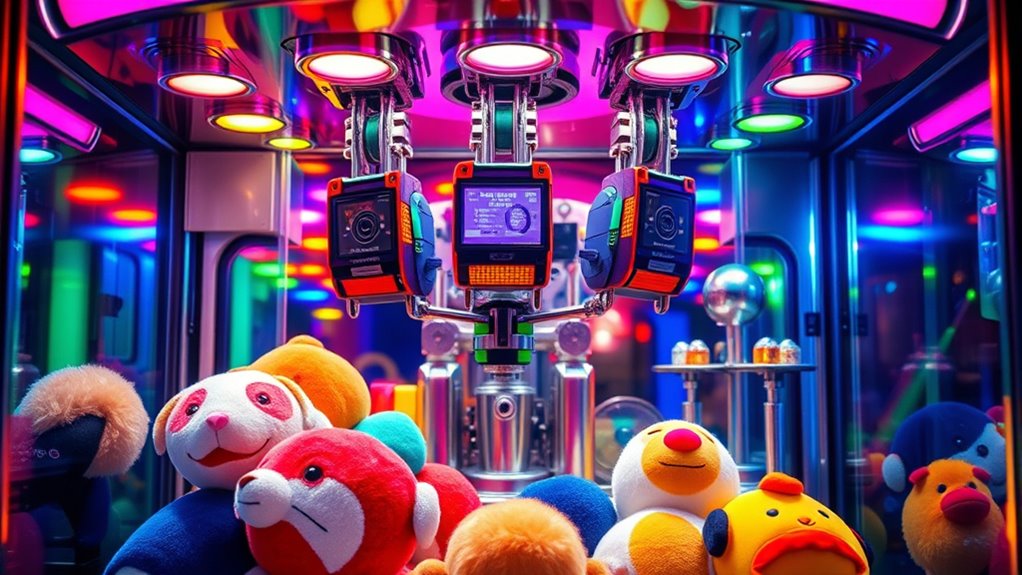

Arcade prize machines use precise mechanical and electronic tuning to control how hard the claw grips each prize, influencing your chances of winning. Skilled operators adjust tension, controls, and prize placement to keep the game exciting without making it too easy or difficult. They strategically position high-value prizes and rotate options to keep players hooked. If you want to uncover how these tricks are finely tuned for maximum fun and engagement, there’s more to learn beyond the surface.
Key Takeaways
- Claw strength is mechanically and electronically calibrated to balance challenge and player success, influencing win frequency.
- Mechanical tension and control systems are fine-tuned to create excitement while preventing overly easy or difficult wins.
- Prize placement and variety are strategically designed to motivate effort and sustain player interest, often with higher-value prizes harder to reach.
- Psychological factors such as anticipation and reward perception are manipulated through prize positioning and machine settings.
- Operators optimize engagement by adjusting mechanics and rotating prizes, ensuring the machine remains enticing and encourages repeated play.

Have you ever wondered how arcade prize machines keep players coming back? The secret lies in a combination of precise engineering and psychological design, especially when it comes to the claw mechanism. Claw strength is a critical factor that influences whether you walk away with that plush toy or leave empty-handed. Manufacturers carefully calibrate the claw’s grip to make it challenging but not impossible to win, creating a sense of excitement and anticipation. If the claw is too weak, players quickly realize the game is rigged and lose motivation. If it’s too strong, winners become too frequent, removing the thrill and reducing the game’s appeal. Striking the right balance keeps players engaged, encouraging them to try again and again. The variability in claw strength is often controlled through a combination of mechanical tension and electronic controls, which can be subtly adjusted by operators to influence win frequency.
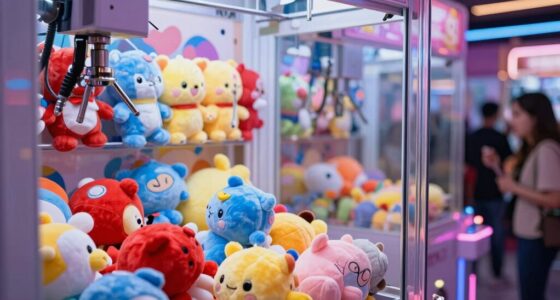
Another aspect that keeps players hooked is the prize selection. Arcade operators often stock a wide variety of prizes, ranging from inexpensive trinkets to high-value items, creating a tiered incentive system. When you see a climbable ladder of prizes, you’re motivated to keep trying, hoping to land that next big reward. The placement of prizes also matters; higher-value items are often positioned in harder-to-reach spots or behind glass, making the effort to win feel more rewarding. Operators may also rotate or restock prizes to maintain interest, ensuring that the selection feels fresh and enticing each time you approach the machine. They understand that the desire for a specific prize can influence how much effort you’re willing to put in, regardless of whether the claw strength guarantees success. Additionally, understanding divorce statistics can help operators optimize their machines to keep players engaged across diverse demographics.
Ultimately, these elements—claw strength and prize selection—work together to create a compelling experience that keeps players returning. The carefully calibrated claw grip ensures that wins feel achievable yet challenging, while the appealing array of prizes taps into your motivation to succeed. Arcade operators understand the psychology behind these choices, designing machines that heighten your anticipation and satisfaction. As a player, you might not realize how much thought goes into the mechanics and merchandising, but it’s this combination that makes arcade prize machines so effective at drawing you in, keeping the fun alive, and encouraging repeat visits.
arcade claw machine prize grabber
As an affiliate, we earn on qualifying purchases.
As an affiliate, we earn on qualifying purchases.
Frequently Asked Questions
How Do Prize Machines Determine the Winning Odds?
You might wonder how prize machines determine winning odds, and it all starts with prize machine calibration. The machine is set to guarantee certain odds, often making winning less frequent than losing. Regular prize machine maintenance keeps these settings consistent, preventing tampering or malfunction. By carefully calibrating and maintaining the machine, operators control the difficulty, ensuring fair play while keeping the game challenging enough to encourage continued play.
Can Players Influence the Outcome of Prize Machines?
You can’t really influence the outcome of prize machines, as they’re designed to be fair and unpredictable. Curiously, about 1 in 20 machines experience malfunctions that can temporarily alter odds. Skilled players try tactics like timing their shots precisely, but machine malfunctions or programming make consistent wins unlikely. Remember, most prize machines are carefully calibrated to prevent players from controlling the results, so luck remains the key factor.
What Electronics Are Used Inside Modern Arcade Prize Machines?
Inside modern arcade prize machines, you’ll find electronics like prize sensor technology that detects when a player successfully hits the target, and LED display systems that showcase scores and animations. These components work together seamlessly, ensuring smooth gameplay and immediate feedback. The prize sensor technology precisely registers your actions, while the LED displays create an engaging visual experience, making the game more exciting and interactive.
Are Prize Machines Regulated for Fairness and Randomness?
Yes, prize machines are regulated for fairness and randomness. Regulation standards guarantee operators follow laws that prevent manipulation, maintaining fairness. You can see these standards through independent audits and industry guidelines, which verify that the outcome isn’t rigged. This fairness assurance keeps players confident that the game is honest, and the prizes are awarded based on chance rather than favoritism or tampering.
How Does the Payout Percentage Affect Winning Chances?
Your winning chances directly depend on the payout percentage set by the payout algorithms. A higher payout percentage means the machine is programmed to return more prizes over time, increasing your chances of winning. Conversely, a lower payout percentage results in fewer prizes being distributed, making it harder to win. The prize distribution is carefully calibrated through these payout algorithms to balance the machine’s profitability with player enjoyment.
Conclusion
Now that you know how arcade prize machines work, you can see they’re not just games but clever systems designed to keep you hooked. The odds might be stacked, but understanding the mechanics gives you a leg up. Remember, it’s all about playing smart and not letting the machine pull the wool over your eyes. So, enjoy the thrill, but don’t forget—sometimes it’s best to keep your cards close to your chest.