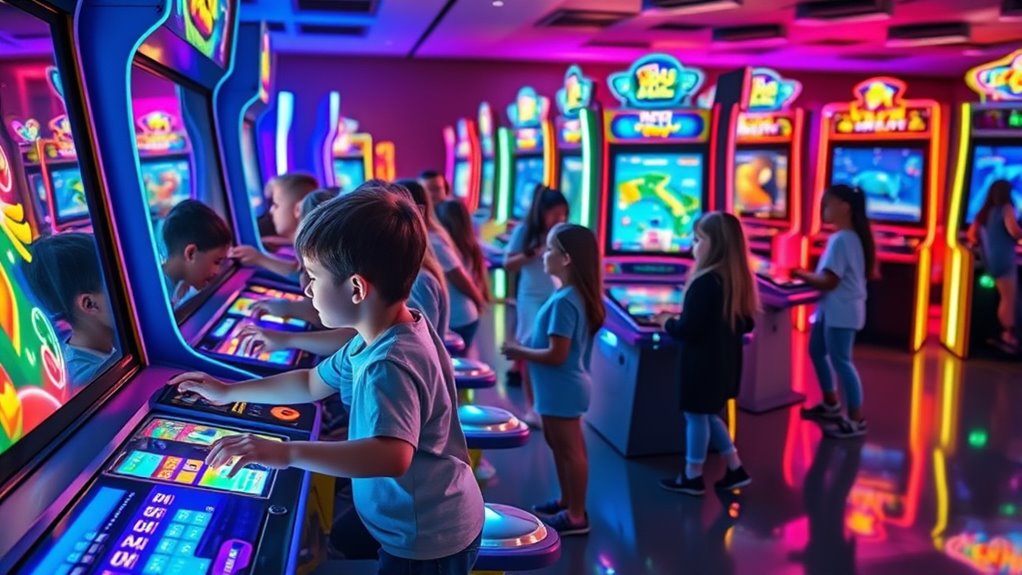

Education through arcades combines engaging games and edutainment to transform learning into fun, interactive experiences. By using virtual reality, you get immersive lessons that make complex topics easier to grasp and remember. Gamification adds motivation through rewards and challenges, making education feel like play. This innovative approach appeals to various learning styles and encourages curiosity. If you keep exploring, you’ll discover how these methods can revolutionize your way of learning.
Key Takeaways
- Arcades utilize gamification and interactive experiences to make learning engaging and enjoyable for all ages.
- Educational games in arcades leverage VR to create immersive, lifelike learning adventures that enhance retention.
- Combining edutainment with arcade-style challenges motivates learners through rewards, levels, and social interactions.
- Arcade-based learning environments promote experiential education, fostering curiosity and lifelong learning habits.
- These innovative approaches transform traditional education into active, fun, and memorable exploration of complex subjects.
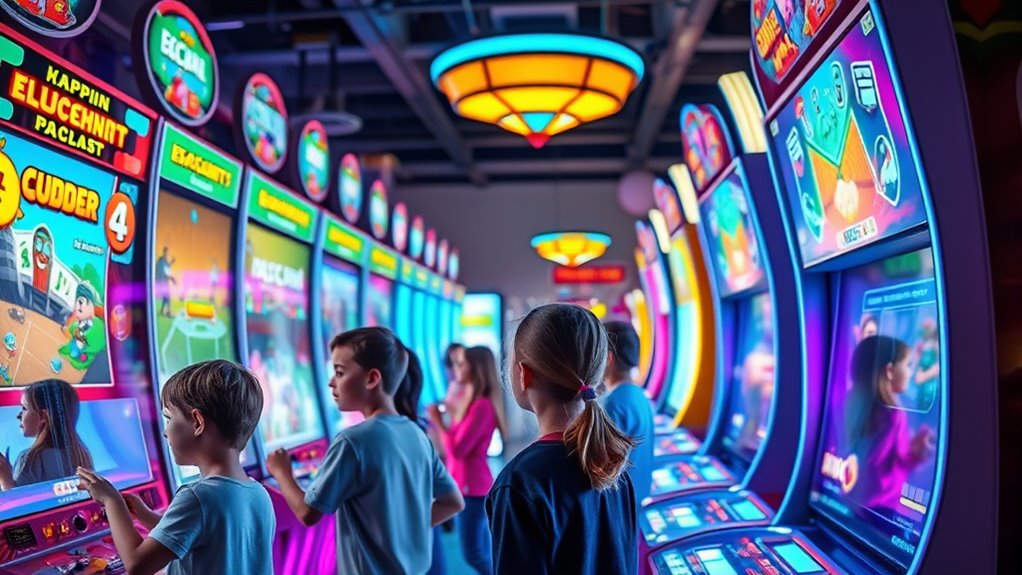
Learning games and edutainment have revolutionized how you acquire knowledge by combining education with engaging entertainment. Gone are the days when learning felt like a chore; now, interactive experiences make absorbing information exciting and immersive. Virtual reality (VR) plays a pivotal role in this transformation, offering a sense of presence that turns educational content into vivid, lifelike adventures. Imagine donning a VR headset and instantly exploring ancient civilizations, maneuvering through complex molecules, or practicing surgical procedures—all from your living room. This technology creates a powerful impact by immersing you deeply in the subject matter, making abstract concepts tangible and memorable.
Virtual reality transforms learning into immersive, lifelike adventures that make complex concepts engaging and memorable.
Gamification strategies are central to designing effective learning experiences within arcades and edutainment environments. These strategies involve applying game elements, such as scoring, levels, rewards, and challenges, to educational activities. When you approach learning with a game-based mindset, you’re motivated to progress, compete, and achieve mastery just as you would in a traditional game. For example, earning points for correct answers or revealing new levels after completing lessons adds a layer of excitement that sustains your engagement. As a result, complex topics become more approachable, and your desire to learn is naturally enhanced through this playful framework.
In arcade-style learning environments, the integration of virtual reality and gamification strategies creates a dynamic, interactive experience that appeals to learners of all ages. You might find yourself maneuvering through a virtual ecosystem to understand environmental science or solving puzzles that reinforce math skills. The immediate feedback provided by these setups helps you identify knowledge gaps and adjust your approach in real-time. Plus, the social element—whether competing with friends or collaborating on challenges—adds an extra dimension of motivation and enjoyment.
This blend of technology and game design also caters to different learning styles. Visual learners benefit from the immersive graphics, kinesthetic learners engage through interactive controls, and those who thrive on competition or achievement find motivation in scoring systems and leaderboards. The versatility of virtual reality and gamification strategies ensures that learning isn’t just effective—it’s also accessible and fun. As you explore these innovative methods, you realize that education is evolving into an experience that not only imparts knowledge but also sparks curiosity and a lifelong love of learning.
Ultimately, the fusion of virtual reality and gamification strategies in arcade-style education has the power to transform traditional learning into an exciting adventure. You’re no longer passive recipient of facts; instead, you become an active participant, exploring new worlds and mastering skills through engaging, hands-on experiences. This approach makes learning memorable, meaningful, and, most importantly, enjoyable. Additionally, the incorporation of all-waterpark hotels and resorts into educational field trips can provide immersive, fun-filled environments that enhance experiential learning outside the classroom.

Abacus Brands Virtual Reality ESPN Gift Box – Illustrated Interactive VR Book and STEM Learning Activity Set
EXPERIENCE SPORTS IN VIRTUAL REALITY! Dive into the world of sports like never before with immersive experiences in…
As an affiliate, we earn on qualifying purchases.
As an affiliate, we earn on qualifying purchases.
Frequently Asked Questions
How Do Arcade Learning Games Influence Cognitive Development?
Arcade learning games boost your cognitive development by enhancing brain plasticity and problem-solving skills. As you play, your brain adapts to new challenges, strengthening neural connections. These games encourage quick thinking and strategic planning, which improve your ability to solve problems in real life. By engaging actively, you train your mind to become more flexible and resilient, making you better equipped to handle complex situations outside the game.
What Are the Best Edutainment Games for Different Age Groups?
Think of it like Alice’s journey through Wonderland—you need the right game for the right age. For young children, choose games with simple game design and vibrant visuals that promote creativity. For older kids, opt for challenging puzzles and strategy games that develop critical thinking. Always consider age appropriateness, ensuring the content is engaging without being overwhelming. This tailored approach helps maximize learning and keeps their curiosity alive.
How Do Designers Balance Fun and Educational Value?
You balance fun and educational value by designing game mechanics that seamlessly integrate learning goals with engaging gameplay. Focus on creating challenges that motivate user engagement without feeling like chores. Use rewards and progression to keep players interested while subtly reinforcing concepts. You should test your game with real users, adjusting mechanics to guarantee that the balance feels natural, making learning enjoyable and motivating players to keep exploring.
Are There Specific Skills Improved by Arcade-Based Learning?
Did you know that 85% of players improve their motor skills through arcade-based learning? You’ll find that these games boost problem-solving abilities and enhance hand-eye coordination. As you engage with challenging levels, you develop quick thinking and strategic planning. Arcade-based learning isn’t just fun; it actively sharpens critical skills like motor control and problem-solving, helping you learn naturally while enjoying the excitement of gaming.
What Is the Future of Edutainment in Virtual and Augmented Reality?
The future of edutainment in virtual and augmented reality looks promising as augmented reality trends evolve, making learning more immersive and engaging. You’ll see more virtual classroom integration, where AR creates interactive environments that enhance understanding. This technology will enable you to explore complex concepts hands-on, making education more accessible and personalized. As AR becomes mainstream, it will revolutionize how you learn, blending entertainment with effective, real-world skill development.
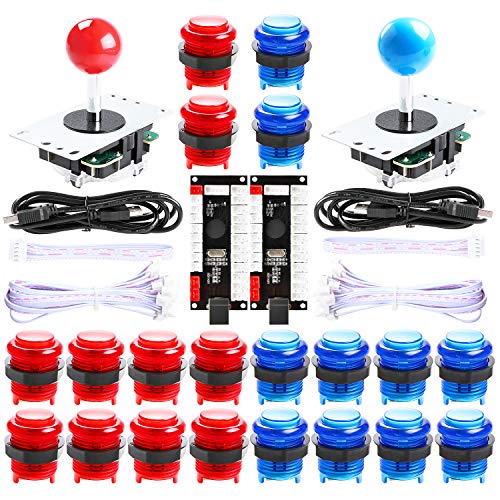
Hikig 2 Player led arcade buttons and joysticks DIY kit 2x joysticks + 20x led arcade buttons game controller kit for MAME and Raspberry Pi – Red + Blue Color
New Style DIY Arcade Kit, LED arace game DIY MAME parts DIY Accessories.
As an affiliate, we earn on qualifying purchases.
As an affiliate, we earn on qualifying purchases.
Conclusion
You see, combining education with arcade-style games transforms learning into an adventure so engaging, it’s practically unstoppable. These interactive experiences turn dull lessons into thrilling quests, making knowledge stick like glue. By embracing edutainment, you’re not just teaching—you’re revolutionizing how learners connect with information. This approach isn’t just a trend; it’s a powerful force that can reshape education worldwide, proving that learning through play can be the most unstoppable force in shaping bright futures.

Designing Gamified Systems: Meaningful Play in Interactive Entertainment, Marketing and Education
As an affiliate, we earn on qualifying purchases.
As an affiliate, we earn on qualifying purchases.
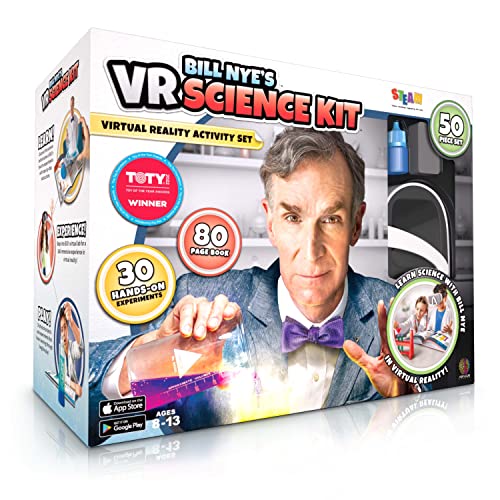
Abacus Brands Bill Nye's VR Science Kit – Virtual Reality Kids Science Kit, Book and Interactive STEM Learning Activity Set (Full Version – Includes Goggles) – for Ages 8 and Up
WINNER OF THE TOTY "STEAM TOY OF THE YEAR AWARD" – Join Bill Nye is his virtual reality…
As an affiliate, we earn on qualifying purchases.
As an affiliate, we earn on qualifying purchases.