
TL;DR
Thorsten Meyer AI has published a Built in Public Spotlight on Readiness, a 20-minute diagnostic intended to test whether an organization is prepared to fund world-model AI. The source says the tool gives a readiness tier, peer percentile, exposure profile and 30-day action plan, while avoiding vendor scoring or sales follow-up.
Thorsten Meyer AI has published a Built in Public Spotlight on Readiness, a 20-minute AI readiness diagnostic aimed at companies deciding whether to fund world-model AI projects. The spotlight matters because it frames readiness as a pre-investment test for whether an AI budget is likely to compound or erode before problems appear in business metrics.
The source describes Readiness as a diagnostic that requires a corporate email and about 20 minutes to complete. It says the tool returns a board-facing tier: Not Ready, Premature, Pilot or Scale.
According to the spotlight, the report also names an organization’s exposure type, compares it with peers by sector and size band, reflects the user’s own answers back in the output and provides three actions that can begin within 30 days. The source says the assessment is calibrated for industry and regulatory realities including MaRisk, HIPAA, the EU AI Act and NIS2, though it also states that those references are examples rather than legal guidance.
The spotlight says the diagnostic does not rank vendors, does not sell an implementation and does not trigger follow-up sales contact. It also says email records are removed by design after confirmation and report delivery, while answers are anonymized unless a user chooses to keep them out entirely.
Before You Fund the Answer
Most world-model AI implementations look clean for a year, then decision quality erodes where no dashboard can see it. Twenty minutes and a corporate email tell you — before you sign — whether the money will compound or quietly evaporate.
A clear tier framed in language a CFO will accept — plus your percentile against peers in your sector and size band, so a score becomes a position you can take to the board.
+ twenty minutes
- No follow-up machine — no vendor in your inbox next week.
- No “book a call.” The output is an action you can take without it.
- No vendor scorecard. It doesn’t sell the implementation it assesses.
- No thumb on the scale toward “you’re ready, let’s talk.”
- Subtraction, pointed at a decision. Strip the vendor theater and dashboard-green comfort until the few things that decide success are visible.
- Independence is the product. A diagnostic that deletes your email has nothing to gain from any verdict but the true one — including “not ready.”
- The shift it’s built for. AI is moving from describing to predicting and acting; readiness is a question you answer before deployment, not during it.
- Find out before you fund the answer. The only thing more expensive than this assessment is learning the answer the slow way.
Independent commentary, produced with AI assistance under human editorial oversight. The views are the author’s own and may change. Readiness is a diagnostic tool, not business, financial, legal, or technical advice; its verdict is one input, not a substitute for due diligence. Regulatory references are named as examples, not legal guidance. Product, model, and company names are trademarks of their respective owners; mention does not imply endorsement.
AI Budgets Face Earlier Scrutiny
The central claim in the spotlight is that many enterprise AI failures are hard to spot early because dashboards can remain green while decision quality declines. That distinction matters for executives because a system that automates judgment can change outcomes over several quarters before the cause becomes visible.
For readers weighing AI spending, the practical issue is timing. The source presents Readiness as a way to test organizational fit before approval, rather than after a budget and year have already been spent. Its value proposition is less about choosing a model or vendor and more about deciding whether the company has the conditions needed to use AI systems that predict or act.
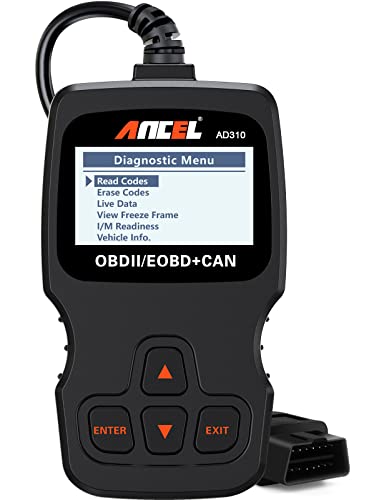
ANCEL AD310 Classic Enhanced Universal OBD II Scanner Car Engine Fault Code Reader CAN Diagnostic Scan Tool, Read and Clear Error Codes for 1996 or Newer OBD2 Protocol Vehicle (Black)
- Diagnoses Check Engine Light: Easily identify cause of check engine light
- Clear Diagnostic Codes: Read and erase trouble codes quickly
- Live Data & Freeze Frame: View real-time data and snapshot info
As an affiliate, we earn on qualifying purchases.
As an affiliate, we earn on qualifying purchases.
From Descriptive To Deciding AI
The spotlight distinguishes today’s common enterprise AI uses from what it calls world-model AI. It describes the current wave as mostly descriptive, including tools that summarize, draft and answer, while the next wave is framed as systems that build an internal model of how a business works and use it to predict and act.
The source identifies three risk patterns. A data-rich business may optimize what it already measures while missing untracked factors. A complex regulated business may encode how it works today and then struggle when operations need to change. A document-driven business may treat a polished answer as informed when it is only fluent.
“Most world-model AI implementations look clean for a year, then decision quality erodes where no dashboard can see it.”
— Thorsten Meyer AI spotlight
Limits Of The Public Detail
The source material does not provide independent validation of Readiness results, a detailed methodology, sample scoring weights or performance data showing how often its verdicts predict AI outcomes. It is also not clear from the source whether the diagnostic is already broadly available beyond the listed readiness.thorstenmeyerai.com address.
The spotlight includes an editorial disclaimer stating that Readiness is a diagnostic tool, not business, financial, legal or technical advice. That means its output should be read as one input in a funding decision, not as a substitute for due diligence, procurement review, security review or legal analysis.
Boards Decide Before Funding
The next step for organizations interested in the tool is to complete the 20-minute diagnostic before approving an AI implementation budget. The reported output is a readiness tier, a peer percentile, a named exposure profile and three near-term actions tied to the weakest dimension.
For Thorsten Meyer AI, the next test is whether Readiness can show that its pre-funding verdicts help organizations avoid delayed AI failures in real deployments. At this stage, the spotlight sets out the product stance and use case; the public evidence base around outcomes is still limited.
Key Questions
What is Readiness?
Readiness is described by Thorsten Meyer AI as a 20-minute diagnostic for organizations considering world-model AI investments before they approve funding.
What does the diagnostic produce?
The source says it produces a board-ready tier, an exposure profile, a peer percentile, quoted references to the user’s answers and three actions that can start within 30 days.
Does Readiness recommend vendors?
No. The spotlight says Readiness does not rank vendors, does not sell implementation and does not push users toward a sales call.
Is this legal or financial advice?
No. The source states that Readiness is a diagnostic tool and that its verdict is one input, not a replacement for due diligence or professional advice.
Source: Thorsten Meyer AI