TL;DR
Thorsten Meyer AI has framed European enterprise AI adoption around a practical question: how much control companies need while building useful AI capability under the EU AI Act. The confirmed publication details are limited, but the timing matters because AI Act duties are phasing in and businesses need auditable AI inventories, ownership and risk classifications.
Thorsten Meyer AI has published an enterprise AI governance article titled “Capability or Control: The European Enterprise AI Playbook for the AI Act Era”, putting European companies’ AI Act response in terms of a choice between building AI capability and adding operational control.
The confirmed development is the publication and title of the Thorsten Meyer AI article. The available material does not include the full article body, so specific recommendations, named contributors, case studies or vendor references cannot be verified from the provided record.
The title points to a current enterprise problem: AI adoption in Europe is no longer only a technology rollout. Companies using AI in hiring, finance, customer service, software development, procurement and internal operations must be able to explain what systems they use, who owns them, what data they rely on and whether they fall into regulated AI Act categories.
The EU AI Act entered into force on August 1, 2024, with duties applying in phases. Prohibited practices began applying in February 2025, general-purpose AI obligations began applying in August 2025, and further obligations for regulated systems continue to move through implementation. That timeline makes governance design a board-level and operating-level issue, not only a legal exercise.
Capability or Control
● EnterpriseThe EU AI Act doesn’t ban models by origin. Together with the CLOUD Act, GDPR, and a supply chain that can be switched off, it forces European enterprises to choose — workload by workload — between capability and control. Origin matters far less than license, deployment, and jurisdiction.
Nationality isn’t the gate. License, data destination, and where you deploy are.
No single point is right for a whole company. The right answer is a portfolio, assigned per workload.
Sort workloads by data sensitivity & regulatory exposure, then match each to a stack.
Independent commentary, produced with AI assistance under human editorial oversight; the views are the author’s own and may change. This is analysis and opinion, not legal, compliance, investment, or technical advice; the EU AI Act, its implementation, and model availability are evolving — verify specifics with qualified counsel and primary regulatory sources before acting. Figures and milestones are drawn from public sources read as of June 2026 and are subject to change. References to specific companies, models, regulators, and government actions are factual and analytical, not partisan, and imply no affiliation or endorsement.
Control Becomes A Deployment Condition
For readers in European companies, the playbook framing matters because AI capability and AI control are now linked. A model or AI tool that improves productivity may still create legal, security, data protection or procurement exposure if the organisation cannot show how it was selected, tested, monitored and governed.
The practical impact is likely to fall across several teams at once. Legal teams need classification and contract records. Security teams need model, vendor and data-flow visibility. Product and operations teams need deployment rules that do not freeze useful experimentation. Executives need a way to compare AI benefit against regulatory and reputational risk.
The central business question is not whether to slow AI adoption. It is whether companies can build enough internal control to keep adoption usable, traceable and defensible as regulators and customers ask harder questions.
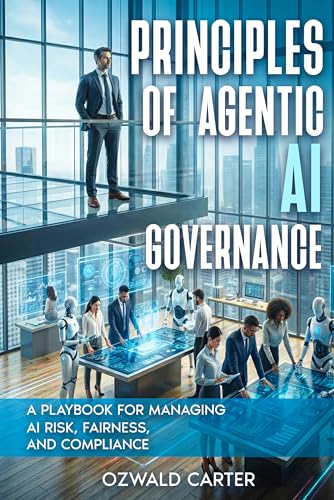
Principles of Agentic AI Governance: A Playbook for Managing AI Risk, Fairness, and Compliance (Agentic Governance and Architecture)
As an affiliate, we earn on qualifying purchases.
As an affiliate, we earn on qualifying purchases.
AI Act Deadlines Are Near
The AI Act uses a risk-based structure. Some uses are banned, some high-risk systems face stricter duties, and limited-risk systems face transparency requirements. General-purpose AI models sit under separate obligations covering areas such as documentation, copyright policies and systemic-risk management for the most powerful models.
That structure leaves many enterprises with a mapping problem before they reach a compliance problem. They first need to know which AI systems are in use, whether they are built internally or bought from vendors, what business process they affect, and whether the company is acting as a provider, deployer, importer, distributor or product manufacturer under the law.
The Thorsten Meyer AI headline fits that moment: European firms are trying to turn regulation into an operating model without losing the productivity gains that drove AI adoption in the first place.
“Capability or Control: The European Enterprise AI Playbook for the AI Act Era”
— Thorsten Meyer AI
Playbook Details Remain Limited
It is not yet clear which concrete controls, governance structures, vendor clauses, technical tests or implementation milestones the Thorsten Meyer AI playbook recommends, because the available article material does not include the full body text.
It also remains developing how EU and national authorities will apply parts of the AI Act in early enforcement and how companies should treat borderline enterprise systems that may or may not qualify as high-risk.
Guidance Will Shape Adoption
European enterprises will need to keep building AI inventories, classify use cases, assign internal owners and track vendor dependencies as AI Act guidance and enforcement practice mature. The next practical test is whether companies can turn policy language into repeatable approval, monitoring and documentation workflows without blocking useful AI deployment.
Source: Thorsten Meyer AI
Key Questions
What is the actual news development?
Thorsten Meyer AI has published an AI Act-era enterprise AI article framed around the trade-off between building AI capability and adding control.
Is this a breaking news story?
No. This is best treated as an analysis item tied to an ongoing regulatory implementation period, not a breaking enforcement action or new law.
What is confirmed right now?
The confirmed facts are the article title, publisher attribution and topic framing. The full article body was not available in the provided material, so specific recommendations are not confirmed here.
Why should enterprise readers care?
The AI Act is pushing companies to document, classify and govern AI systems while still trying to gain business value from them. That makes AI governance an operational issue across legal, security, product, data and procurement teams.
Source: Thorsten Meyer AI