
TL;DR

Play games on Amazon Luna for your game nights, included with Prime
- A rotating selection of games, no download needed
- Play on TV, laptop or phone
- Fast, free delivery for your gear, too
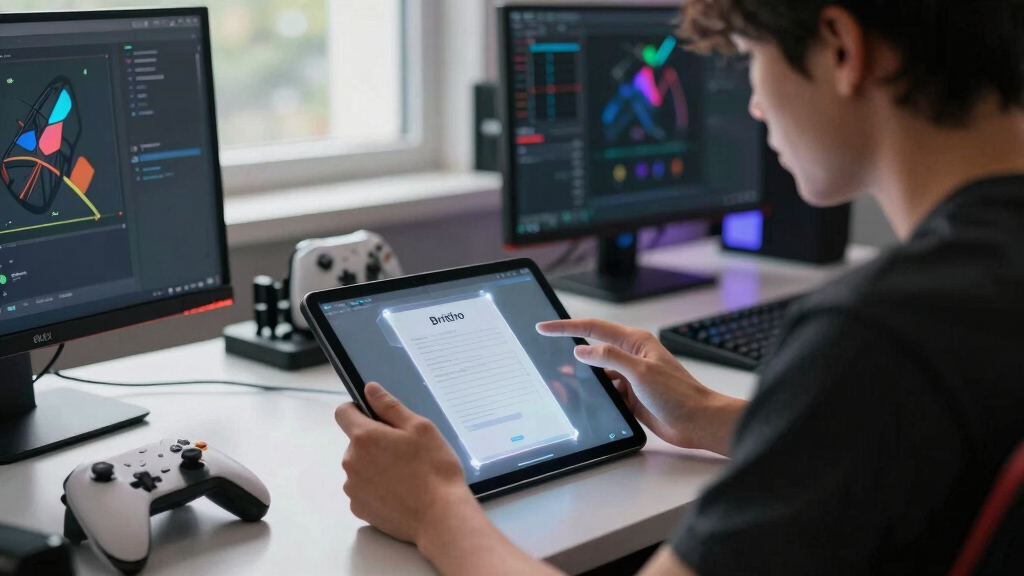
Thorsten Meyer AI says it has shipped Briefro’s public site and legal pages after earlier holding back the marketing site until the product was real. The product is pitched as a local-first AI document system that binds figures to data sources, locks approved language and generates files on user-owned hardware.
Thorsten Meyer AI says Briefro’s public site is now live, marking a shift from a previously refused marketing homepage to a working product pitch for local-first AI documents that keep sensitive data on user-owned hardware.
The source material describes Briefro as an AI tool for generating polished, branded decks, documents and proposals from prompts. Its central claim is that figures are bound to real datasets rather than pasted as static values, while approved legal and finance wording can be locked so the model fills blanks without rewriting controlled clauses.
Thorsten Meyer AI says the site shipped with a distinctive landing page, four German-law legal pages, eight live URLs returning HTTP 200, self-hosted fonts and zero third-party requests. The source also says the work was completed in an isolated worktree off main, committed as a single concern and merged by pull request so an existing broken feature branch did not affect the release.
The company frames Briefro around three commitments: running on customer hardware, binding charts and KPIs to actual data, and applying brand kits automatically across internal, client and public variants. Those statements are product claims from Thorsten Meyer AI; the source material does not include outside audits, customer case studies or pricing details.
A Document That Tells the Truth
A prompt becomes a polished, branded deck, document, or proposal — where every figure is bound to your actual data, the regulated language is locked, the export is reproducible, and the whole thing is generated on hardware you own.
re-upload the data and this figure updates itself. A pasted number drifts; a bound one can’t.
The v1 contract deliberately killed the marketing site — spec written, then archived with “do not build any of it now.” The app shipped; briefro.com served nothing; four legal pages 404’d to an empty /. Subtraction taken to its end — refused until the product was real. This is the work of finally building it.
main, staged as one clean concern, committed once, and merged by PR — the dirty branch never touched.stdin, never on the command line, so the password never hit the process list.- Rotate the FTP password. It was pasted into a setup transcript, so it’s flagged for rotation as a precaution — noted, not buried.
- One-command redeploy pending. A deploy script that bakes in the control-only-TLS font trick is still to be written.
- What-if is unmerged and broken. The scenario engine reaches the KPIs but not yet the chart’s value labels; it lives on a local branch until the bug is fixed.
- Frontier vs. core. The trust architecture — local generation, data-binding, locked clauses, deterministic export — is load-bearing; some features around it are still evolving.
Independent commentary, produced with AI assistance under human editorial oversight. The views are the author’s own and may change. This is not business, financial, legal, or technical advice. Briefro is an early-stage product; some capabilities are shipped while others are in development or unmerged. Legal-page references describe templates, not advice. Infrastructure identifiers and credentials have been deliberately omitted. Product, model, and company names are trademarks of their respective owners; mention does not imply endorsement.
Why Bound Documents Matter
Briefro is aimed at a common business risk: numbers and wording in finished documents can become detached from the systems they were meant to represent. A board deck, proposal or contract may look complete while containing stale metrics, outdated churn rates or edited clauses that no longer match approved language.
If Briefro performs as described, its value would be strongest for teams that handle sensitive financial, legal, research or client material and want AI-generated documents without sending source data to a vendor. The local-first design also speaks to intellectual property and privacy concerns, since Thorsten Meyer AI says contracts, decks and datasets do not leave the user’s machine or local network.
The product’s reproducible export claim matters for regulated or high-accountability work. The spotlight says a document that has been sent can be reconstructed and defended later, which would help teams explain where claims, charts and clauses came from.
secure local-first document editor
As an affiliate, we earn on qualifying purchases.
As an affiliate, we earn on qualifying purchases.
Homepage Built After Delay
The spotlight says Briefro’s first contract deliberately killed the marketing site: the specification was written, then archived with an instruction not to build it at that stage. According to the source, the app shipped while briefro.com served no real homepage and four legal-page paths returned to an empty root page.
The new release is presented as the delayed public face for the product. Thorsten Meyer AI calls it part of a built-in-public operator portfolio and positions Briefro as a local-intelligence instrument rather than a generic AI template tool.
The same source says the release process included credential safeguards. Credentials were git-ignored and checked before commits, then provided to the uploader through a configuration file on standard input so the password did not appear in the process list. It also describes an FTPS issue in which binary fonts initially uploaded as zero-byte files over a fully encrypted data channel; the workaround kept TLS on the control channel while sending public font bytes without data-channel encryption.
“A prompt becomes a polished, branded deck, document, or proposal.”
— Thorsten Meyer AI
Audits And Roadmap Still Open
Several details remain unverified from the source material. It is not yet clear whether Briefro’s privacy, local-generation and deterministic-export claims have been independently tested, and the source does not provide customer deployments, benchmark results, supported file formats or pricing.
Some features are still described as incomplete. The what-if scenario engine is marked as in development and unmerged; according to the source, it reaches KPIs but not chart value labels. A one-command redeploy script also remains pending, and the FTP password is flagged for rotation after being pasted into a setup transcript.
Password Rotation And Redeploy Script
The next stated steps are operational rather than promotional: rotate the FTP password, write a one-command redeploy script that preserves the font-upload workaround, and fix the what-if scenario engine before merging it from a local branch.
Readers should watch for evidence that the shipped trust model works outside the product spotlight: repeatable exports, data refresh behavior, locked-clause handling and any independent validation of the local-first privacy claims.
Key Questions
What is the confirmed development?
Thorsten Meyer AI says Briefro’s public homepage and related legal pages are now live after the marketing site was previously held back.
What does Briefro claim to do?
It is described as an AI document system that generates branded decks, documents and proposals while binding figures to source data, locking approved clauses and running on user-owned hardware.
Has the product been independently verified?
The provided source material does not include independent audits, customer references, benchmark data or outside verification of the privacy and reproducibility claims.
What parts are unfinished?
The source says the what-if scenario engine is still broken on a local branch, a redeploy script remains to be written and an FTP password should be rotated as a precaution.
Source: Thorsten Meyer AI
Fall Picks
fall essentials
As an affiliate, we earn on qualifying purchases.