
TL;DR

Play games on Amazon Luna for your game nights, included with Prime
- A rotating selection of games, no download needed
- Play on TV, laptop or phone
- Fast, free delivery for your gear, too
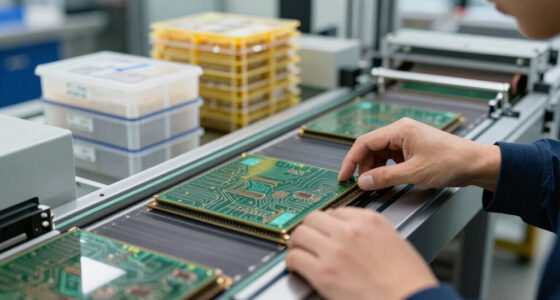
Apple is reportedly seeking U.S. government approval to buy memory from China’s CXMT after raising Mac and iPad prices because of a global memory shortage. The development matters because Apple still has options: U.S. supplier Micron, access in Washington and a possible China fallback. Europe lacks a major domestic DRAM or HBM maker.
Apple is reportedly lobbying U.S. officials to allow purchases of memory chips from China’s CXMT, a Pentagon-listed company, after Mac and iPad price increases tied to the global memory shortage. The move matters beyond Apple because it shows that even the world’s strongest hardware buyer is under pressure, while Europe lacks a comparable fallback.
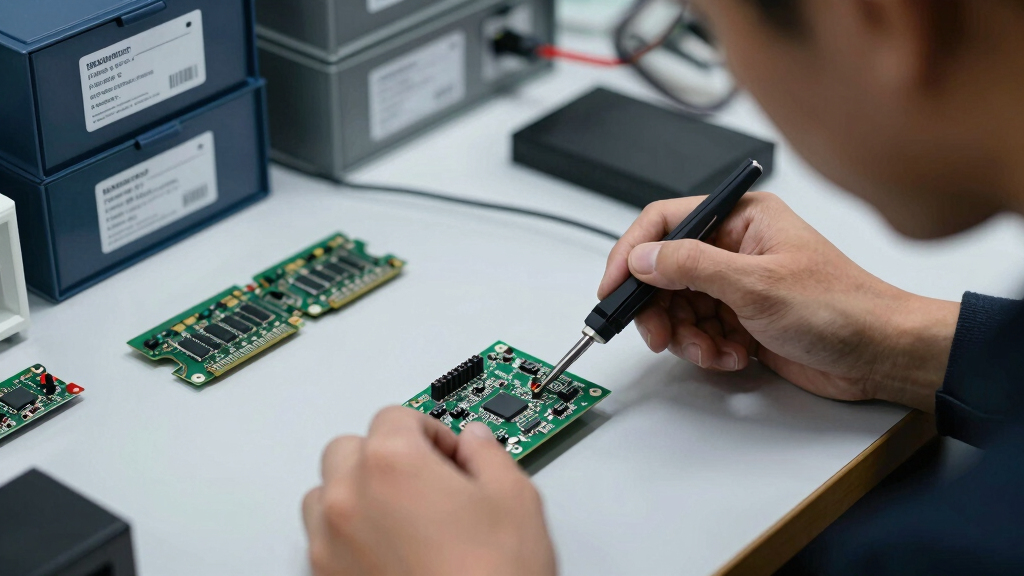
The Financial Times reported, according to coverage cited by 9to5Mac and Engadget, that Apple is seeking clearance to buy DRAM from ChangXin Memory Technologies. CXMT appears on the U.S. Defense Department’s 1260H list of Chinese military companies, although that designation is not the same as a full Commerce Department ban.
The reported request followed Apple’s June 25 price increases on Macs and iPads, which the company linked to rising memory and storage costs. The shortage has been driven by demand from AI data centers, where high-bandwidth memory and advanced DRAM are being reserved by major cloud and accelerator buyers. Current suppliers include Micron, Samsung and SK Hynix.
For Europe, the confirmed gap is stark. The European Union makes less than 10 percent of global semiconductors by value, according to the European Commission, and has no European DRAM or HBM maker at the scale of the leading suppliers. That leaves European device makers, cloud companies and industrial buyers as price takers in a market now shaped by AI demand.
Apple greift nach China-Speicher. Europa hat nicht einmal diese Option.
Der Speicher-Engpass legt Amerikas Abhängigkeit offen — und Europas weit brutaler. Apple hat einen heimischen Zulieferer, politisches Gewicht und die China-Option. Europa hat keinen eigenen Speicher, keinen Sitz am Tisch, keinen Hebel auf das, was zählt.
- EU fertigt < 10 % der Halbleiter weltweit
- Praktisch kein DRAM, kein HBM aus Europa
- 3–4 Speicherhersteller weltweit — keiner europäisch
- Reiner Preisnehmer: Speicher ~4× in 3 Quartalen
- ASML: EUV-Monopol — kein Spitzenchip ohne
- Zeiss: Präzisionsoptik, weltweit konkurrenzlos
- imec · CEA-Leti · Fraunhofer: Spitzenforschung
- Infineon, NXP, STMicro: Automotive · Leistung · SiC
Der Engpass ist ein Souveränitätstest — Europa fällt bei der Versorgung durch, hält die Hebelmacht aber in der Hand. Wenn sich selbst Apple nicht freikaufen kann, ist Europas Antwort nicht, sich einzukaufen, sondern zweigleisig: die einzigartigen Engstellen konsequent als Hebel nutzen — und die Abhängigkeit dort senken, wo es ohne Brüssel geht: lokal-first, offene Gewichte, Quantisierung, richtig dimensionierte Hardware. Den 20-%-Traum begraben, das Eigene verteidigen, weniger brauchen.
Apple’s Options Expose Europe’s Gap
Apple still has leverage that Europe does not. It can buy from Micron, press its case in Washington and, if officials allow it, use China’s CXMT as another source. Europe has no equivalent domestic memory supplier and no direct claim on the production lines that set prices.
The point is not that Europe has no semiconductor strength. ASML holds a central position in EUV lithography, Zeiss supplies unmatched precision optics, and imec, CEA-Leti and Fraunhofer remain major research centers. European chipmakers such as Infineon, NXP and STMicroelectronics are strong in automotive, power and silicon carbide chips. But those strengths do not solve a shortage in commodity DRAM or HBM.
As an affiliate, we earn on qualifying purchases.
2030 Chip Goal Looks Distant
The EU Chips Act, adopted in 2023, set a goal of lifting Europe’s global chip share to 20 percent by 2030, backed by about 43 billion euros in public and private funding. The European Court of Auditors has since described that target as very unlikely to be reached, with the Commission’s own figures putting Europe closer to 11.7 percent.
ASML has estimated that reaching the 20 percent target would require more than 250 billion euros, according to the source material. That makes near-term self-sufficiency in leading-edge production unlikely. A more realistic path for Europe is to defend equipment chokepoints, invest in advanced packaging and new memory-adjacent architectures, and reduce demand through local-first AI, quantization and right-sized hardware.
“The EU is almost completely dependent on the United States and Asia for advanced semiconductor supply.”
— European Commission
Washington Approval Remains Unsettled
It is not yet clear whether U.S. officials will approve Apple’s reported request, how much CXMT supply Apple could obtain, or which Apple products would use those chips if approval were granted. Apple has not publicly laid out volumes, pricing or a timeline in the source material.
It is also unclear how long the memory price spike will last. Counterpoint data cited by the source material put memory prices at roughly four times higher over three quarters, with steeper rises in some segments. New capacity from Samsung, SK Hynix and Micron takes years to build.
Europe Faces A Memory Test
The next marker is whether Washington grants Apple clearance to buy from CXMT or blocks the request on national-security grounds. In Europe, the policy question is whether Brussels shifts from broad market-share goals toward specific memory resilience, including advanced packaging, strategic purchasing and lower memory demand. For buyers, the near-term issue is simpler: higher component costs may keep moving into device prices.
Key Questions
Did Apple get approval to buy CXMT memory chips?
No approval has been confirmed in the source material. Apple is reported to be seeking U.S. clearance, and the decision remains with Washington officials.
Why is CXMT politically sensitive?
CXMT is a Chinese DRAM maker listed by the U.S. Defense Department under 1260H, which identifies Chinese military companies. That creates political and security risk even though the listing is not a total trade ban.
Does Europe make DRAM or HBM at scale?
No major European supplier competes with Samsung, SK Hynix, Micron or CXMT in DRAM or high-bandwidth memory. Europe has strength in equipment, optics and some chip categories, but not in large-scale memory production.
Why does this affect consumers?
Memory is used in phones, tablets, laptops and AI servers. When supply tightens and prices rise, device makers may pass higher component costs into retail prices, as Apple did with Macs and iPads.
Source: Thorsten Meyer AI
Halloween Picks
halloween
As an affiliate, we earn on qualifying purchases.