TL;DR

Play games on Amazon Luna for your game nights, included with Prime
- A rotating selection of games, no download needed
- Play on TV, laptop or phone
- Fast, free delivery for your gear, too
Arcade-style pinball machines are physical, coin-operated cabinets with flippers, bumpers, and ramps — and they’re still being built today by companies like Stern Pinball, Jersey Jack, and Spooky Pinball. New machines cost roughly $6,000–$13,000 depending on the tier (Pro, Premium, or LE), while solid used machines run $3,000–$8,000. The LCD pinball evolution, online features like Stern’s Insider Connected, and the rise of virtual pinball have made 2020s pinball more alive than it’s been since the early 1990s.
A single pinball machine contains more than 2,500 parts, weighs over 400 pounds, and has survived video games, the internet, and smartphones — all while flipping along since 1947, when Humpty Dumpty introduced the first flippers [1].
Pinball was supposed to die in the ’90s. It didn’t. Barcades are packed, competitive leagues run on IFPA rankings, and Stern Pinball can barely build machines fast enough. This article gives you an overview for a smart buying and playing decision: what arcade-style pinball machines actually are, who builds them, what they cost, and how they’ve changed.
Arcade-style pinball machines are physical, coin-op cabinets with 2,500+ parts — distinct from virtual cabinets (VPX, AtGames) and pinball video games (Pinball…
Stern Pinball dominates modern production, with Jersey Jack, Chicago Gaming (classic remakes), and Spooky filling premium and niche niches; modern runs are jus…
The tier ladder runs roughly Pro ($6,000–$7,000), Premium ($8,000–$10,000), and LE ($9,000–$13,000+); solid used machines go for $3,000–$8,000.
Modern machines feature LCD screens, internet-connected profiles (Stern Insider Connected), and downloadable code updates that add new modes after purchase.
Use PinballMap.com to find public machines and play extensively before buying — machines weigh 400+ pounds and expect about an hour of maintenance per month.
What Arcade-Style Pinball Machines Actually Are (In Plain English)
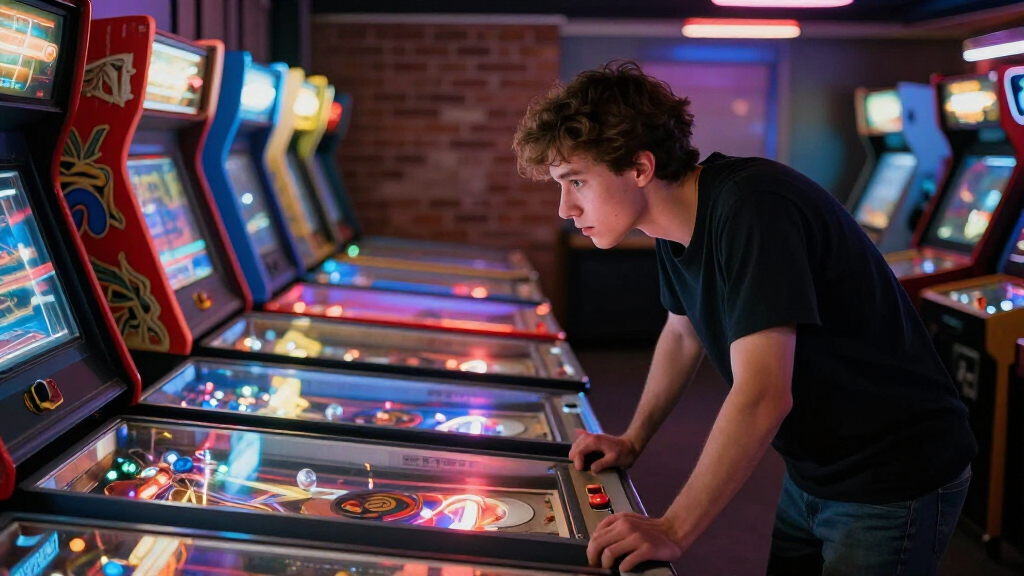
Arcade-style pinball machines are physical, coin-operated cabinets where you use two flippers to keep a steel ball alive across a slanted playfield full of bumpers, ramps, and targets. Unlike a video game, everything you see is real: the ball has actual weight, the thwack of a flipper is mechanical, and gravity never updates its software. The tilt mechanism — which punishes you for shaking too hard — has been the sport’s referee since the 1940s.
The machines split into three families, and the family matters because it determines everything from how a machine plays to how hard it is to repair. Electromechanical (EM) machines, built until the late 1970s, run on relays, switches, and rotating score reels — they sound like a sewing machine having a good time. They’re slower and simpler, but many collectors prize them precisely because any problem can be fixed with a screwdriver and patience: no code, no boards, just visible moving parts. Solid-state (SS) machines swapped that for circuit boards and digital displays, which enabled deeper rule sets and saved the game from oblivion when video arcades arrived — but it also meant repairs required electronics knowledge. And today’s modern digital machines carry full-color LCD screens, complex rule sets, and internet connections, blurring the line between pinball and software.
Here’s a common mix-up worth clearing up: the difference between arcade pinball, home virtual pinball cabinets, and pinball video games is real, and it matters most when you’re deciding where your money goes. Arcade machines are the genuine article, with unmatched physics — nudging, dead bounces, and ball spin simply can’t be faked. Virtual cabinets (like an AtGames Legends Pinball or a custom VPX build) mimic the shape but display simulated play on a screen; they trade authenticity for variety, giving you hundreds of tables in one footprint. And games like Pinball FX are just pinball-flavored video games — fun, but no substitute for a ball you can almost feel through the flipper buttons. The tradeoff in a nutshell: real machines cost more and need space and maintenance; virtual ones are cheaper and flexible but approximate the core experience.
Who Still Builds Pinball Machines (and Why It’s Mostly Five Companies)
Stern Pinball is the last major American manufacturer, and it carries the industry. Recent titles like Guardians of the Galaxy, Foo Fighters, Jaws, and Venom show their formula: licensed themes sell machines [1]. That formula isn’t a quirk — it’s survival economics. A licensed theme pulls in casual buyers who’d never consider an abstract pinball, which keeps production lines running, which keeps parts suppliers and skilled playfield assemblers in business. When Stern nearly went under in the early 2000s, it was licensed titles that brought the money back. Jersey Jack Pinball builds premium, feature-stuffed machines like Wizard of Oz, Willy Wonka, and The Godfather — think of them as the luxury arm of pinball. Their importance goes beyond their own sales: they forced Stern to innovate on screens, lighting, and build quality, raising the bar for the whole industry.
Chicago Gaming Company does something clever: it remakes golden-age classics like Medieval Madness and Attack from Mars, machines that originally sold for thousands used because so few were built. This matters because it solves a real problem — the most beloved games of the ’90s exist in fixed, shrinking supply, and remakes let new players get that experience without bidding against collectors. Spooky Pinball runs smaller batches — often under 1,000 units — with horror and pop-culture themes; that scarcity is deliberate, making their machines near-instant collectibles. Newer players like Multimorphic (P3) and Pedretti are pushing modular designs and fresh ideas [1] — Multimorphic’s swappable playfields matter because they attack pinball’s biggest cost problem: why buy a whole $9,000 cabinet for each new game?
The scale tells the story. In 1992, The Addams Family sold over 20,000 units — still the all-time record. Modern production runs are typically 500–5,000 units per title, which is why popular machines hold value so stubbornly [1]. The implication for you as a buyer is direct: small runs mean a sought-after title rarely gets cheaper, so waiting for a discount is usually a losing strategy.
The LCD Pinball Evolution: How Machines Got Smart in the Last 15 Years
The LCD pinball evolution replaced the orange dot-matrix displays (DMDs) of the ’90s with full-color screens that play animations, show progress toward objectives, and even taunt you. Jersey Jack’s Wizard of Oz (2013) was the breakthrough — its 20-inch LCD felt like a small cinema sitting in the backbox. The change matters more than aesthetics: DMDs could only show crude stick figures and scores, which capped how deeply a rule set could communicate itself to a new player. Full-color screens let designers explain modes, track progress visually, and tell stories — which is exactly why modern pinball is far more approachable to beginners than the cryptic machines of the ’90s ever were.
The bigger change is connectivity. Stern’s Insider Connected system lets you scan a QR code at the machine, build a player profile, and track scores and achievements across every connected machine — like an arcade loyalty card crossed with Xbox achievements. The strategic implication for operators is huge: machines can now identify and reward repeat players, which keeps a location’s machine earning. For players, it adds a persistent identity to a game that used to forget you the moment the ball drained. Manufacturers also now push code updates over the internet, and seasonal “code drops” can add new modes to a game you already own. This changes the ownership math: a machine you bought in 2022 can genuinely play like a different game in 2025 — modern machines depreciate less like furniture and more like a subscription that improves over time. The tradeoff is complexity; more software means more potential bugs at launch, which is why savvy buyers often wait six months for a title’s code to mature.
Meanwhile, virtual pinball exploded. Platforms like VPX, Pinball FX, and the AtGames Legends Pinball bring hundreds of simulated tables home for a fraction of the cost. They’re impressive — good haptics, real cabinet shapes — but purists will tell you the physics still isn’t quite the sharp edge of the real thing, and that gap matters most at higher skill levels, where subtle nudges and live ball catch separate good players from great ones.
What Pinball Machines Cost: Pro, Premium, and LE, Compared
New machines follow a three-tier pricing ladder, and the gaps are big. Here’s how the tiers stack up, using typical current pricing [1]:
| Option | Typical Price | What You Get | Best For |
|---|---|---|---|
| Used EM/SS machine | $300–$2,000 | Classic mechanics, simpler rules, project machines common | Tinkering, nostalgia |
| Modern used machine | $3,000–$8,000 | Full-featured recent titles, depreciated | First home machine |
| New Stern Pro model | $6,000–$7,000 | Same rules as higher tiers, plainer playfield | Players on a budget |
| New Premium model | $8,000–$10,000 | Extra toys, ramps, and playfield features | Enthusiasts |
| Limited Edition (LE) | $9,000–$13,000+ | Numbered build, upgraded cabinet, collectibility | Collectors |
Post-pandemic demand pushed prices up hard — LE machines that cost $8,500 in 2019 regularly crest $12,000 now [1]. The upside: scarcity means good machines hold value. Buy a popular title used at a fair price and you can often resell it years later for close to what you paid.
If you’re buying your first machine, buy the game you love playing, not the one the forums call a good investment. A machine you’ll flip for 500 hours is worth more than a collectible gathering dust.
Your 5-Step Checklist Before Buying a First Pinball Machine
Buying a pinball machine is closer to adopting a car than buying a TV — it’s heavy, it needs occasional care, and it loves attention. Here’s how to do it right:
- Play before you pay. Find machines near you on PinballMap.com and play at least a dozen titles. Rule sets vary wildly.
- Set your real budget. Include $200–$500 for delivery help and initial shopping-out (rubbers, balls, bulbs).
- Inspect for water damage and battery corrosion. Lift the playfield, check the boards, and ask about service history.
- Plan the move. Machines weigh 400+ pounds. Remove the head, remove the legs, use an appliance dolly, and never carry one alone [1].
- Budget 30–60 minutes of light maintenance per month. Clean the playfield, wax it every few months, and replace rubbers when they crack.
Parts are rarely a problem — pinball has one of the best hobby supply networks in collecting, with vendors stocking parts for machines built 50 years ago.
Where to Actually Play Pinball Right Now
You don’t need to own a machine to enjoy pinball — you need a map. PinballMap.com tracks thousands of public machines worldwide, crowd-maintained by players. Barcades have become the engine of the comeback: a Wednesday league night at a local bar has replaced the smokey arcade of the ’80s.
Competition is more accessible than ever. The IFPA ranks players worldwide, and local tournaments usually welcome beginners with a cheap entry fee. One night of tournament play will teach you more about aiming flipper shots than a month of solo games — the pressure alone sharpens you.
According to the Replay Foundation and PAPA, tournament play has grown steadily alongside the barcade boom [1]. The scene is genuinely social, and unlike online gaming, your opponents are standing right next to you.
Frequently Asked Questions
How much does a real pinball machine cost?
Used electromechanical or solid-state machines run $300–$2,000, modern used machines $3,000–$8,000, and new machines $6,000–$13,000+ depending on tier (Pro, Premium, or Limited Edition). Budget an extra $200–$500 for moving and initial maintenance supplies.
All three tiers share the same core rules and software. Pro models have a plainer playfield with fewer toys, Premium models add extra mechanisms and features, and Limited Edition models are numbered builds with upgraded cabinets and trim aimed at collectors.
Are virtual pinball machines worth it instead of real ones?
Virtual cabinets like AtGames Legends Pinball or custom VPX builds cost far less and offer hundreds of tables, making them great for casual play and small spaces. But the physics of a real ball — bounces, nudging, dead bounces — still isn’t perfectly replicated, so serious players treat them as a supplement, not a replacement.
How much maintenance does a pinball machine need?
Expect about 30–60 minutes per month: wiping the playfield, replacing worn rubbers, and occasionally waxing. Parts availability is excellent thanks to a strong hobby supply network, including parts for machines built decades ago.
Which pinball machines hold their value best?
Licensed, popular titles in small production runs hold value best — scarcity matters since modern runs are only 500–5,000 units. The Addams Family (1992, 20,000+ units) remains the best-seller ever, and classic remakes from Chicago Gaming have also held strong resale prices.
Conclusion
Here’s the one thing to remember: pinball never died — it just moved from arcades to barcades, home collections, and connected machines that update like software. Whether you drop a quarter into a local machine or $7,000 on your first cabinet, the same physics rule applies: a real steel ball, real gravity, and no pause button.
Find your nearest machine on PinballMap.com this week and play three games. One drained ball later, you’ll understand why people still dedicate basements to these 400-pound machines.
Evergreen bestsellers Picks
bestsellers
As an affiliate, we earn on qualifying purchases.