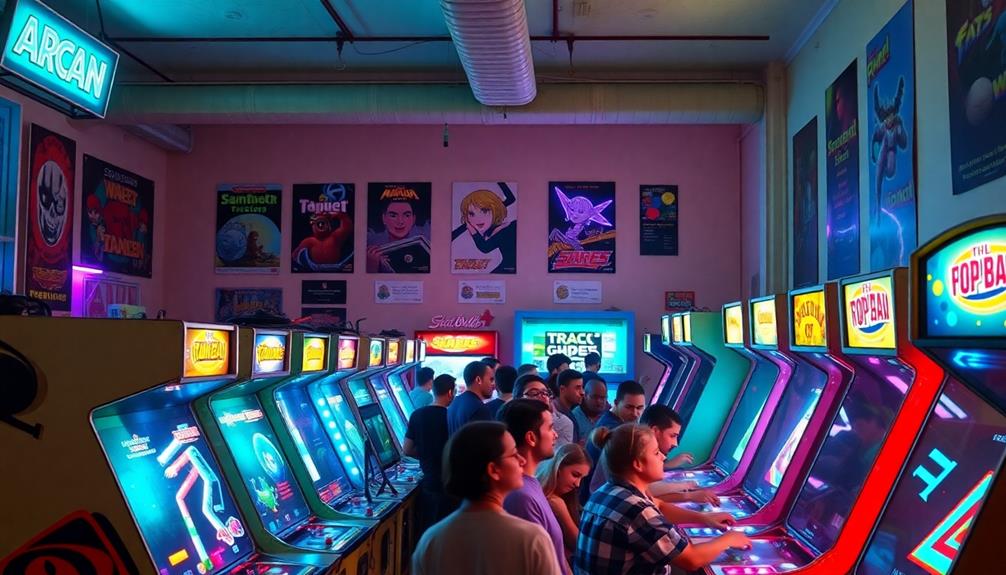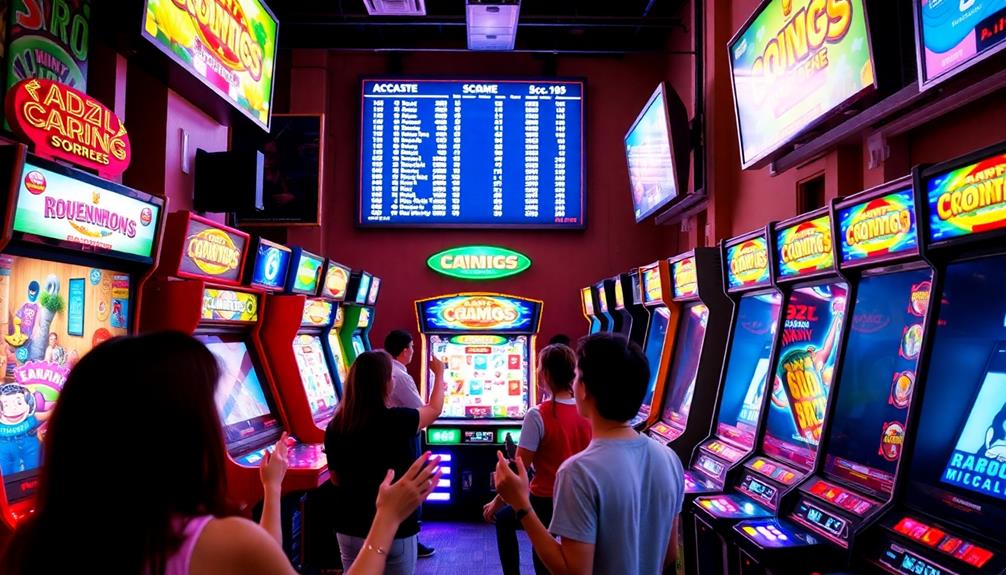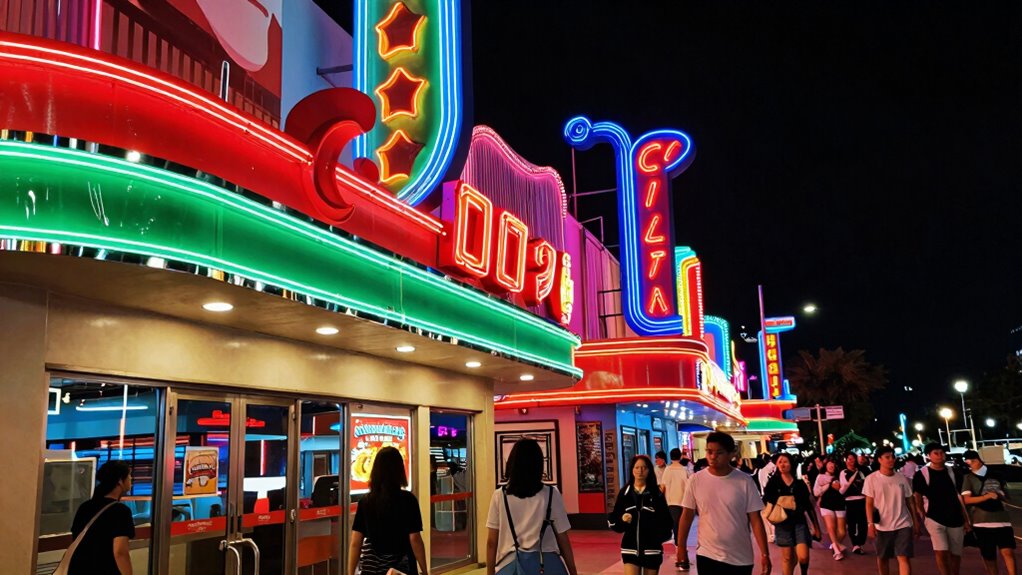
You might notice how arcade marquees evolved from simple signs to vibrant advertisements by using bright neon lights, bold colors, and eye-catching designs. These features helped attract attention in busy city streets, making them effective tools for promoting arcade games and entertainment venues. Over time, innovations like dynamic displays and interactive elements turned marquees into cultural icons that shaped urban energy and identity. If you’re curious about how they continue to influence advertising today, keep exploring.
Key Takeaways
- Early arcade marquees used bold colors and illuminated signs to attract passing pedestrians and promote entertainment venues.
- Technological innovations like neon lights enhanced visual appeal, making marquees eye-catching advertising tools.
- Dynamic and interactive displays created immersive experiences, drawing more attention to arcades and entertainment venues.
- Marquees became cultural icons, symbolizing urban excitement and leisure, reinforcing their advertising impact.
- Preservation of historic marquees maintains their role as nostalgic, recognizable city landmarks that continue to advertise and attract visitors.

Have you ever noticed how arcade marquees catch your eye amid busy city streets? They’re more than just flashing signs; they’re a vibrant part of urban landscapes, with a rich history and cultural significance that goes beyond mere advertising. The historical evolution of arcade marquees reveals how they transformed from simple signs into powerful marketing tools. In the early 20th century, these marquees were often ornate, illuminated displays designed to attract passersby to gaming arcades and entertainment venues. Over time, as technology advanced, the use of neon lights and dynamic displays allowed marquees to stand out even more, becoming icons of city nightlife. This evolution was driven not only by changes in advertising techniques but also by the desire to create memorable landmarks that drew people in, making the marquees themselves part of the city’s identity.
The cultural impact of arcade marquees is equally significant. They became symbols of the excitement and energy of urban life, embodying the spirit of entertainment and innovation. These marquees didn’t just promote games or arcades; they became cultural touchstones that reflected the era’s social dynamics. During the mid-20th century, they contributed to the rise of youth culture, serving as visual signals of modernity and leisure. As a result, they helped shape the way cities presented themselves—bright, lively, and inviting. Beyond their advertising purpose, arcade marquees fostered a sense of community, acting as meeting points and landmarks that locals and tourists alike came to recognize and remember. Their designs often incorporated bold colors, flashy lights, and eye-catching lettering, making them unforgettable symbols of the bustling urban environment. Additionally, the technological advancements in lighting and display methods enhanced their visual appeal, and interactive displays created immersive experiences that continued to captivate audiences. These innovations also contributed to their status as cultural icons, blending entertainment with art and design. Furthermore, their visual prominence helped solidify their role as memorable city landmarks, making them integral to urban identities.
Today, the importance of arcade marquees as advertising tools is still evident, even as digital marketing takes center stage. Their cultural impact persists because they evoke nostalgia and serve as reminders of a bygone era when city streets were illuminated by the promise of entertainment. They’ve evolved from simple promotional signs into cultural icons that celebrate the history of leisure and urban life. Whether restored or preserved, these marquees continue to attract attention, proving their enduring relevance. In summary, their journey from functional signs to cultural symbols highlights their essential role in shaping both the commercial landscape and the collective memory of city dwellers. As you walk past these glowing displays, remember—they’re more than advertising; they’re stories of cultural evolution and urban history, shining brightly as testaments to a lively, dynamic past.

Kavaas Arcade Neon Sign, LED Arcade Signs for Arcade Room Decor | Retro Neon Sign for Boys Bedroom, Gaming Wall decor – Best Arcade Gifts for Teenage Boys, Christmas
【UPGRADE ARCADE TO THE NEXT LEVEL!】Easily make your arcade gaming cave the most epic entertainment center with this…
As an affiliate, we earn on qualifying purchases.
As an affiliate, we earn on qualifying purchases.
Frequently Asked Questions
When Did Arcade Marquees First Start Being Used for Advertising?
You might notice arcade marquees started being used for advertising around the early 20th century, especially as vintage nostalgia grew. These bright, eye-catching signs boosted brand visibility, drawing attention from passersby. As arcades gained popularity, businesses recognized the value of marquee advertising to attract customers. Over time, these marquees evolved from simple signs to iconic symbols of entertainment and marketing, making them a lasting part of advertising history.
Are Arcade Marquees Still Popular in Modern Advertising Campaigns?
You might think arcade marquees are outdated, but they’re still relevant in modern advertising, especially with digital integration. You can leverage their nostalgic appeal to boost consumer engagement, making your campaigns stand out. While digital ads dominate, arcade marquees add a tactile, immersive element that captures attention uniquely. Their versatility and ability to connect emotionally with audiences guarantee they remain a valuable tool, even in today’s tech-driven landscape.
What Materials Were Traditionally Used for Arcade Marquee Signs?
Traditionally, arcade marquee signs used materials like metal for the framework and glass for the face panels. Neon lighting was a popular choice to illuminate vintage signage, creating eye-catching displays that attracted customers. You’d see vibrant colors and glowing effects that made arcade signs stand out, especially at night. These materials combined durability with visual appeal, helping arcade marquees become iconic symbols of entertainment and advertising in their era.
How Did the Design of Arcade Marquees Influence Other Advertising Mediums?
You’ll find that the vibrant design of arcade marquees, especially their neon lighting, revolutionized advertising. In fact, neon signs increased business visibility by up to 50%. Their bold, colorful visuals established strong visual branding that influenced billboards, storefronts, and later digital ads. This eye-catching style became a blueprint for advertising mediums, showing how striking visual elements can attract attention and leave lasting impressions on audiences everywhere.
What Are Some Famous Examples of Arcade Marquees as Advertising Icons?
You’ll recognize iconic vintage neon arcade marquees like the Coney Island’s Luna Park, which became symbols of entertainment and branding evolution. These marquees served as advertising icons, drawing crowds with their bright, colorful displays. You might also think of the famous signs for Times Square arcades, showcasing how vintage neon played a vital role in shaping modern branding. Their bold designs helped turn arcade marquees into timeless symbols of fun and advertising.

JASZDOT 32/43/55/65 Inch Digital Signage Display, LCD Screen Advertising Display Kiosk Interactive Totem Floor Standing Auto AD Player with USB/HDMI/WiFi Android OS (32'' Touch Screen)
【Ultra-Clear Display Touch Panel】Our digital signage kiosk features a Ultra-Clear Display LCD touch panel with IPS technology, offering…
As an affiliate, we earn on qualifying purchases.
As an affiliate, we earn on qualifying purchases.
Conclusion
So, next time you see a vibrant arcade marquee, ask yourself—did they just aim to attract players, or were they cleverly advertising something bigger? These bright signs did more than just beckon gamers; they turned arcades into walking billboards that captured attention and built excitement. By blending entertainment with marketing, arcade marquees revolutionized how businesses promoted themselves. Isn’t it fascinating how a simple sign could do so much more than just advertise?

Tokyo Landmark Neon Sign Japanese Neon Light with USB Powered Tokyo Sign Vintage Style LED Sign for Japanese Restaurant Shop Window Boutique Decoration Cyberpunk Atmosphere Gift
Size & Multiple Brightness Modes: Japanese Tokyo Neon Sign Size 11.81*16.14Inch(30cm*41cm), dimmable switch, press the "+"/" – "button,…
As an affiliate, we earn on qualifying purchases.
As an affiliate, we earn on qualifying purchases.

Arcade1Up PAC-Man Deluxe Arcade Machine for Home – 5 Feet Tall – 14 Classic Games
Join the legacy: Library of 14 iconic games, including Dig Dug, Galaga, Galaxian, Rompers, PAC-Mania, Mappy, and more!
As an affiliate, we earn on qualifying purchases.
As an affiliate, we earn on qualifying purchases.