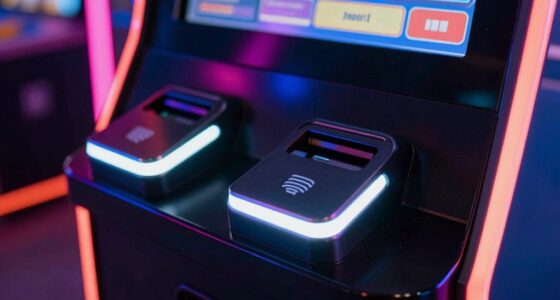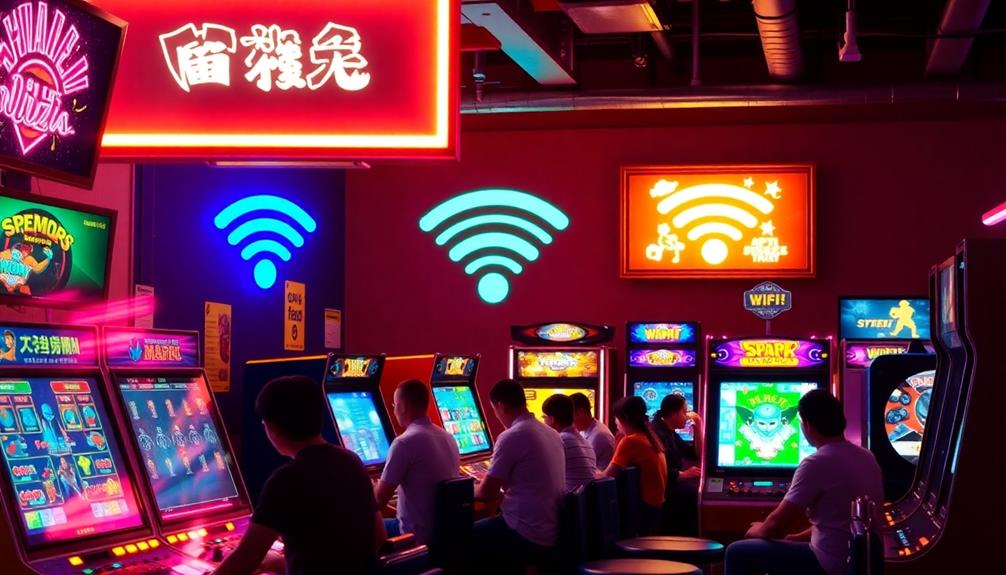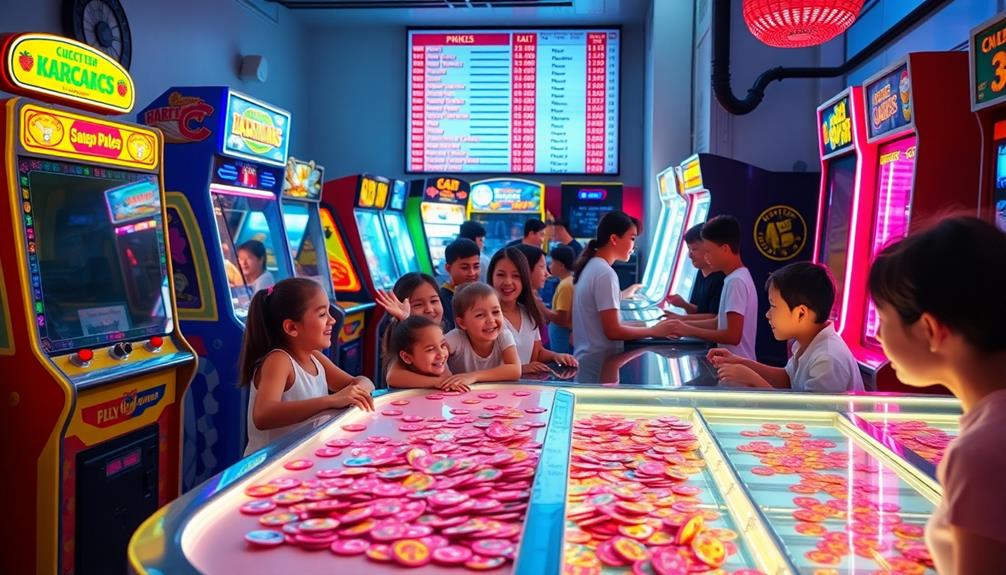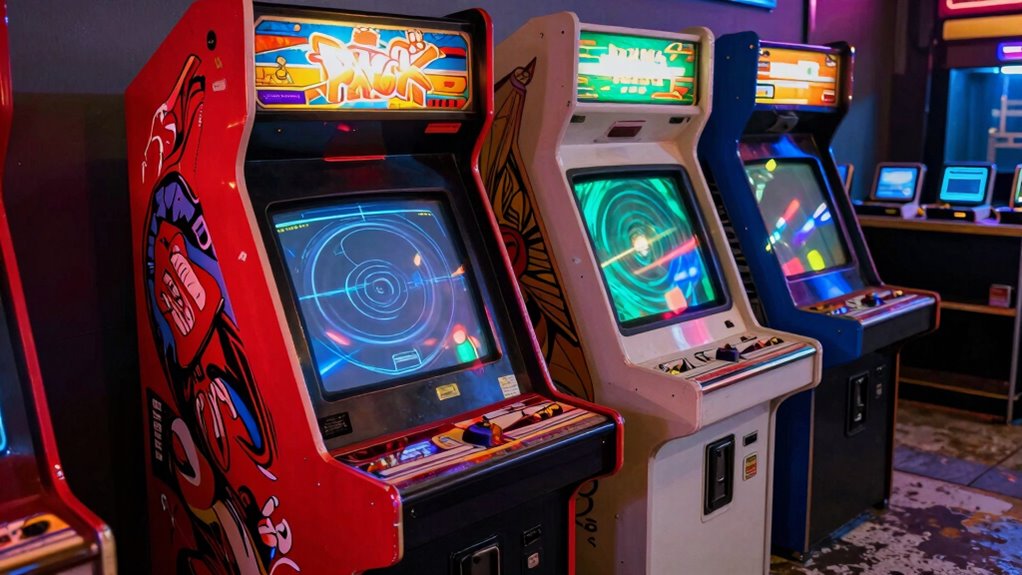
Arcade machines feel more permanent than consoles because they’re built as physical landmarks in social spaces, designed to last and withstand heavy use. Their bold, colorful designs and sturdy construction make them visually striking and durable, creating a strong sense of place. Unlike consoles, which are portable and temporary, arcades become symbols of gaming culture and community hubs. If you keep exploring, you’ll discover how these qualities shape their lasting cultural impact.

Play games on Amazon Luna for your game nights, included with Prime
- A rotating selection of games, no download needed
- Play on TV, laptop or phone
- Fast, free delivery for your gear, too
Key Takeaways
- Arcade machines are built with heavy, durable materials, emphasizing longevity and physical permanence.
- Their bold, colorful designs and flashing lights make them visually striking landmarks.
- Designed for high traffic, they are reinforced to withstand extensive, continuous use over years.
- They serve as social hubs, fostering community engagement and shared gaming experiences.
- Their fixed placement and iconic presence embed them as cultural symbols of gaming history.
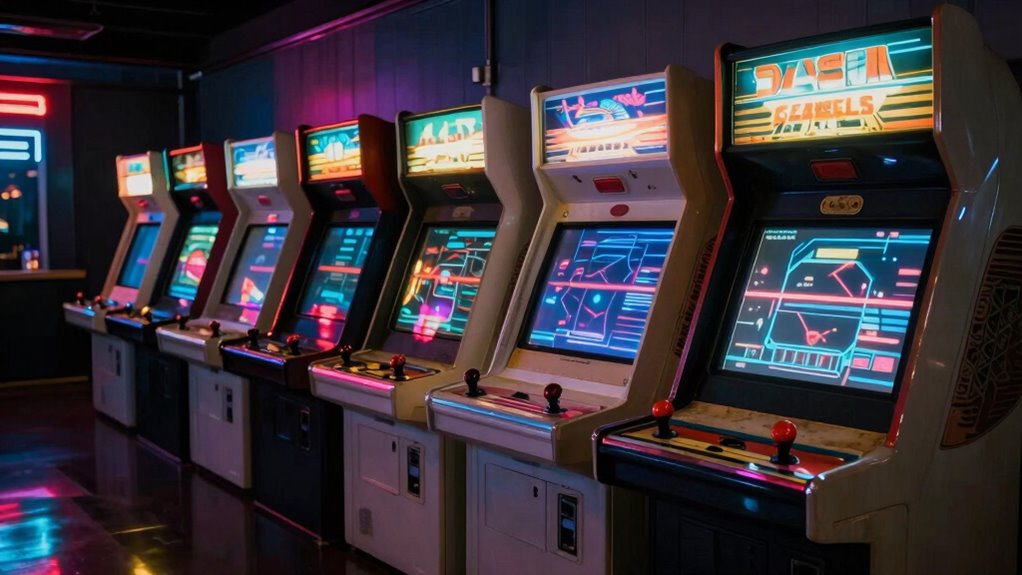
When it comes to gaming, you might wonder whether arcade machines or home consoles offer the better experience. Arcade machines tend to feel more permanent, and that’s partly because of their distinct design and cultural presence. These machines are built with a sense of purpose and durability, often crafted from heavy materials that make them stand out in any room or arcade. Their retro aesthetics evoke nostalgia, reminding you of a time when gaming was about more than just pixels on a screen—it was an event. The bold, colorful cabinets, flashing lights, and unique artwork make arcade machines visually striking, giving them a sense of permanence that consoles often lack. They’re not just devices; they’re symbols of gaming history that can’t be easily moved or replaced.
Arcade machines are built to last, with bold designs that create a lasting, communal gaming experience.
Beyond their physical presence, arcade machines foster social gaming in a way that consoles often struggle to replicate. When you approach an arcade cabinet, it’s almost impossible not to feel drawn into a communal experience. You might be waiting your turn, cheering on friends, or competing head-to-head in a game that demands more than just quick reflexes—it calls for shared energy and collective enthusiasm. This social aspect makes arcade machines feel like fixed fixtures in a space, almost like community landmarks rooted in the fabric of social life. The shared experience turns gaming into an event, making it feel more meaningful and lasting. Additionally, their durability and design contribute to their feeling of permanence, ensuring they can withstand extensive use over many years. This durability is reinforced by their robust construction, which is often designed to endure continuous use in busy arcade environments. Moreover, their cultural significance helps cement their place as enduring icons in gaming history, reflecting a broader cultural impact that extends beyond just the games themselves.
Home consoles, on the other hand, tend to be more portable and less visually imposing. They sit quietly in a corner, easily moved or tucked away. While they excel at convenience and versatility, they lack the same sense of permanence. When you look at a console, it’s easy to see it as a temporary setup, something you can pack up or replace without much fuss. The social gaming experience on consoles is different—more private, often limited to a small circle. It’s convenient, but it doesn’t carry the same weight as gathering around an arcade cabinet, where the environment itself encourages a sense of community and tradition.
As an affiliate, we earn on qualifying purchases.
Frequently Asked Questions
How Do Arcade Machines Influence Local Gaming Communities?
Arcade machines boost local gaming communities by fostering community engagement and creating shared experiences. You find that they bring people together, encouraging social interaction and teamwork. Their nostalgic appeal attracts different generations, strengthening bonds through shared memories. By serving as social hubs, arcade machines help maintain a lively, connected community where players can connect over their love for gaming, making these machines feel more permanent and integral to local culture.
What Maintenance Challenges Do Arcade Machines Face Over Time?
You face several maintenance challenges with arcade machines over time. You need to adhere to regular maintenance schedules to prevent issues, like dust buildup or hardware wear. Component replacements, such as screens, buttons, or internal circuitry, are common as parts age or break. Ensuring these machines stay operational requires consistent attention, timely repairs, and sometimes upgrading components to keep the gaming experience smooth and engaging for players.
Are Arcade Machines More Durable Than Modern Gaming Consoles?
You might think arcade machines are more durable than modern consoles, and there’s some truth to that. Their hardware durability and design longevity often surpass consoles because they’re built with robust materials and simpler internal components. Arcades are designed for intense, repeated use, making them sturdier. However, modern consoles are more compact and technologically advanced, which can make them more vulnerable over time. Overall, arcades tend to endure longer physically.
How Do Arcade Machines Impact Arcade Business Longevity?
Arcade machines boost your arcade business longevity by attracting nostalgic players and offering unique experiences. Their durability and customizable features keep customers engaged, making your arcade more appealing over time. By incorporating arcade nostalgia and machine customization, you create a memorable environment that encourages repeat visits. This ongoing appeal helps sustain your business, ensuring it remains relevant in a competitive entertainment market. Ultimately, well-maintained arcade machines can be a cornerstone of lasting success.
What Technological Differences Contribute to Their Perceived Permanence?
Did you know arcade machines often last over 20 years, while consoles typically need upgrades every 5-7 years? This durability comes from their robust hardware, designed for continuous use, which enhances perceived permanence. Unlike consoles, arcade hardware minimizes technological obsolescence through modular components and repairs, making them feel more permanent. You notice this when arcade machines operate smoothly decades later, unlike consoles that quickly become outdated or unreliable.
Conclusion
So, next time you stroll past an arcade, remember how those machines seem almost immortal, despite their age. Ironically, it’s not the tech that makes them feel permanent—it’s the memories you attach to them. Consoles might be sleek and modern, but they’re fleeting, easily replaced by the next big thing. In a way, it’s the arcade’s stubbornness to stay put that makes it feel like it’s here to stay forever, even if it’s just an illusion.
Halloween Picks
halloween
As an affiliate, we earn on qualifying purchases.