
Arcade machine noise became part of the experience by creating a lively atmosphere that draws you in and heightens your engagement. The sounds, like beeps and hums, mark game events, signal wins or failures, and cut through background noise, making gameplay more exciting. These iconic noises also connect generations and preserve arcade culture. If you keep exploring, you’ll discover how these sounds shape memories and keep the spirit of arcade gaming alive today.
Key Takeaways
- Early arcade machines used distinctive sounds to attract players and create a lively, engaging environment.
- Loud, clear noises helped players recognize game states and successes amid ambient noise.
- Iconic sounds became cultural symbols, preserving the heritage of arcade gaming across generations.
- Carefully designed audio cues enhanced responsiveness, immersion, and emotional engagement during gameplay.
- Persistent sound branding fostered social connection and reinforced the arcade’s unique identity and nostalgia.
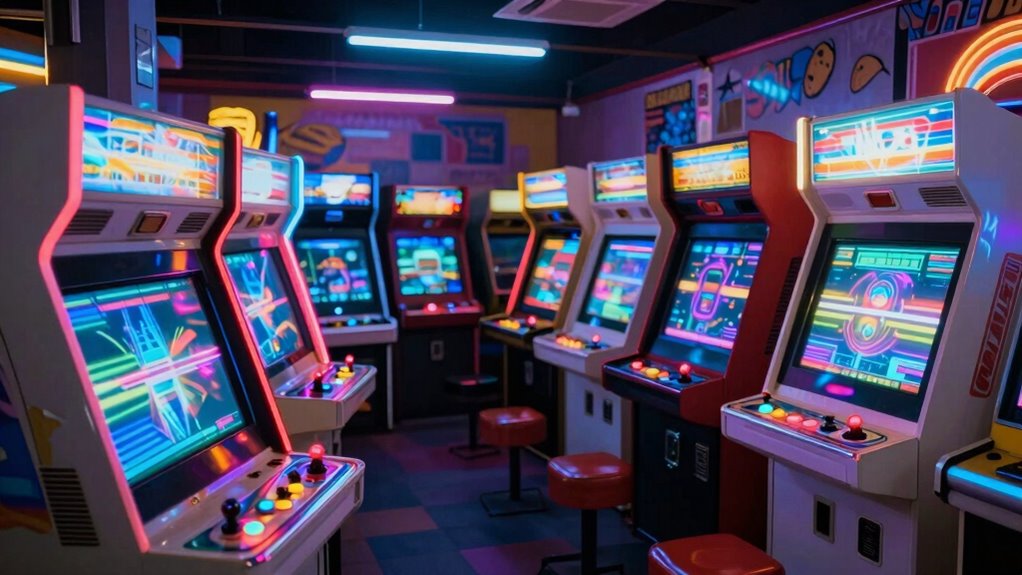
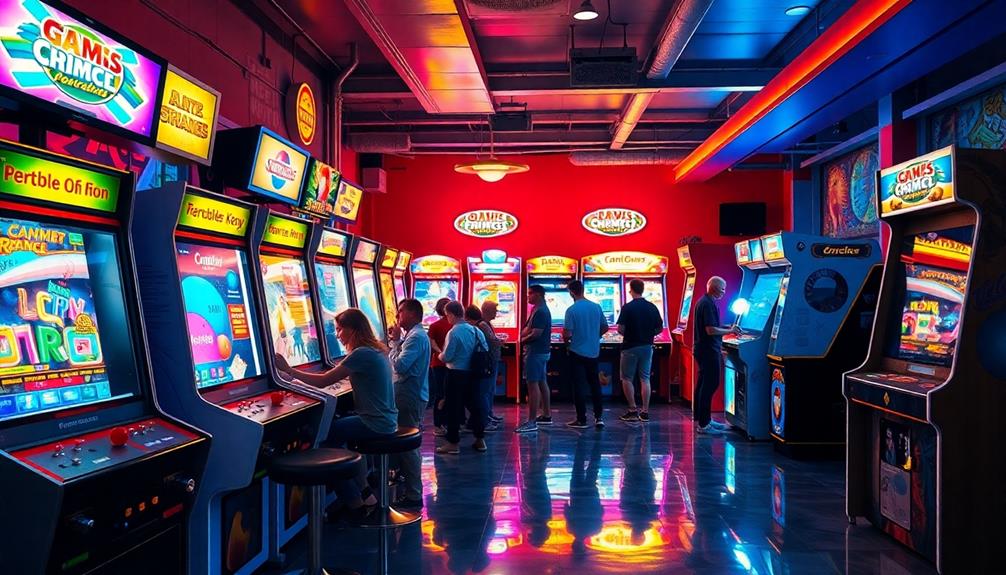
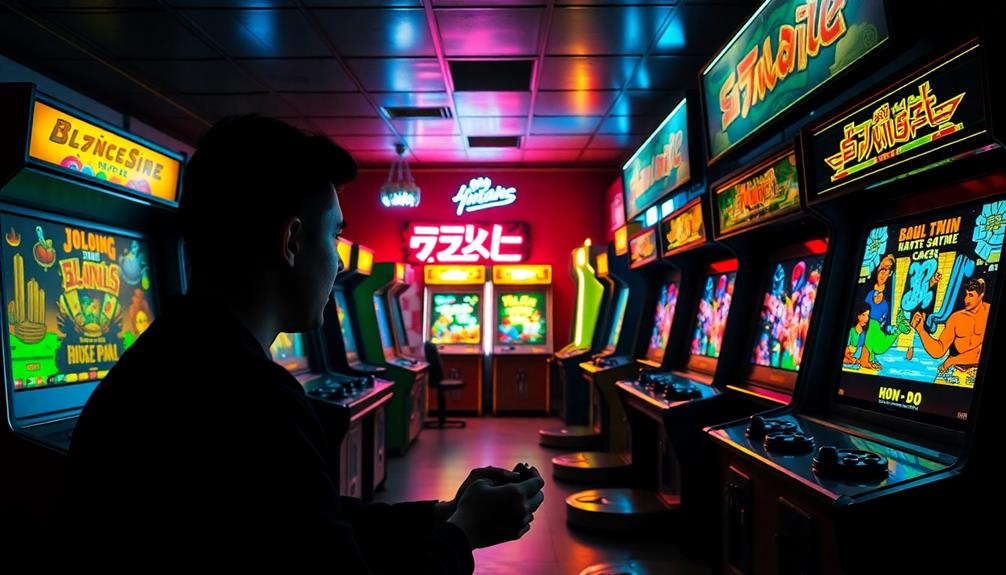
Walking into an arcade, you’re immediately immersed in a symphony of sounds—beeps, boops, and the constant hum of machines. These noises aren’t just background noise; they’re carefully crafted elements of sound design that shape your entire experience. From the moment you step in, the sounds draw you in, making the environment lively and exciting. They serve more than just alerting you to game actions—they create an atmosphere that keeps you engaged and enthusiastic to play. When you hit a high score or complete a level, the sound effects heighten your sense of achievement, reinforcing your connection to the game. This deliberate use of sound design helps maintain player engagement, making each moment feel significant and rewarding.
Arcade sounds create an immersive, lively atmosphere that keeps players engaged and amplifies every achievement.
The noises in an arcade are intentionally loud and distinct, designed to cut through the ambient chatter and competing sounds. This strategic choice ensures you can always tell what’s happening on a game without needing to look, keeping your focus sharp and your reactions quick. The sounds signal winning moments, failures, or new challenges, guiding your responses instinctively. When a game’s sound design is effective, it turns passive observation into active participation. You start to anticipate certain sounds, which heightens your emotional investment and keeps you coming back for more. It’s a feedback loop: the sounds motivate you to keep playing, and your engagement, in turn, fuels the vibrant atmosphere of the arcade. Additionally, the distinctive sounds help preserve the cultural heritage of arcade gaming as a unique auditory environment. These iconic sounds also contribute to the development of auditory branding, making each game instantly recognizable. The consistent use of these sounds over time has helped solidify their cultural significance, connecting generations through shared memories. Moreover, the precise timing and design of these sounds are often tailored to enhance the overall gameplay experience, ensuring that players remain captivated and responsive.
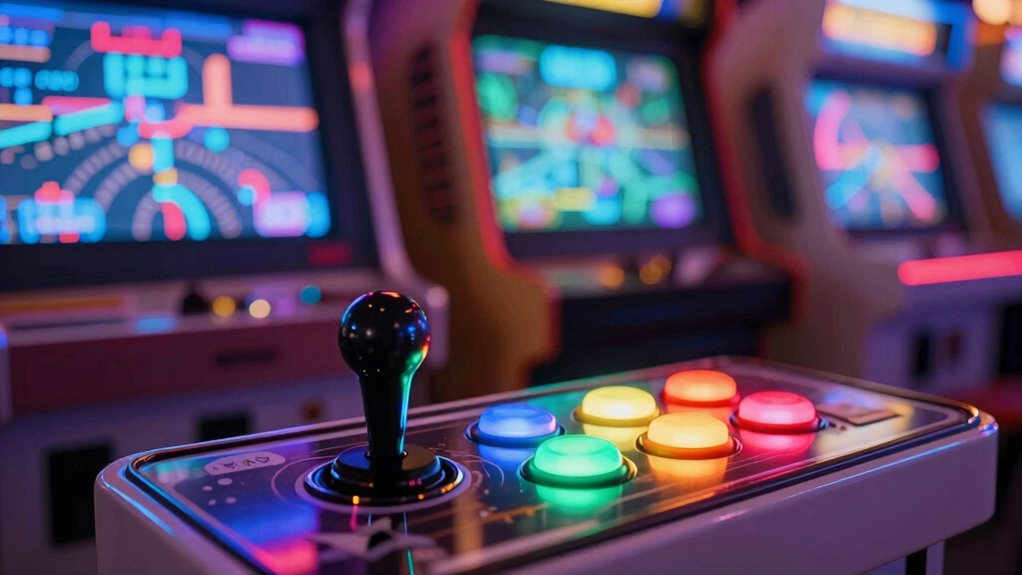
Over time, these sounds have become iconic, defining the identity of arcade gaming. You recognize the familiar chimes, sirens, and digital effects, and they evoke nostalgia even if you’re new to the scene. This audio branding enhances the social aspect of arcade gaming—shared experiences become memorable because of the sounds that punctuate your gameplay. They act as a universal language, connecting players across generations. The sound design isn’t just about making noise; it’s about crafting an immersive environment that heightens your emotional response and keeps you hooked. It turns simple button presses and joystick movements into a multisensory adventure. Additionally, these sounds can be linked to biodiversity as they represent a unique form of auditory environment that, when preserved, contributes to cultural heritage. Ultimately, the careful design of arcade sounds has helped sustain the cultural significance of these gaming environments for decades.
arcade machine sound effects
As an affiliate, we earn on qualifying purchases.
As an affiliate, we earn on qualifying purchases.
Frequently Asked Questions
How Did Arcade Noise Influence Game Design Choices?
You can see that arcade noise greatly influenced game design choices by shaping the background ambiance and sound design. Developers intentionally amplified sounds to create an energetic atmosphere, making players feel more immersed and excited. They optimized sound effects to alert players to game events and encourage engagement. This deliberate use of background ambiance and sound design made arcade games more enthralling, fostering a lively environment that kept players coming back.
Were There Regional Differences in Arcade Noise Levels?
You’ll find that regional acoustics and cultural sound preferences shaped arcade noise levels across different areas. In some countries, louder machines and vibrant sounds were the norm, energizing players, while quieter environments favored more subdued noise levels. It’s like comparing apples and oranges, as local architecture and cultural attitudes toward noise influenced how loud arcade environments became. These regional differences created unique gaming atmospheres worldwide.
How Did Players Perceive Noise Compared to Modern Gaming Sounds?
You likely perceive arcade machine noise as vibrant and energetic, unlike the sanitized sounds of modern gaming. The nostalgic ambiance of those loud, unpredictable noises creates a sensory overload that immerses you fully in the experience. Compared to today’s clearer, more refined audio, arcade sounds evoke a sense of excitement and community, making every game feel more alive and memorable—an essential part of the arcade’s charm.
What Technological Changes Reduced Arcade Noise Over Time?
Imagine shutting a heavy curtain on chaos—that’s what soundproofing innovations and acoustic engineering did for arcade noise. These technological changes reduced the loud, chaotic symphony of arcade machines by adding soundproof enclosures and improving acoustics. Over time, these advancements created quieter environments, making gameplay less overwhelming and more focused. You now experience a more refined soundscape, where game sounds are clearer, and the noise is controlled, enhancing your gaming experience.
Did Arcade Noise Impact Player Behavior or Competition?
Arcade noise greatly impacted your behavior and competition by influencing player concentration and social interactions. The loud environment heightened adrenaline, making you more competitive, but also distracted you, sometimes causing mistakes. It fostered social bonding, as players communicated and cheered amidst the chaos. The noise created an energetic atmosphere, motivating you to perform better, yet it also occasionally led to misunderstandings or frustration during intense moments.

Itailian Brainrots Soundboard Gun Simulator Games : Tung tung Horror Gun Sounds Adventure Game
🧠 Brainrot gun sounds to feed your inner chaos and unhinged vibes.
As an affiliate, we earn on qualifying purchases.
As an affiliate, we earn on qualifying purchases.
Conclusion
So, next time you hear those familiar arcade noises, don’t just tune them out. Instead, see them as part of the thrill, a reminder of shared excitement and youthful joy. Sure, the noise can be overwhelming, but it’s also what makes the experience unforgettable. Embrace the chaos—because those sounds are more than just noise; they’re the heartbeat of countless memories, connecting you to a vibrant world of fun you’ll never forget.
arcade noise generator
As an affiliate, we earn on qualifying purchases.
As an affiliate, we earn on qualifying purchases.
retro arcade sound effects
As an affiliate, we earn on qualifying purchases.
As an affiliate, we earn on qualifying purchases.