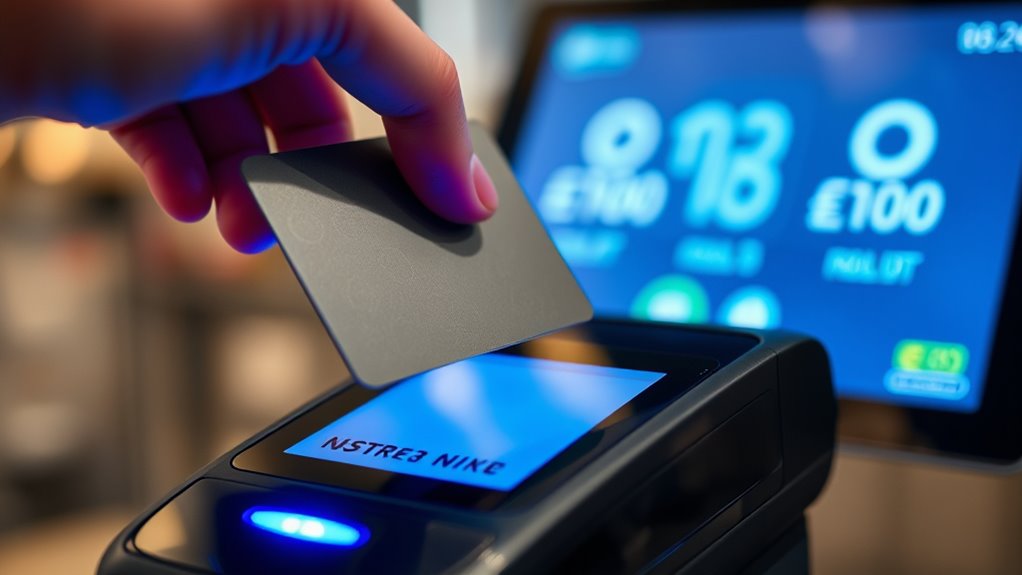

Card readers and cashless payment systems let you pay quickly and securely using your mobile device or contactless cards. They use RFID or NFC technology to transmit data swiftly, often in less than a second, while encrypting your information to protect against fraud. These systems are easy to set up, support multiple cards, and are accepted at many merchants, making checkout faster and more convenient. Exploring further reveals how these technologies continue to evolve for even better security and user experience.
Key Takeaways
- Card readers facilitate electronic transactions by capturing payment information from credit or debit cards via contact or contactless methods.
- Cashless payment systems enable users to pay digitally using mobile wallets, contactless cards, or other electronic devices without cash.
- NFC and RFID technologies securely transmit payment data between the card or device and the card reader during transactions.
- These systems often incorporate encryption and security protocols to protect sensitive information and prevent fraud.
- The adoption of cashless payment systems speeds up checkout, reduces physical contact, and enhances convenience for consumers and merchants.
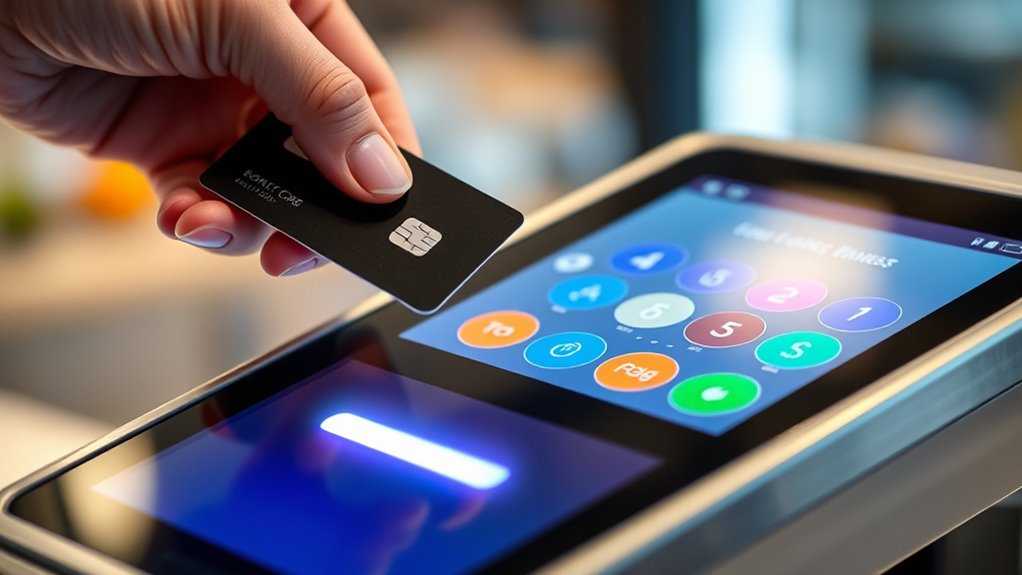
As technology advances, more businesses and consumers are turning to card readers and cashless payment systems for quick and secure transactions. One of the most popular innovations in this space is mobile wallets, which let you store your credit, debit, or prepaid card information digitally. Instead of digging through your wallet for cash or cards, you simply tap your smartphone or compatible device against a card reader equipped with contactless technology. This method speeds up checkout times and reduces physical contact, making your transactions more hygienic and convenient.
Mobile wallets are designed to work seamlessly with contactless technology, enabling you to make payments by just tapping or waving your device near a compatible terminal. This contactless approach relies on radio-frequency identification (RFID) or near-field communication (NFC) protocols, which securely transmit your payment data in a fraction of a second. Because of this, transactions are not only faster but also safer, as your sensitive card details are encrypted and never exposed during the process. This technology minimizes the risk of skimming or card cloning, giving you peace of mind when making purchases.
If you’re used to traditional card payments, adopting mobile wallets and contactless technology might seem intimidating at first. However, setting up your mobile wallet is straightforward. You just download the app provided by your bank or a third-party provider, add your cards, and verify your account. Once set up, you’ll find yourself making payments more effortlessly than ever. Many retailers now have contactless terminals, so you simply need to hold your device close to the reader for the transaction to complete. This eliminates the need to swipe, insert, or enter a PIN for small purchases, streamlining your shopping experience.
In addition to speed and convenience, mobile wallets and contactless systems also support loyalty programs and digital receipts, making it easier to track your spending and earn rewards. With increasing adoption, more merchants are upgrading their systems to accept contactless payments, which means you can enjoy a consistent, hassle-free experience across various locations. As these technologies continue to evolve, expect even more secure, versatile, and user-friendly options that will transform how you pay for everyday items. Empowering Independent Sellers for Success
Frequently Asked Questions
How Secure Are Cashless Payment Systems Against Hacking?
Cashless payment systems are fairly secure, but no system is entirely invulnerable. They use encryption protocols to protect your data during transactions, making hacking more difficult. Additionally, fraud prevention measures like real-time monitoring and secure authentication add extra layers of security. Still, you should stay vigilant—use strong passwords, keep software updated, and monitor your accounts regularly to reduce the risk of fraud or hacking.
Can Card Readers Operate Offline During Network Outages?
During network outages, your card reader can operate offline, like a trusty lighthouse standing firm against stormy seas. This offline functionality relies on built-in storage to process transactions when network reliability falters. While it guarantees continuity, it’s crucial to remember that some features, like real-time updates, might be limited. You gain the peace of mind knowing your system stays operational, even when the digital waves are rough.
What Are the Costs Associated With Setting up Card Readers?
The costs to set up card readers include initial hardware purchase, installation fees, and ongoing hardware maintenance. You’ll need to budget for the cost installation of the device itself, which varies based on the model and setup complexity. Additionally, expect regular expenses for hardware maintenance to guarantee smooth operation. Some providers also charge monthly or transaction fees, so factor those into your overall budget to keep your cashless system running efficiently.
How Do Contactless Payments Differ From NFC Technology?
Contactless payments are like quick taps, allowing you to pay without swiping or inserting your card. NFC technology is the core behind contactless tech, enabling devices to communicate wirelessly within close range. The main NFC differences involve how data is exchanged and security measures. While all contactless payments use NFC, not all NFC tech is used for payments—some connect devices for data sharing, making contactless payments just one application.
Are There Environmental Impacts of Digital Payment Systems?
You might not realize it, but digital payment systems do have environmental impacts. They contribute to digital waste through discarded devices and outdated hardware. Additionally, they consume significant energy during data processing and server operations, increasing overall energy consumption. While convenient, it’s important to contemplate these impacts and support more sustainable practices, like recycling old devices and choosing energy-efficient solutions, to help reduce digital waste and energy use.
Conclusion
As you hold your card and see the payment terminal light up, you’re part of a seamless dance of technology and everyday life. The gentle beep confirms your transaction, like a quiet handshake in a bustling world. With each tap, you’re connected to a digital network that moves effortlessly beneath the surface, turning simple purchases into smooth, instant experiences. This is the future of spending—fast, secure, and always at your fingertips.