
TL;DR

Play games on Amazon Luna for your game nights, included with Prime
- A rotating selection of games, no download needed
- Play on TV, laptop or phone
- Fast, free delivery for your gear, too
A closet can work as a small vocal booth or recording space if you treat reflections, seal gaps, and manage heat. Proper placement and layering of absorbent materials make a big difference, and soundproofing isn’t just foam. Focus on reflection control, sealing, and ventilation for best results.
Acoustic dampening
& the rig in the closet.
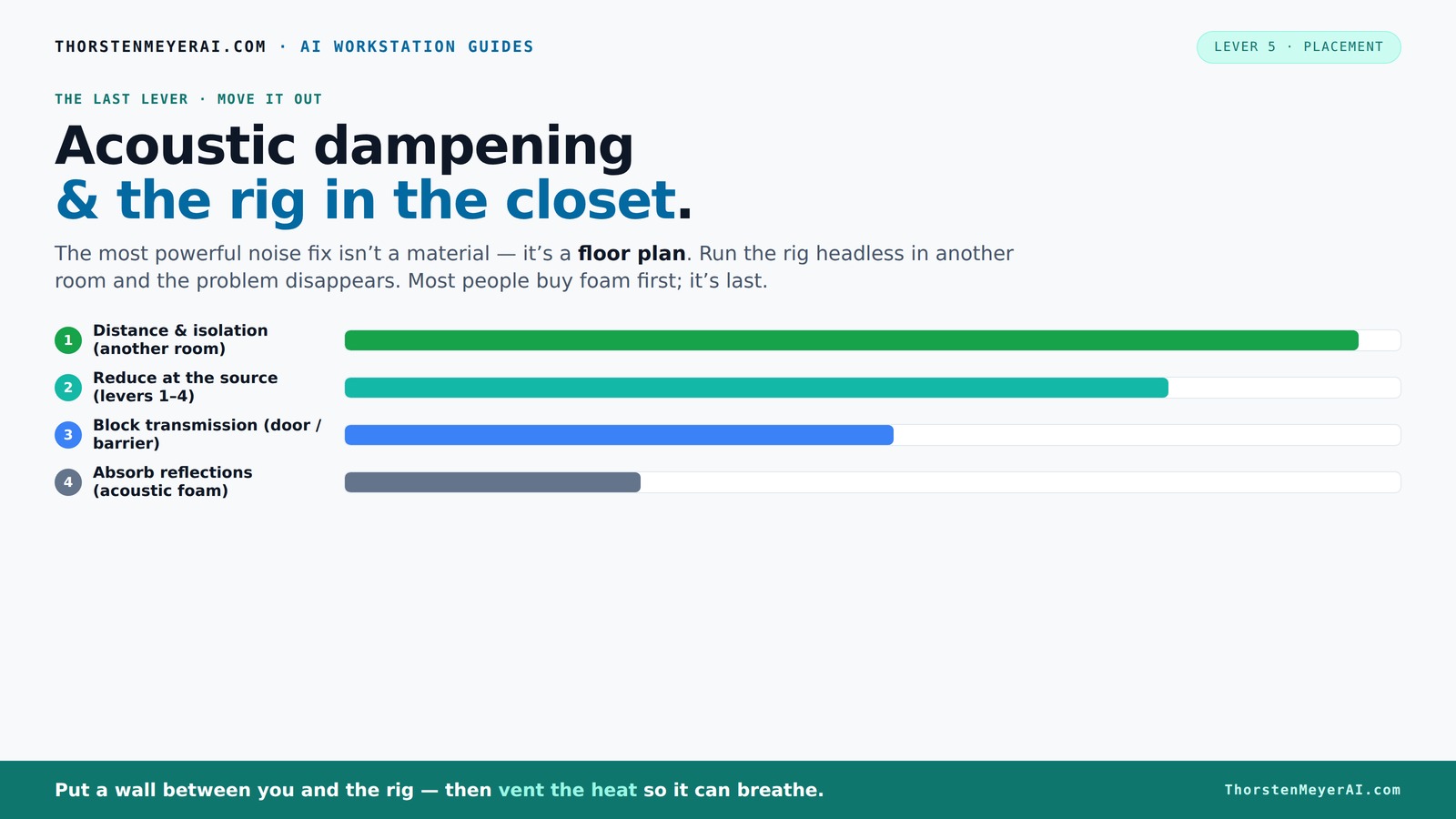
The most powerful noise fix isn’t a material — it’s a floor plan. A rig you can’t hear because it’s in another room beats any amount of foam. Tap the approaches in Part 1 to see what actually works.
(another room)
(levers 1–4)
(door / barrier)
(acoustic foam)
Contain the noise, not the heat
Key Takeaways
- Treat reflection points with layered blankets and foam, not just foam alone.
- Seal gaps around the door and vents to prevent noise leaks.
- Use bass traps in corners to control low-frequency muddiness in small spaces.
- Place your mic carefully—about 6-12 inches from your mouth, facing away from reflective surfaces.
- Ensure proper ventilation to prevent heat buildup and component throttling.
DIY vocal booth acoustic treatment kit
As an affiliate, we earn on qualifying purchases.
As an affiliate, we earn on qualifying purchases.
How Closet Acoustics Actually Work (And Why It Matters)
Closets are tiny spaces with hard surfaces—perfect echo chambers for your voice or instrument. When you record, those reflections can make your sound harsh and muddled. But if you treat the interior right, you can tame these reflections and make your recordings clear and focused.
Think of it like this: the smaller and more reflective the space, the more reverb and low-end buildup you get. This can lead to a muddy, indistinct sound where vocals lack clarity. Adding absorbent materials like foam or blankets helps to break up these reflections, but the real key is understanding why and where to place them. Check out placement strategies for best results. Proper reflection control prevents the sound from bouncing around uncontrollably, which can cause muddiness, reduce intelligibility, and make your recordings sound unprofessional. For more on this, see acoustic dampening techniques. Combining reflection control with noise sealing ensures that external sounds don’t muddy your recordings, giving you a clean, focused sound that stands up to professional standards. The tradeoff? Over-absorbing can make your space sound too dead and unnatural; balance is essential for a natural yet controlled sound. Learn more about soundproofing and acoustic balancing.
For example, hanging thick blankets on the walls can cut echo by 50-70%. Add a rug on the floor, and you instantly improve clarity. The goal? Turn the harsh, echoey closet into a warm, intimate sound chamber that captures your voice perfectly and provides a neutral acoustic environment for mixing.
Best Placement for Mics and Absorbers in Your Closet Voice Booth
Where you place your mic and acoustic treatment makes all the difference—not just for sound quality but for capturing a natural, professional tone. Start with the mic: position it about 6-12 inches from your mouth, facing away from reflective surfaces. This minimizes unwanted room reflections that can cause muddiness and coloration. Proper mic placement reduces the need for excessive treatment and ensures your voice is captured cleanly.
Next, identify the main reflection points: the wall behind the mic, the ceiling, and the side walls. Use a mirror trick—sit in your usual spot, have a friend move a mirror along the wall, and find spots where you see the mic. These are your reflection hotspots. Placing absorbers at these points prevents sound waves from bouncing directly into the mic, which would otherwise cause comb filtering and a loss of clarity. Using thick blankets or foam panels at these points creates a buffer zone that absorbs energy before it reaches the mic. Leave about 2-4 inches of space between the absorber and the wall to increase the effectiveness of the absorption, especially for mid and high frequencies. Remember, low-frequency issues—like boomy sounds—are best addressed with bass traps placed in the corners, as these trap and dissipate standing waves that can muddy your recordings. The tradeoff? Over-treating can make the space sound unnatural or overly dead, so aim for a balanced approach that preserves some liveliness while controlling problematic reflections.
Sealing the Door and Gaps — Your Secret to Quiet and Clean Recordings
The door and gaps are often the weakest points in a closet booth. Sound leaks out and external noise sneaks in through cracks, hinges, and even the smallest openings. Sealing these is crucial for a professional sound because unsealed gaps allow unwanted noise to enter your recordings, reducing clarity and increasing post-production work. Additionally, sound leaks can disturb neighbors or household members, especially in shared spaces.
Start with weatherstripping around the door frame to create a tight seal that prevents air and sound from escaping. Use acoustic door seals or heavy blankets hung over the door for extra noise blocking, which can significantly reduce external disturbances. For cracks and small gaps, apply acoustic sealant or foam tape—these materials fill in tiny openings that let sound pass. Installing a heavier, solid-core door—if your setup allows—provides a substantial barrier against external noise, especially low-frequency sounds like traffic or voices. The key is to understand that sealing gaps isn’t just about blocking sound; it also prevents air drafts and heat loss, making your space more comfortable. See more on sealing techniques for your closet setup. For example, one DIY creator used a heavy curtain plus weatherstripping on his closet door, which resulted in a significant drop in external noise, making voiceovers crisp and isolated. Every gap you seal enhances your soundproofing, reducing noise intrusion and making your recordings clearer and more professional. The tradeoff? Over-sealing can sometimes make ventilation harder, so consider passive ventilation options to maintain airflow without sacrificing sound isolation.
Foam, Blankets, or Both? Choosing What Works Best for Your Closet
Acoustic foam is popular because it’s easy and looks pretty. But in a closet, layering blankets and foam can yield better results for less money because they target different frequency ranges. Foam panels primarily absorb high frequencies, which helps tame sibilance and sharp transients, but they often lack effectiveness at low frequencies. Blankets and heavy curtains, on the other hand, are dense and can dampen mid and high frequencies while also reducing some low-frequency leaks. The tradeoff is that blankets can be bulky and less aesthetically pleasing, but they are highly effective in small, reflective spaces where low-frequency control is essential.
Here’s the breakdown:
| Material | Pros | Cons |
|---|---|---|
| Acoustic foam | Good for high frequencies, lightweight, easy to mount | Limited low-frequency absorption, can look cheap or sterile |
| Heavy blankets | Absorb both high and some low frequencies, inexpensive, flexible to arrange | Less aesthetic, bulky, may need proper hanging to avoid sagging |
Layering foam on reflection points and covering the door with blankets creates a multi-layered approach that balances sound absorption across the spectrum. Thicker panels (2 inches or more) improve low-frequency control, which is crucial in small, reflective spaces where standing waves can cause muddiness. The tradeoff? Over-layering can deaden the space excessively, reducing natural liveliness. Finding the right mix depends on your specific space and recording needs, but combining targeted foam with dense blankets generally offers a cost-effective, flexible solution that enhances clarity without sacrificing warmth.
Frequently Asked Questions
What is the difference between acoustic dampening, acoustic treatment, and soundproofing?
Acoustic dampening reduces echo and reverb inside a space by absorbing sound waves. Acoustic treatment involves installing materials like foam or blankets to improve sound clarity. Soundproofing stops sound from entering or leaving the space, often requiring sealing gaps and adding mass—foam alone doesn’t do this.
Can I turn any closet into a vocal booth or recording space?
Yes, but success depends on the closet’s size, materials, and how well you treat reflections and leaks. Small closets with thick blankets, proper mic placement, and sealing can sound surprisingly good for vocals and podcasts. Larger closets may need bass traps and better sealing for optimal results.
Where should I place foam, blankets, or panels in a closet booth?
Place absorptive materials at reflection points—behind the mic, ceiling, and side walls—using the mirror trick. Cover the door and gaps with blankets or weatherstripping. Bass traps should go in the corners where low frequencies tend to build up. Layering these materials yields the best sound.
Do I need bass traps in a closet?
Yes, bass traps are crucial for controlling low-end buildup common in small, reflective spaces. They help tighten your vocals and prevent muddiness. DIY options with dense insulation or rockwool work well and are affordable.
How much coverage is enough on the walls and ceiling?
At least 50-70% coverage of reflective surfaces with foam or blankets is a good starting point. Focus on reflection points and corners. More coverage improves clarity, but layering and sealing gaps matter just as much for best results.
Conclusion
A closet can be your secret weapon for professional-quality recordings. Focus on reflection control, sealing gaps, and managing heat, and you’ll turn a tiny space into a powerhouse of sound. Remember, the best setup balances absorption, isolation, and ventilation—don’t just throw foam on the wall. Your voice deserves a space that’s warm, quiet, and tuned to perfection.Fall Picks
fall essentials
As an affiliate, we earn on qualifying purchases.