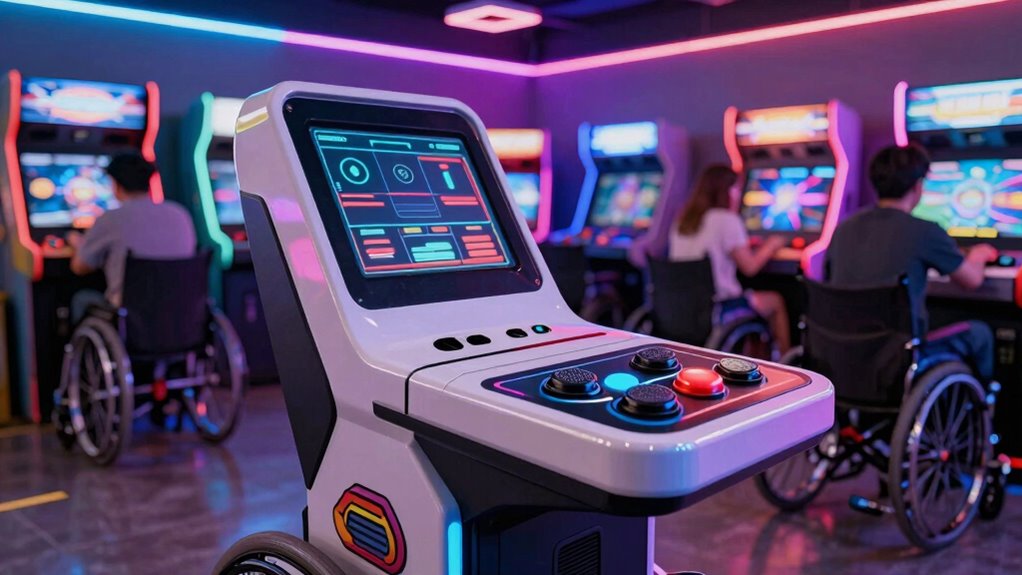

Incorporating accessibility into arcade cabinet design makes gaming more inclusive and enjoyable for everyone. By adding features like haptic feedback, high-contrast visuals, and adaptable controls, you guarantee players with impairments can participate comfortably. These enhancements also create a more engaging experience for all users. Prioritizing accessibility not only broadens your audience but fosters a community-driven environment. If you keep exploring, you’ll discover how these features truly transform arcade gaming for diverse players.

Play games on Amazon Luna for your game nights, included with Prime
- A rotating selection of games, no download needed
- Play on TV, laptop or phone
- Fast, free delivery for your gear, too
Key Takeaways
- Incorporating accessibility features broadens the player demographic and enhances overall user experience.
- Haptic feedback provides tactile cues that assist players with visual or auditory impairments.
- Visual enhancements like high contrast and adjustable displays improve clarity for diverse players.
- Adaptive controls and alternative input methods ensure inclusive gameplay for all motor abilities.
- Designing with accessibility fosters community engagement, innovation, and compliance with inclusivity standards.
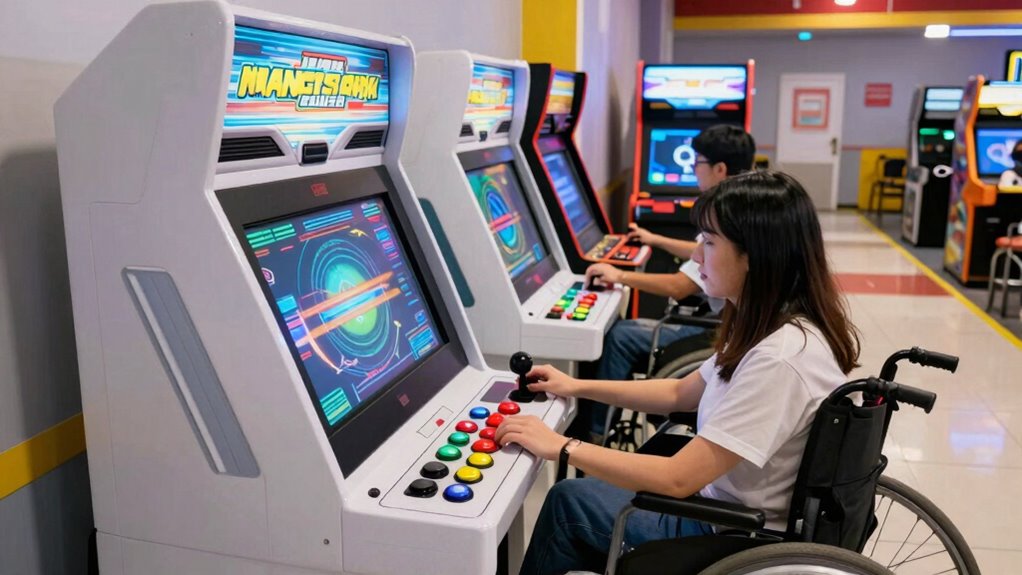
Have you ever wondered if arcade cabinets are designed with everyone in mind? The truth is, many classic designs overlook a broad range of players, unintentionally excluding those with visual, auditory, or motor impairments. But by integrating accessibility features, you can create an inclusive experience that appeals to a wider audience. One effective way to do this is through haptic feedback, which provides tactile responses during gameplay. For players with visual impairments or those who rely on touch cues, haptic feedback turns sound or visual cues into physical sensations, making the game more intuitive and immersive. For example, vibrations or subtle pulses can signal when a player hits a target, completing a level, or making a mistake. This sensory augmentation helps guarantee that players don’t miss critical game information simply because they can’t see or hear it.
Haptic feedback enhances accessibility by turning visual and sound cues into tactile sensations, making gameplay more inclusive and immersive for all players.
In addition to tactile cues, visual enhancements play a vital role in making arcade cabinets more accessible. Bright, high-contrast displays help players with color blindness or visual difficulties distinguish game elements easily. Adjustable screen brightness and contrast settings allow players to customize their experience according to their needs, reducing eye strain and improving clarity. Clear, large fonts and simplified visual interfaces can help players with cognitive or visual impairments process information more efficiently. Incorporating accessible design principles can also promote better engagement from a diverse range of players. These enhancements don’t just serve those with disabilities; they can also improve overall gameplay for everyone, making the experience more engaging and comfortable. Additionally, considering universal design in your approach ensures that your arcade cabinets are accessible and user-friendly for all types of players. Recognizing inclusive design strategies can inspire innovative solutions that benefit a broad spectrum of users.
Designing with accessibility in mind encourages game developers and cabinet manufacturers to think beyond the standard layout. You might incorporate adjustable controls or alternative input methods, such as larger buttons or touch-sensitive panels, to accommodate different motor skills. Incorporating auditory cues, like descriptive sounds or voice commands, can further assist players with hearing impairments. When you prioritize accessibility, you’re not just complying with regulations—you’re creating a more inclusive environment where everyone feels welcomed and empowered to play. Emphasizing adaptive technologies can also open new possibilities for game interaction and enjoyment.
Ultimately, accessibility in arcade cabinet design isn’t a one-size-fits-all solution; it’s about recognizing diverse needs and actively addressing them. By integrating features like haptic feedback and visual enhancements, you make the arcade experience richer and more inclusive. When everyone can participate comfortably, you foster a community where gaming is shared and enjoyed by all, regardless of ability. This shift not only broadens your audience but also demonstrates a commitment to making gaming accessible and fun for everyone.
arcade cabinet haptic feedback kit
As an affiliate, we earn on qualifying purchases.
As an affiliate, we earn on qualifying purchases.
Frequently Asked Questions
How Does Accessibility Impact Overall Arcade Cabinet Aesthetics?
Accessibility enhances arcade cabinet aesthetics by ensuring visual harmony and a seamless user experience. When you incorporate adjustable controls, clear visuals, and intuitive layouts, the cabinet looks inviting and well-designed. These features not only support diverse players but also create a cohesive appearance that appeals to all users. Ultimately, accessibility improvements make your arcade cabinet more attractive, functional, and enjoyable, boosting overall engagement and satisfaction.
What Are Cost Implications for Implementing Accessibility Features?
Implementing accessibility features involves a careful cost analysis, but it doesn’t have to break your budget. You’ll need to contemplate costs for adjustable controls, ramps, or adaptive technology, along with installation and maintenance. While initial expenses may increase, you can prioritize features based on your budget considerations, ensuring your arcade cabinet remains inclusive without overspending. Ultimately, accessible design investments can attract a broader audience and boost your arcade’s success.
Are There Specific Regulations for Accessible Arcade Cabinets?
Yes, there are specific regulations for accessible arcade cabinets, especially regarding assistive technology and regulatory compliance. You need to follow guidelines like the ADA (Americans with Disabilities Act) that set standards for inclusivity. These regulations guarantee your cabinet accommodates players with disabilities by integrating assistive technology features, such as adapted controls or screen readers, making your arcade accessible to everyone and helping you stay compliant with legal requirements.
How Can Accessibility Features Be Customized for Different Users?
You can customize accessibility features by incorporating adaptive controls and customizable interfaces to suit different users’ needs. For instance, you might add adjustable button sizes, alternative input devices, or visual and audio cues tailored to individual preferences. By offering these options, you guarantee everyone can enjoy the game comfortably, making the arcade experience more inclusive. This customization creates a welcoming environment for players of all abilities, enhancing overall accessibility.
What Training Is Needed for Staff to Assist Diverse Players?
You need to provide staff with thorough training that covers both essential skills and diversity awareness. This training should include how to assist players with different abilities, using accessible features effectively, and understanding cultural sensitivities. By doing so, your staff becomes confident in supporting diverse players, ensuring everyone has a positive experience. Regular refreshers and updates keep staff knowledgeable about evolving accessibility features and best practices.
Conclusion
By making arcade cabinets more accessible, you open the door for everyone to enjoy the thrill of gaming, much like a welcoming lighthouse guides ships safely home. When you prioritize inclusive design, you create a space where players of all abilities can join in the fun, fostering a more vibrant and diverse gaming community. Embracing accessibility isn’t just a feature—it’s the key to making arcade gaming a universal joy, brightening the experience for everyone involved.
Fall Picks
fall essentials
As an affiliate, we earn on qualifying purchases.