
TL;DR
Thorsten Meyer AI has introduced Forezai TradingAgents, an open-source Apache-2.0 research framework that uses multiple AI agents to model a trading desk. The project is framed as experimental software for structured disagreement and risk review, not as financial advice or a trading system with proven returns.
Thorsten Meyer AI has introduced Forezai TradingAgents, an open-source Apache-2.0 research framework that models a trading firm with specialized AI agents, including analysts, bull and bear researchers, a trader and a risk manager with veto power.
The project is described as part of Forezai’s Markets family and is positioned as a companion to Polybot, a single AI forecaster covered in the previous installment. While Polybot centers on one estimate against a market price, TradingAgents is built around structured disagreement among multiple roles before any proposed action is considered.
According to the source material, the framework assigns separate agents to different forms of signal, including fundamentals, news and sentiment, and technical price action. A bull researcher builds the strongest case for action, while a bear researcher builds the strongest case against it. A trader then proposes an action, and a risk manager vets the proposal, sizes it, or rejects it.
The author repeatedly frames the release as research software, not as a recommendation to trade, invest or use the tool. The project is said to be available at forezai.com/tradingagents.html and on GitHub, with the source material stating that it is licensed under Apache-2.0 and provided without guarantees of accuracy, profitability or fitness for any purpose.
TradingAgents — a firm made of agents
A single model is an overconfidence machine. So this isn’t one AI — it’s a whole desk: analysts, a bull and a bear who argue, a trader, and a risk manager who can say no.
Not financial, investment, legal or tax advice; not a recommendation or solicitation to trade, invest or use any software. Forezai · TradingAgents is an experimental open-source research framework (Apache-2.0), provided “as is” without warranty of accuracy or profitability. Trading and automated trading carry a substantial risk of loss including total loss of capital; past or backtested performance does not indicate future results. Market and trading-software access is regulated or restricted in some jurisdictions — you are solely responsible for compliance with applicable law. Consult a licensed professional before any financial decision. Produced with AI assistance under human editorial oversight; independent commentary, the author’s own views. Product and company names are trademarks of their respective owners; mention does not imply endorsement.
A Risk Gate Before Action
The main news value is not that another AI trading tool exists, but that this one is being presented as an attempt to reduce single-model overconfidence through organizational design. Instead of asking one model to produce a trading view, the framework separates research, disagreement, trade proposal and risk review into different roles.
That matters because AI systems can generate confident market commentary without being correct. The source material argues that a single model can produce a polished answer that may be mistaken, and that a multi-agent structure can force competing cases to be recorded before any proposed action reaches the risk layer.
The project may interest readers following open-source AI agents, financial research automation and local-first software portfolios. At the same time, the financial risk is explicit: the source material warns that automated trading can lead to substantial losses, including the full loss of capital, and that market access and trading software may be regulated or restricted depending on jurisdiction.
Python for Algorithmic Trading Cookbook: Recipes for designing, building, and deploying algorithmic trading strategies with Python
As an affiliate, we earn on qualifying purchases.
As an affiliate, we earn on qualifying purchases.
Day 14 Completes Markets
TradingAgents appears in the Built in Public series as Day 14 of 19 in the Thorsten Meyer AI operator portfolio. The source material says it completes the portfolio’s Markets family by pairing Polybot, a lone forecaster, with a multi-agent simulated trading desk.
The project also inherits broader themes from the series: local-first operation, provider-agnostic model roles and open templates for accountable AI decision-making under uncertainty. The author describes the design as a “council” approach applied to markets, where debate and a risk veto are meant to reject weak ideas before they become positions.
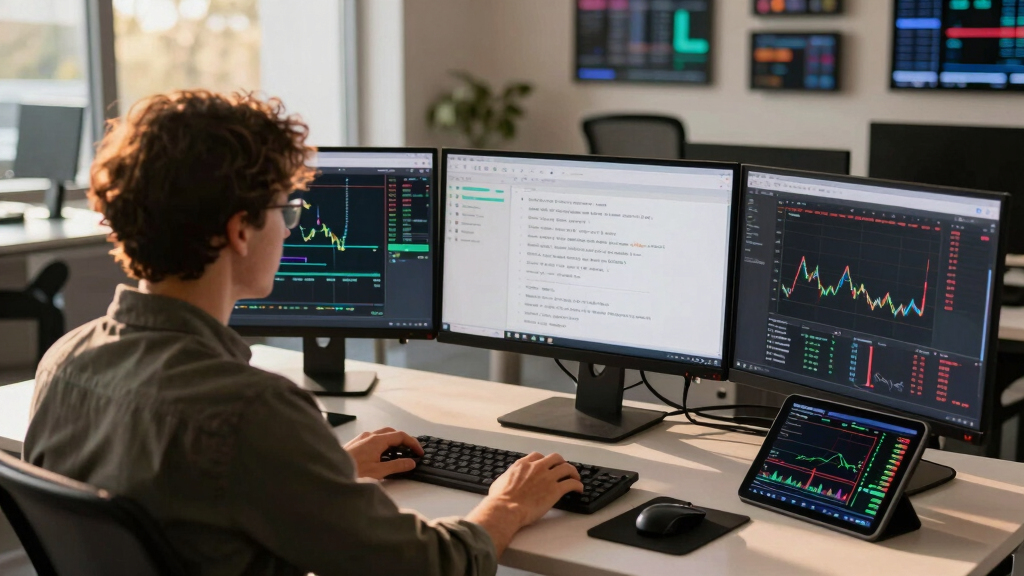
The framework is presented as illustrative architecture rather than a track record. The source material says the desk shown in the announcement illustrates how the system is organized, not evidence that it can trade profitably.
No Track Record Shown
It is not yet clear how the framework performs under live market conditions, what safeguards are implemented in code, or how users would connect it to real data and brokerage systems. The source material does not provide audited results, benchmark data or a verified trading record.
Any claims about usefulness, accuracy or profitability should be treated as unproven unless supported by reproducible testing. The source material itself states that the project is experimental and that past or backtested performance does not indicate future results.
Testing Will Define Use
The next step for interested developers is likely code inspection, local testing and evaluation of how the agent roles behave under real or simulated market data. Readers should also watch for documentation, examples, safety controls and any reproducible benchmarks that show how the framework handles disagreement, sizing and veto decisions.
For anyone considering financial use, the next milestone is not deployment but due diligence: legal review, risk review, technical review and consultation with a licensed professional before any financial decision.
Key Questions
What is Forezai TradingAgents?
It is an open-source research framework that models a trading desk with multiple AI agents, including analysts, bull and bear researchers, a trader and a risk manager.
Is this financial advice or a recommendation to trade?
No. The source material explicitly says it is not financial, investment, legal or tax advice and is not a recommendation to trade, invest or use the software.
What is confirmed about the release?
The source material states that TradingAgents is part of the Forezai Markets family, is open source under Apache-2.0 and was published as Day 14 of the Built in Public series.
What remains unproven?
The source material does not provide audited performance, live trading results or proof of profitability. It presents the project as experimental research software.
Why use multiple agents instead of one model?
The stated aim is to reduce overconfidence by separating roles: different agents gather signals, opposing researchers argue each side, a trader proposes an action and a risk manager can reject it.
Source: Thorsten Meyer AI