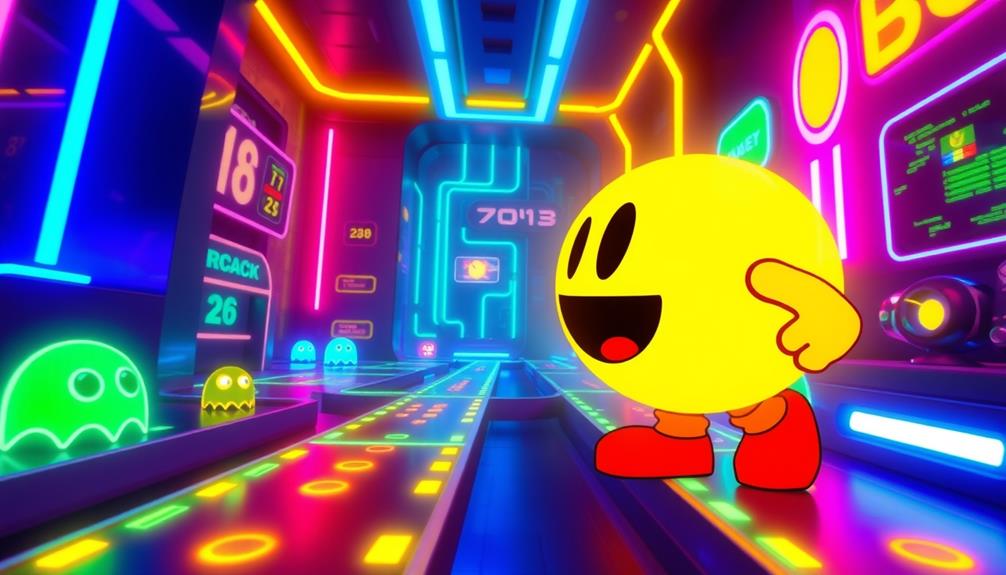
During the golden age of arcades, the environment was created to spark intense competition. You’d see high score boards, flashing screens, and energizing sounds that kept everyone motivated. The layout encouraged spontaneous challenges and watching others for tips. Friendly rivalry and social interaction turned gaming into a lively social scene. All these elements made every game feel like a test of skill and persistence, setting the stage for a truly competitive experience—there’s much more to uncover if you keep exploring.

Play games on Amazon Luna for your game nights, included with Prime
- A rotating selection of games, no download needed
- Play on TV, laptop or phone
- Fast, free delivery for your gear, too
Key Takeaways
- High score boards and visible rankings fueled competition and motivated players to outperform others.
- Prominent placement of popular machines encouraged spontaneous challenges and rivalry.
- The energetic atmosphere, with flashing lights and sounds, heightened excitement and competitive spirit.
- Social interactions, such as teasing and cheering, reinforced camaraderie and rivalry among players.
- Mastery of classic games motivated repeated play and continuous improvement to beat top scores.

During the Golden Age of arcades, these vibrant gaming hubs became cultural landmarks that drew crowds of all ages. People flocked to arcades not just to play games but to compete, showcase their skills, and be part of a lively social scene. The competitive atmosphere was driven by a mix of retro game trends and social gaming culture, making each visit feel like a new challenge. You’d see groups gathered around classics like Pac-Man, Donkey Kong, and Space Invaders, all enthusiastic to outscore each other. These games weren’t just about fun; they became a battleground where bragging rights were earned through skill and persistence.
Arcades were lively cultural hotspots where players competed fiercely around classics like Pac-Man and Donkey Kong.
Retro game trends played a huge role in fueling this competitive spirit. Many players grew up with these arcade hits, developing a deep familiarity and mastery that added to the thrill of beating high scores. Arcade culture also encouraged a sense of collective achievement, motivating players to improve their skills and set new records. Arcades fostered a culture of excellence, where players constantly pushed themselves to beat their own records or those set by friends and strangers alike. The design of these games encouraged repeated play, with the promise of higher scores and recognition. This created a culture of continuous improvement, where everyone aimed to outdo the last person, heightening the stakes and intensifying the competition. Additionally, the competitive environment was heightened by the physical layout of the arcade, which encouraged spectatorship and immediate feedback. The layout often placed popular machines in prominent locations, fostering spontaneous challenges and rivalries.
Social gaming culture also amplified the sense of rivalry. Unlike solo gaming, arcades thrived on social interaction. Watching others play became part of the experience; you learned new techniques and picked up tips from fellow gamers. The competitive environment was often fueled by friendly teasing, cheers, or even outright wagers, making every game more engaging. You felt the energy of the crowd, the pressure of live competition, and the desire to stand out among your peers. This social element turned arcade gaming into a communal activity, where friendships formed through shared victories and defeats. Additionally, the vibrant arcade environment with its lively sounds and flashing screens created an electrifying atmosphere that intensified the competitive spirit. The communal aspect was crucial, as it fostered a sense of camaraderie among players despite the rivalry. The shared enthusiasm helped elevate the stakes, making each game memorable.
The arcade environment itself further encouraged competitiveness. The layout of machines, the sounds of buttons and joysticks, and the flashing screens created an electrifying atmosphere. High score boards displayed the top players, inspiring everyone to challenge those rankings. It was easy to get caught up in the thrill of trying to surpass someone else, especially when everyone was watching. The visual stimuli of flashing lights and competitive score displays kept players motivated and engaged throughout their gaming sessions. The sense of immediate feedback and recognition was key to maintaining high levels of engagement and excitement.
arcade high score leaderboard display
As an affiliate, we earn on qualifying purchases.
As an affiliate, we earn on qualifying purchases.
Frequently Asked Questions
How Did Arcade Competition Influence Game Development?
Arcade competition pushed game developers to enhance arcade aesthetics and create more engaging, challenging experiences. You notice how competitive gaming fueled innovation, leading to faster-paced gameplay, eye-catching visuals, and unique features to attract players. Developers constantly refined their games to outdo rivals, making every new release more exciting. This drive for dominance made arcade games more immersive and dynamic, shaping the unforgettable competitive atmosphere of the golden age.
What Role Did Local Communities Play in Arcade Rivalries?
Have you ever wondered how local communities fueled arcade rivalries? In your neighborhood, social dynamics like friendly competition and pride drove players to outscore each other, making arcade visits exciting. These local rivalries created a sense of camaraderie and competition, motivating players to improve their skills. Your neighborhood’s arcade scene became a lively hub where friendships, rivalries, and shared passion for gaming thrived, intensifying the golden age’s competitive spirit.
Were There Any Notable Arcade Tournaments During the Golden Age?
Yes, during the golden age, notable arcade tournaments drew fierce competition, fostering rivalries and showcasing players’ skills. You’d often see arcade memorabilia like high-score plaques and trophies, fueling competitive strategies and pride. These events created a vibrant scene where players pushed limits, constantly innovating their gameplay. The tournaments not only highlighted individual talent but also strengthened community bonds, making the arcade culture highly spirited and memorable.
How Did Arcade Design Encourage Competitive Play?
Arcade aesthetics amplified the allure, attracting you to compete. Bright blinking lights, mesmerizing characters, and vibrant visuals created a stimulating space that encouraged rivalry. Prize incentives, from tickets to trophies, sweetened the stakes, urging players to push harder. The strategic layout of machines kept you engaged, fostering fierce face-offs. Ultimately, thoughtful design and tempting rewards transformed arcades into arenas of rivalry, fueling the fierce, fun-filled frenzy of arcade competition.
Did Arcade Rivalry Impact Gaming Culture Outside Arcades?
Yes, arcade rivalry considerably impacted gaming culture outside arcades. You see, arcade fashion, like team jerseys and memorabilia, grew popular as fans embraced their favorite coin-op legends. This rivalry fostered community pride and inspired players to emulate the skills and styles of top gamers, spreading their influence beyond arcades. As a result, competitive spirit and arcade culture merged, shaping modern gaming attitudes and creating a lasting legacy.
Conclusion
So, next time you’re reminiscing about the golden age of arcades, remember—it wasn’t just about high scores or bragging rights. No, it was about fighting tooth and nail for those tiny, glowing victories, all while risking blisters from endless button mashing. That fierce competition? It was practically a social experiment in adrenaline and ego. But hey, at least now you can sit comfortably at home, knowing you’re not risking a sweat-drenched high score anymore.
Fall Picks
fall essentials
As an affiliate, we earn on qualifying purchases.