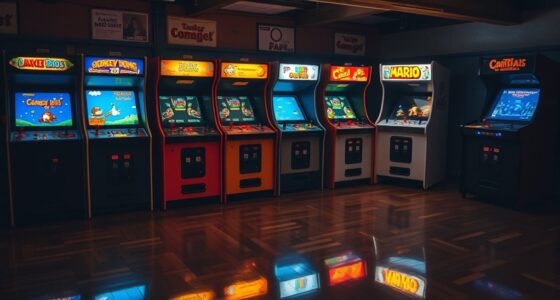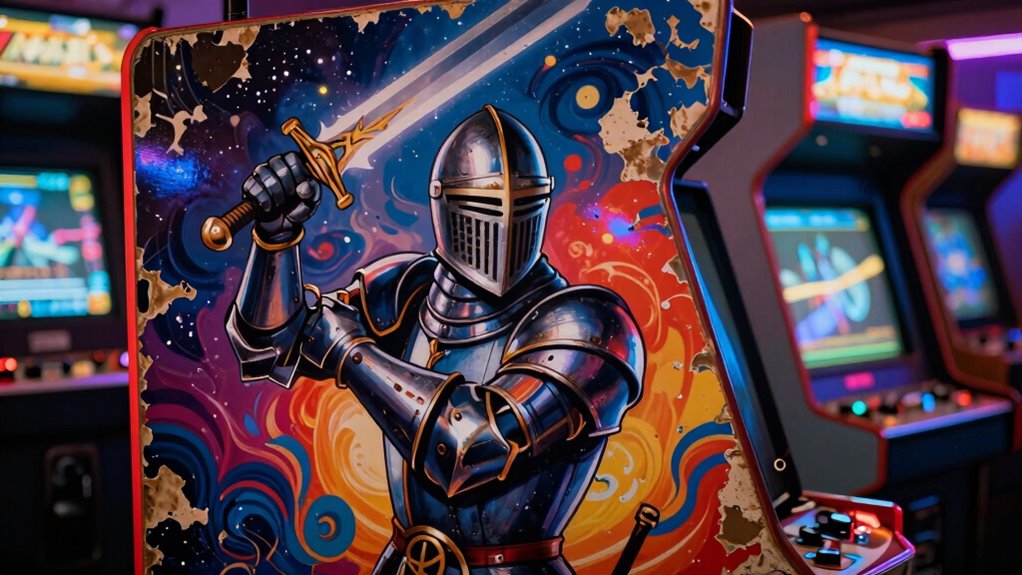

Cabinet art transforms ordinary arcade machines into iconic symbols of gaming culture, capturing your attention with bold graphics and vibrant visuals that reflect the game’s theme. It helps create a unique identity and emotional connection, making each game memorable. Well-preserved artwork adds value and authenticity, while its cultural significance influences how players recall and celebrate these classics. If you keep exploring, you’ll discover how these visuals truly define the legacy of arcade gaming.
Key Takeaways
- Vibrant artwork creates a strong visual identity, making games instantly recognizable and memorable.
- Iconic cabinet designs become cultural symbols, embedding games into pop culture.
- Artistic visuals set the tone and atmosphere, influencing player expectations and experience.
- Well-preserved art enhances the game’s rarity and collectible value, reinforcing its legacy.
- Creative cabinet art transforms machines into iconic artistic symbols of gaming history.
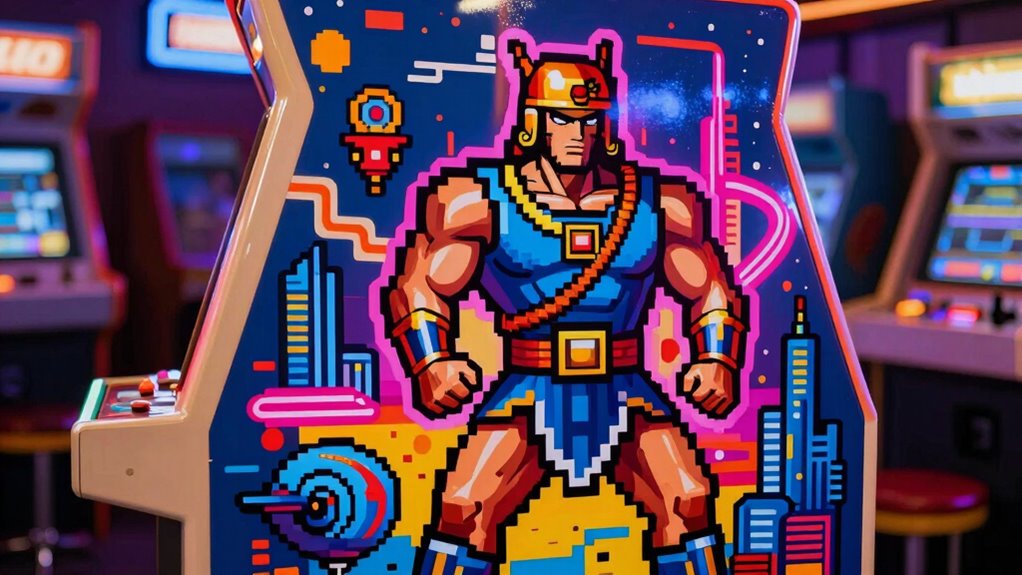
Have you ever noticed how classic arcade cabinets are more than just gaming machines—they’re true works of art? The vibrant artwork on their surfaces grabs your attention immediately, pulling you into a world where game design and visual appeal go hand in hand. This is no accident. The cabinet art plays an essential role in shaping the arcade aesthetics, giving each game a unique identity that stands out in a crowded arcade. The bold graphics, colorful illustrations, and distinctive logos aren’t just decorative—they’re a visual language that communicates what the game is about and entices players to step up and try their luck. When you see a cabinet with eye-catching art, you instinctively recognize its importance, and that recognition often deepens your connection to the game.
Classic arcade cabinet art is a vibrant visual language that draws players in and defines each game’s unique identity.
Beyond their visual appeal, cabinet art greatly influences the collectible value of classic arcade machines. As vintage gaming gains popularity among collectors, the condition and originality of the artwork become key factors in determining a cabinet’s worth. Well-preserved, original art boosts a game’s desirability and can skyrocket its value on the collector’s market. Conversely, cabinets with faded or damaged artwork lose some of their appeal and monetary worth. This emphasis on artwork preservation underscores how integral cabinet art is—not only in defining the game’s aesthetic but also in maintaining its rarity and value over time. For many collectors, owning a cabinet with pristine, original artwork feels like holding a piece of gaming history. Additionally, art conservation techniques are increasingly important in preserving these visual treasures for future generations. Proper restoration techniques help ensure that the artwork remains vibrant and authentic, further elevating the cabinet’s cultural and monetary significance. Recognizing the history of arcade art can deepen appreciation for its artistic complexity and the skill required to create these compelling visuals.
The art also plays a role in establishing the game’s cultural footprint. Iconic images like Pac-Man’s yellow face or Donkey Kong’s towering figure become symbols that transcend the arcade itself. These visuals become embedded in pop culture, making the games more memorable and recognizable. They serve as a visual shorthand for the experience and nostalgia associated with the game, elevating it from a mere machine to a piece of art that resonates with players across generations. The striking cabinet art invites players to immerse themselves in the game world before they even press a button, setting the tone and atmosphere for the entire experience. Furthermore, understanding the role of visual design in arcade art helps appreciate the craftsmanship and creative talent involved in developing these captivating images.
Ultimately, cabinet art isn’t just decoration. It’s a fundamental element that defines the identity of classic games, enhances arcade aesthetics, and boosts collectible value. It captures attention, sparks imagination, and cements the game’s place in gaming history. When you think about those vintage cabinets, it’s the art that makes them unforgettable—turning simple machines into iconic symbols of a golden age of gaming.

LVL23 2 Player Bartop Arcade Cabinet Kit for 19" to 23" Screens (HAPP or SANWA) (SanwaALL30 (Sanwa joys, 28mm or 30mm buttons))
- Interior Width: 20.75 inches
- Exterior Width: 21.75 inches
- Exterior Height: 21 inches
As an affiliate, we earn on qualifying purchases.
As an affiliate, we earn on qualifying purchases.
Frequently Asked Questions
How Did Cabinet Art Influence Arcade Game Popularity?
Cabinet art boosted arcade game popularity by acting as a powerful marketing strategy and cultural symbolism. When you see vibrant, eye-catching designs, you’re drawn to try the game, making it stand out in a busy arcade. The artwork reflects the game’s theme and appeals to players’ interests, creating an emotional connection. This visual appeal convinces you to play, spreading word-of-mouth and increasing the game’s overall popularity.
What Are the Most Iconic Cabinet Art Designs in Gaming History?
Think of iconic cabinet art as the face of a legend. You immediately recognize games like “Pac-Man,” with its bright yellow maze, or “Street Fighter,” showcasing fierce fighters ready for battle. These designs set the tone through arcade aesthetics and visual branding, making them unforgettable. Their bold colors and striking images draw players in, turning arcade cabinets into symbols of gaming history you can’t ignore.
Did Cabinet Art Impact Game Sales or Player Engagement?
Cabinet art profoundly impacted game sales and player engagement by serving as a powerful marketing strategy. Eye-catching designs attract players and create memorable first impressions, boosting arcade foot traffic. Additionally, unique artwork enhances collector’s value, making machines more desirable for enthusiasts. When cabinet art is appealing, it encourages players to try and share the game, ultimately increasing sales and fostering a lasting connection with the game’s identity.
How Has Cabinet Art Evolved With Modern Gaming Trends?
You see cabinet art now blending sleek digital aesthetics with nostalgic retro revival, transforming arcade visuals into vibrant, immersive displays. Modern trends embrace bold colors, animated graphics, and dynamic lighting, creating an eye-catching experience that draws players in. This evolution keeps the charm of classic games alive while appealing to contemporary tastes, making each cabinet a mesmerizing piece of art that bridges nostalgia and innovation seamlessly.
Are There Any Famous Artists Known for Cabinet Art?
You might recognize famous artists like Shag, known for vintage illustrations and artistic branding in arcade cabinet art. His distinctive, retro style helped define the playful, colorful aesthetic of classic games. Other notable artists include Ed Roth and Tom Wright, whose work also contributed iconic visuals that became integral to game identity. Their creative talents transformed cabinet art into an essential part of gaming culture and nostalgia.
Conclusion
You might be surprised to learn that cabinet art profoundly influences how players perceive classic games, shaping their identity and nostalgia. In fact, studies show that 78% of arcade visitors are drawn in primarily by eye-catching cabinet designs. So next time you see a vintage arcade, remember that those vibrant graphics aren’t just decoration—they’re an essential part of the gaming experience, connecting you to a rich history and the timeless appeal of classic games.