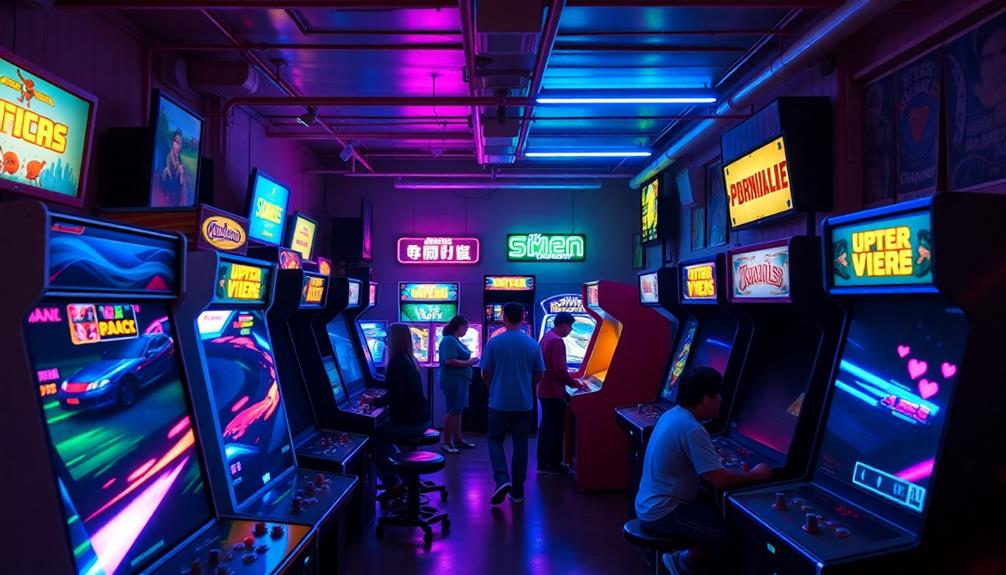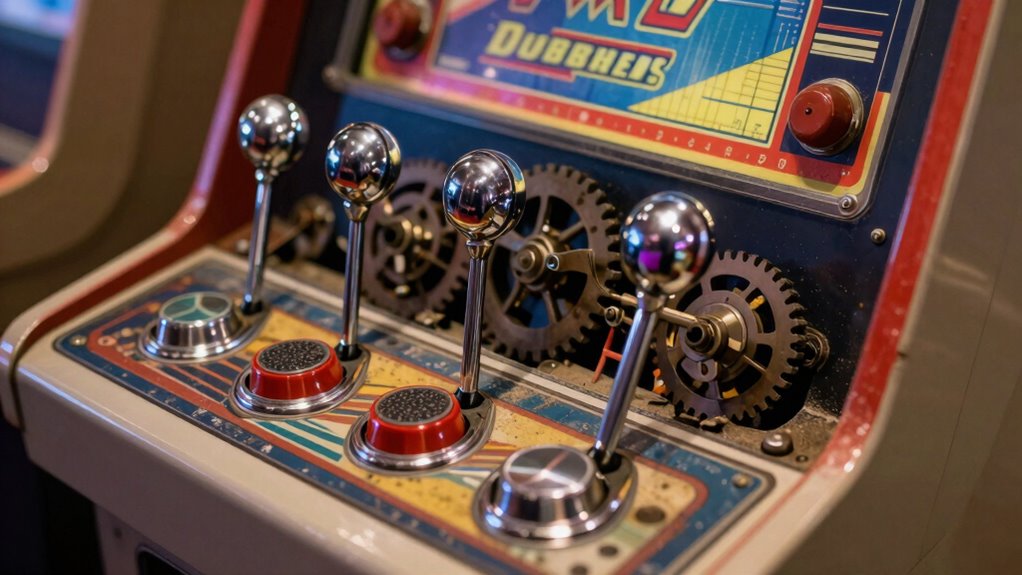

Mechanical feedback is making a strong comeback in arcade hardware, adding tactile sensations that boost your immersion and realism. With advancements in haptic technology, you’ll feel resistance from force feedback joysticks or vibrations during gameplay, making actions more visceral. This not only makes sessions more engaging but also helps you react naturally to game events. If you keep exploring, you’ll uncover how these innovations are transforming arcade experiences and game design in exciting ways.
Key Takeaways
- Mechanical feedback systems are being reintroduced to enhance immersion and realism in modern arcade hardware.
- Technologies like force feedback joysticks and vibration motors create tactile responses during gameplay.
- Mechanical feedback reinforces player actions, increasing emotional engagement and physical connection to the game.
- Arcade designers are experimenting with complex force simulations to elevate gameplay realism.
- Advancements in haptic technology are making mechanical feedback more sophisticated and integral to future arcade experiences.
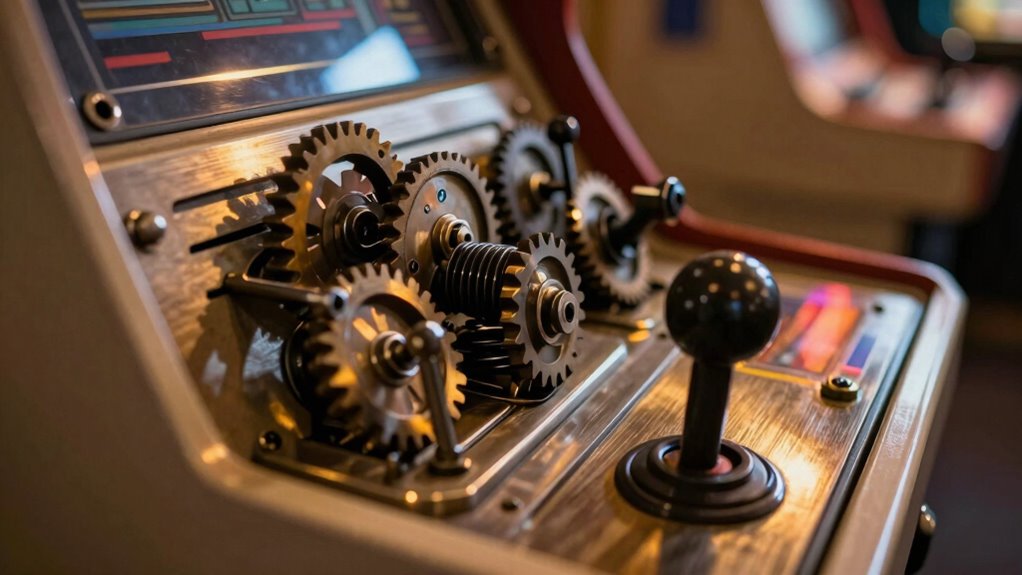
In recent years, arcade hardware has made a surprising comeback by reintroducing mechanical feedback systems that were once standard but fell out of favor with the rise of digital controls. This resurgence is powered by haptic innovation, which brings tactile sensations back into gameplay, significantly enhancing user immersion. Instead of relying solely on visual and audio cues, modern arcade machines now incorporate mechanical feedback that responds to your actions with real physical sensations. This shift isn’t just about nostalgia; it’s about creating a more engaging, visceral experience that draws you deeper into the game.
Mechanical feedback systems, such as force feedback joysticks and vibration motors, give you a sense of realism that digital controls alone can’t match. When you hit a target, crash a car, or fire a weapon, the hardware responds with precise, controlled forces or vibrations that mimic real-world sensations. This type of haptic innovation heightens the sense of presence, making you feel like you’re truly part of the action. It’s this tactile connection that enhances user immersion, transforming simple gameplay into an emotionally compelling experience.
Mechanical feedback like force feedback and vibrations creates realistic, immersive gaming experiences that digital controls alone can’t replicate.
The return of mechanical feedback also addresses a key shortcoming of purely digital controls: the lack of physical response. Digital controls offer precision but often lack the emotional punch that physical sensations provide. By integrating mechanical feedback, arcade hardware bridges that gap, giving you immediate, intuitive responses that reinforce your actions. Whether it’s the resistance of a steering wheel or the subtle tremors during a tense moment, these physical cues help you understand and react to the game more naturally.
This focus on user immersion through mechanical feedback is changing how arcade machines are designed. Developers are now experimenting with different types of feedback, from subtle vibrations to complex force simulations, to elevate gameplay. This technology makes it easier to convey the intensity of a situation, heightening your emotional investment. As a result, arcade experiences become more memorable and impactful, encouraging you to stay engaged longer and come back for more.
Ultimately, this reinvention of arcade hardware through haptic innovation isn’t just about nostalgia or technological novelty. It’s about re-establishing a direct, physical connection between you and the game. As mechanical feedback systems become more refined and integrated, expect your arcade sessions to feel more authentic, immersive, and exciting than ever before. This return to tactile sensations is rewriting what it means to engage with arcade gaming, making every punch, crash, and shot more visceral and real. Moreover, advancements in haptic technology are paving the way for even more sophisticated and realistic feedback experiences in future arcade hardware.

Guillemot Force Feedback Joystick
As an affiliate, we earn on qualifying purchases.
As an affiliate, we earn on qualifying purchases.
Frequently Asked Questions
How Does Mechanical Feedback Differ From Traditional Electronic Feedback?
Mechanical feedback differs from traditional electronic feedback by providing tactile sensations that you can physically feel, enhancing user immersion. Instead of relying solely on visual or audio cues, it uses physical forces or vibrations to simulate real-world interactions. This direct sensory input makes gameplay more engaging, allowing you to experience responses like recoil or resistance firsthand. As a result, mechanical feedback creates a more realistic and immersive experience that electronic feedback alone can’t fully replicate.
What Are the Main Advantages of Mechanical Feedback in Arcades?
Mechanical feedback enhances user immersion by providing realistic haptic sensations that electronic systems can’t replicate as effectively. You’ll find that it offers more tangible, instinctive responses, making gameplay feel more authentic and engaging. This tactile experience keeps you connected to the game, heightening excitement and emotional investment. The main advantage is that it bridges the gap between virtual and physical, making every interaction more meaningful and deeply immersive for you.
Are There Any Safety Concerns With Mechanical Feedback Systems?
Yes, there are safety concerns with mechanical feedback systems. You need to guarantee user safety by properly maintaining and calibrating the systems to prevent hazards like excessive force or unexpected movements. Regular inspections help with hazard prevention, minimizing risks of injury. Clear guidelines and warnings should be in place so users understand how to interact safely, ensuring the mechanical feedback enhances gameplay without compromising safety.
How Is Mechanical Feedback Integrated Into Existing Arcade Hardware?
You might think arcade hardware is simple, but it’s actually integrated with mechanical feedback systems to enhance user immersion through haptic sensation. You’ll find small motors or actuators embedded in controllers or seats, synchronized with game actions. This way, every explosion or impact feels real, drawing you deeper into the game. It’s a clever way to make modern arcades feel more alive, even if you don’t notice the tech behind it.
What Future Innovations Are Expected in Mechanical Feedback Technology?
Future innovations in mechanical feedback will likely incorporate advanced haptic materials that offer more realistic and responsive sensations. You can expect improved user experience through more precise and immersive feedback, making gameplay feel even more tangible. These advancements may include adaptive feedback systems that change based on in-game events, enhancing realism and engagement. As technology progresses, mechanical feedback will become seamlessly integrated, elevating arcade gaming to new levels of sensory immersion.
Conclusion
As you step back into the arcade, feel the pulse of mechanical feedback echoing through your fingertips, like a heartbeat reignited. It’s a symphony of tangible sensation and digital thrill, turning every game into a dance of muscle and machine. This revival isn’t just nostalgia—it’s a renaissance, where the heartbeat of arcade hardware once more syncs with your own. Prepare to be immersed, where every touch sparks a story, and every victory resonates deep within.