
You can now create your own custom pinball machines by combining innovation, unique themes, and personalized gameplay. Enthusiasts are driven by passion, using electronics, microcontrollers, and open-source resources to craft one-of-a-kind experiences. The community shares ideas and skills, making it easier for newcomers and seasoned tinkerers alike to participate. As projects evolve, you’ll discover endless ways to enhance your designs and push creative boundaries—if you keep exploring, there’s much more to uncover.
Key Takeaways
- Increasing enthusiasm for DIY projects drives the creation of unique, personalized pinball machines.
- Hobbyists incorporate custom electronics, microcontrollers, and lighting for innovative gameplay features.
- Technical skills like circuit design and programming are essential for blending creativity with mechanics.
- Community sharing and open-source resources accelerate project development and knowledge exchange.
- Homebrew pinball machines reflect individual imagination, allowing ongoing personalization and technological evolution.
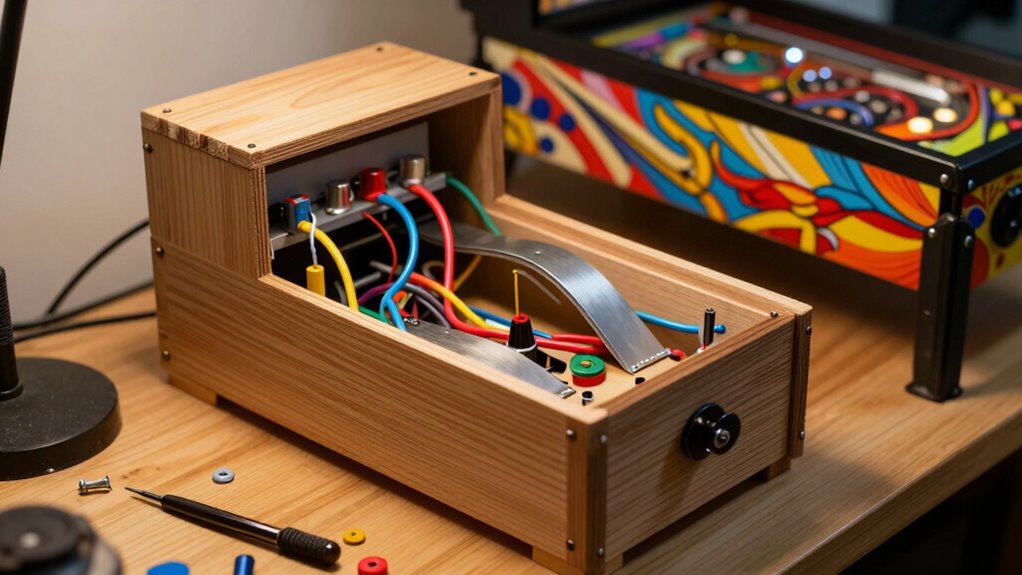
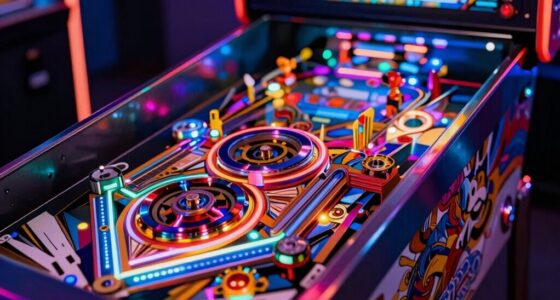
In recent years, a surge of enthusiasm has fueled the rise of homebrew pinball projects, allowing enthusiasts to craft their own machines from scratch or customize existing ones. This movement is driven by a desire to create unique gaming experiences and push the boundaries of traditional pinball design. When you embark on a homebrew project, you’re empowered to bring your own ideas to life through custom design. You can choose themes, artwork, and gameplay mechanics that resonate with your personal style, making each machine one-of-a-kind. This level of customization extends beyond aesthetics; it influences the entire gameplay experience, allowing you to tailor features like ball speed, target difficulty, and scoring rules to match your preferences.
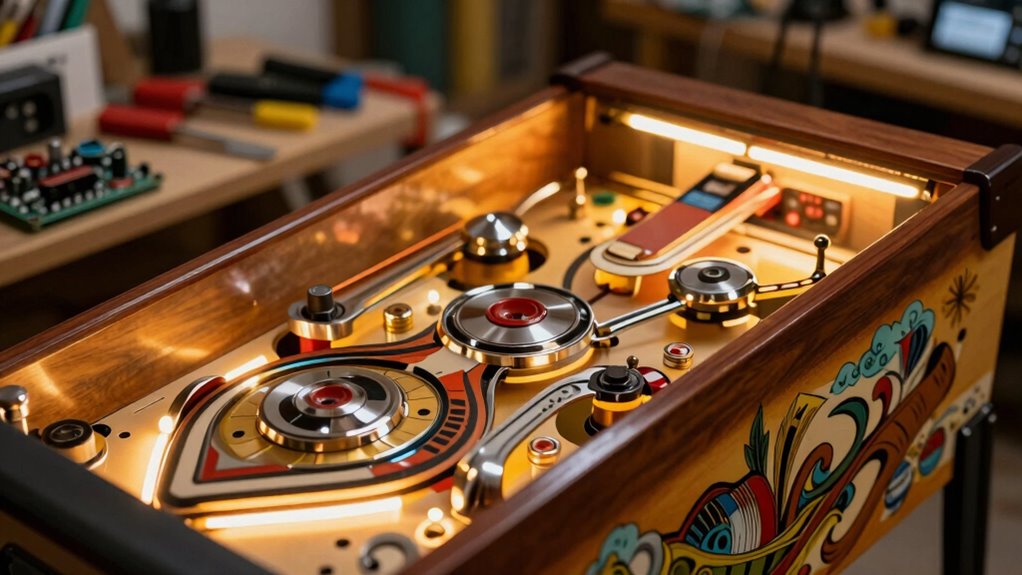
Electronic modifications are a core part of the homebrew scene. Unlike factory-made pinball machines, which rely on standardized circuitry, homebuilders often incorporate custom electronics to enhance or redefine gameplay. You might upgrade the original boards or design your own, integrating modern microcontrollers or microprocessors to add new functions. These electronic modifications enable you to implement features like digital scoring displays, advanced lighting effects, or even interactive sound systems. The flexibility to modify and upgrade electronics gives you control over the machine’s functionality, allowing for innovations that weren’t possible with traditional designs. Circuit design skills are essential for creating reliable and innovative electronic modifications in these projects. Additionally, understanding power management is crucial to ensure your custom electronics operate safely and efficiently. Developing a solid understanding of electronics fundamentals can further empower you to troubleshoot and optimize your custom circuits.
Building a homebrew pinball machine involves more than just hardware tinkering; it’s about blending creativity with technical skill. You’ll need to learn how to design circuits, program microcontrollers, and understand the mechanics of pinball components. This hands-on approach can be challenging, but it’s incredibly rewarding when you see your custom design come to life. Many hobbyists share their plans and code online, creating a collaborative community where ideas flow freely, and support is readily available. This sharing culture accelerates innovation and lowers entry barriers, inspiring newcomers to start their own projects. Open-source resources further facilitate learning and collaboration within this community. Embracing community-driven innovation is a key factor in the ongoing evolution of the scene. By engaging with others, you can discover new techniques and stay updated on emerging trends in both electronics and game design.
Ultimately, your homebrew pinball machine becomes a reflection of your imagination and technical prowess. The ability to customize every aspect—from artwork to electronics—means you’re not just buying a machine; you’re building an experience. As more enthusiasts embrace this DIY ethos, the scene continues to evolve, with new ideas and techniques emerging constantly. Whether you’re a seasoned tinkerer or a curious newcomer, the world of homebrew pinball projects offers endless opportunities to innovate and enjoy the timeless thrill of pinball in a way that’s uniquely yours.
homebrew pinball machine kit
As an affiliate, we earn on qualifying purchases.
As an affiliate, we earn on qualifying purchases.
Frequently Asked Questions
What Tools Are Essential for Starting a Homebrew Pinball Project?
To start a homebrew pinball project, you need essential tools like a drill, soldering iron, and screwdrivers. Focus on custom design by sketching your ideas and selecting quality materials such as wood, metal, or plastics. A scroll saw or jigsaw helps shape parts, while a multimeter guarantees electrical safety. These tools enable you to craft a unique, functional game, emphasizing precise material selection and creative design.
How Much Does It Typically Cost to Build a Custom Pinball Machine?
Building a custom pinball machine usually costs between $3,000 and $8,000, depending on your retro design choices and sound customization options. You’ll spend on parts like the cabinet, playfield, and electronics, plus any unique features you want to add. Keep in mind, high-quality sound systems and vintage-inspired design elements can increase costs, but they also make your machine truly one-of-a-kind. Budget accordingly for a rewarding DIY experience.
Are There Any Safety Considerations for DIY Pinball Construction?
Did you know that electrical shocks are among the top hazards for DIY pinball builders? You should always wear safety gear, like insulated gloves and goggles, when working with electrical components. Prioritize electrical safety by disconnecting power before wiring and double-checking connections. Also, follow proper safety guidelines to prevent injuries, ensuring your project remains fun and safe throughout the build process.
Can I Incorporate Digital or Electronic Features Into My Homebrew Pinball?
Yes, you can incorporate digital integration and electronic customization into your homebrew pinball. Use microcontrollers like Arduino or Raspberry Pi to add features such as score displays, lighting effects, or sound effects. Integrating sensors and custom circuitry enhances gameplay and personalization. Just ensure your electronic components are properly insulated and secured to maintain safety. With careful planning, digital features can greatly boost your pinball machine’s functionality and fun.
How Long Does It Usually Take to Complete a Homebrew Pinball Project?
It typically takes several months to a year to complete a homebrew pinball project, depending on your custom design and material selection. You’ll spend time planning, sourcing parts, and building, so it’s vital to stay organized. If you’re new, expect longer timelines. Dedicate consistent effort, and you’ll see progress. Patience is key, especially when working through complex custom features or refining your materials to guarantee durability and flair.
microcontroller electronics for pinball
As an affiliate, we earn on qualifying purchases.
As an affiliate, we earn on qualifying purchases.
Conclusion
Just like a spark ignites a wildfire, your passion for homebrew pinball projects can ignite a community of creators. Each custom design, tweak, and tweak pushes the boundaries of what’s possible, turning your game into a true masterpiece. Embrace the challenge, and remember, every flip and bounce adds to the vibrant tapestry of DIY innovation. So, keep crafting and playing—your pinball journey is a shining star in a galaxy of endless creativity.
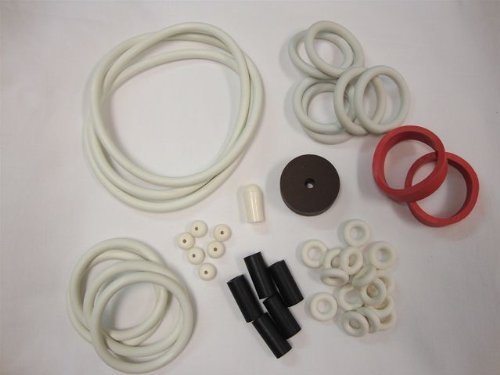
Game Room Guys Gottlieb Top Score and 300 Pinball White Rubber Ring Kit
CUSTOM RUBBER RING KIT- Each Kit is Built for Specific Pinball Machine
As an affiliate, we earn on qualifying purchases.
As an affiliate, we earn on qualifying purchases.
DIY pinball lighting effects
As an affiliate, we earn on qualifying purchases.
As an affiliate, we earn on qualifying purchases.