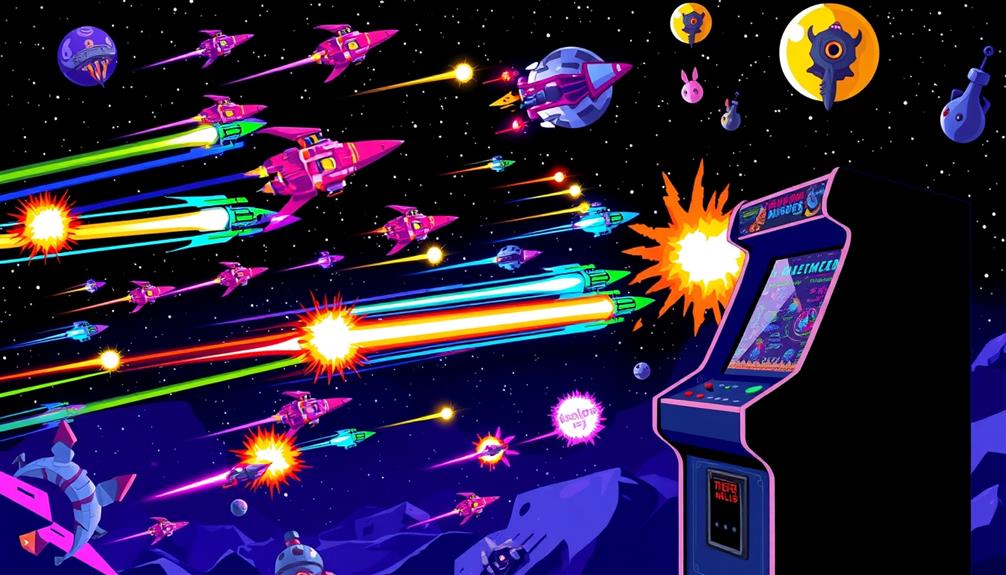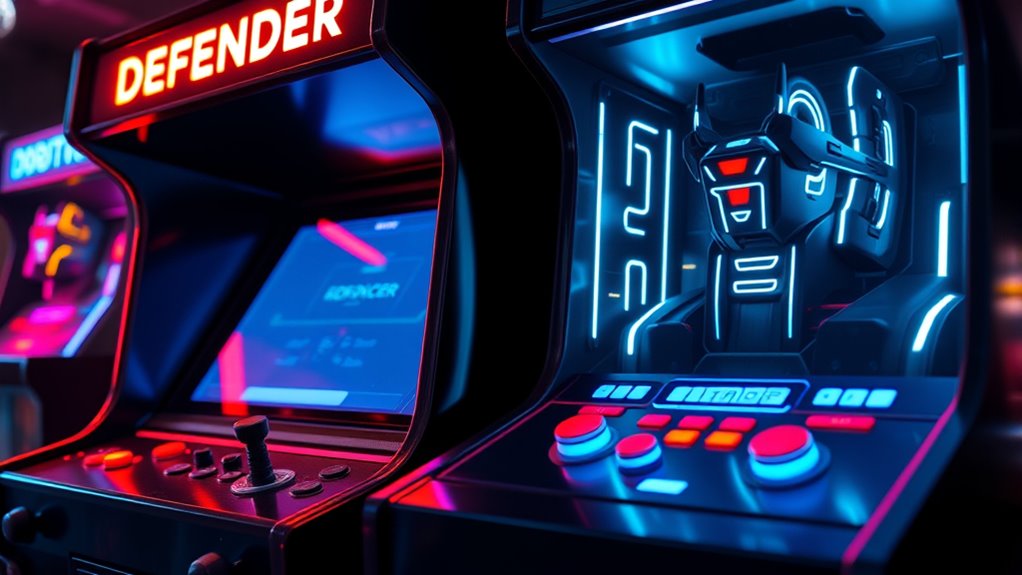

In Defender and Robotron, the developers pushed arcade hardware to its limits with clever programming and innovative techniques. They optimized sprite handling, seamless scrolling, and flicker-free graphics, all within strict hardware constraints. These techniques allowed for smooth visuals and responsive gameplay despite limited processing power and memory. Their mastery of hardware utilization set new standards for arcade game quality. If you want to discover how these classics achieved such fluid performance, there’s more to uncover ahead.
Key Takeaways
- Both games maximized hardware capabilities through optimized sprite handling and seamless scrolling to support multiple moving objects.
- Developer techniques exploited hardware constraints to enhance visual clarity and responsiveness without additional hardware.
- Innovative routines managed numerous enemies and projectiles, pushing the arcade hardware beyond typical limits.
- Their success demonstrated that clever programming and hardware utilization could deliver immersive gameplay on limited systems.
- Defender and Robotron set new performance standards, influencing future arcade game design through hardware-efficient innovations.
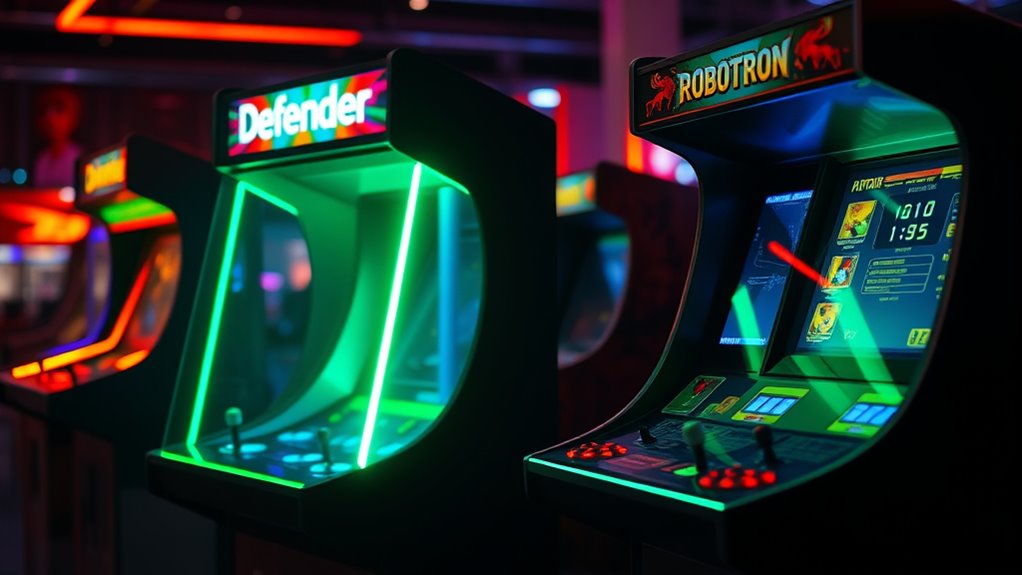
Have you ever wondered how classic arcade games like Defender and Robotron revolutionized the gaming industry? These arcade classics didn’t just entertain; they pushed the boundaries of what arcade hardware could do. In the era when arcade cabinets were limited by technology, developers aimed to maximize every bit of hardware to deliver smooth, immersive experiences. That drive for innovation led to groundbreaking hardware optimization strategies that set new standards for game design and performance.
Classic arcade games like Defender and Robotron pushed hardware limits to deliver smooth, immersive gameplay through innovative optimization.
When you think about Defender and Robotron, you’re witnessing the result of intense hardware optimization. These games required more than just great graphics and gameplay—they demanded efficient use of limited processors, memory, and display capabilities. To make these games run seamlessly, programmers had to work within strict hardware constraints, squeezing every ounce of performance from the arcade’s hardware. They optimized code to ensure fast, flicker-free graphics, which was no small feat given the hardware limitations of the time. This meant clever routines for sprite handling, seamless scrolling, and rapid input processing, all achieved through meticulous tuning.
In particular, the hardware behind these games was designed to maximize visual clarity and responsiveness. Defender, for instance, used a hardware configuration that handled multiple moving objects on screen simultaneously without significant slowdown. The developers achieved this by carefully managing sprite rendering and prioritizing game elements, ensuring that players saw a smooth, cohesive universe despite the hardware constraints. Robotron, with its intense action and dozens of on-screen objects, pushed this optimization even further. Its hardware had to handle rapid fire, multiple enemies, and complex animations—all in real-time—requiring innovative solutions in both hardware layout and software routines. Moreover, these hardware constraints led to creative techniques like color palette limitations, which developers cleverly exploited to enhance visual fidelity without additional hardware resources.
This relentless focus on hardware optimization didn’t just improve performance; it also influenced future game development. It showed that with clever programming and thoughtful hardware design, arcade games could deliver exhilarating experiences without needing the most advanced technology. It’s this legacy of maximizing hardware potential that makes Defender and Robotron stand out as true arcade classics. They proved that pushing hardware limits wasn’t just about raw power but about smart, efficient design that made gameplay feel fluid and responsive.
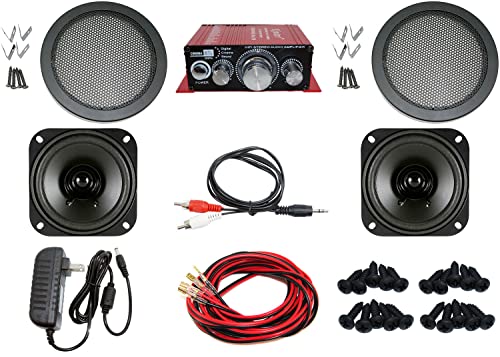
Audio Kit for Arcade Game, MAME Cabinet, or Virtual Pinball Machine
1 Kinter Stereo Audio Amplifier (18w per channel, Bass & Treble adjustments)
As an affiliate, we earn on qualifying purchases.
As an affiliate, we earn on qualifying purchases.
Frequently Asked Questions
What Were the Most Challenging Hardware Modifications for These Games?
You faced the challenge of enhancing hardware cooling to prevent overheating during intense gameplay, which required innovative solutions. Upgrading the control interface was equally tough, as it demanded precise calibration to guarantee smooth, responsive controls. These modifications pushed your technical skills, demanding careful planning and execution. Balancing cooling needs with maintaining game performance and control accuracy made these hardware modifications the most demanding yet rewarding aspects of the projects.
How Did Developers Optimize Performance on Limited Arcade Hardware?
You can optimize performance on limited arcade hardware through techniques like hardware overclocking and graphics compression. For example, developers might overclock the CPU slightly to boost frame rates or compress graphics data to reduce memory load. These strategies help games run smoothly without additional hardware, ensuring a seamless experience. By carefully balancing these methods, developers maximize hardware capabilities, making classic games like Defender and Robotron feel responsive and engaging despite hardware constraints.
Were There Any Unreleased or Prototype Versions of Defender or Robotron?
You’ll find that prototype variants and unreleased builds of Defender and Robotron exist, offering glimpses into early development stages. These prototypes often feature different graphics, mechanics, or hardware tweaks that never made it to final release. Collectors and enthusiasts have uncovered some of these unreleased builds, providing insight into the developers’ experimentation and evolution, which helps us appreciate how the games were optimized within limited arcade hardware.
What Impact Did Hardware Constraints Have on Gameplay Design?
Hardware constraints considerably shaped your gameplay experience, forcing developers to innovate within limits. These constraints spurred hardware innovations that influenced design choices, leading to more engaging, fast-paced gameplay. You can see how creators maximized hardware capabilities, pushing the boundaries of what was possible. As a result, gameplay creativity thrived, producing challenging, memorable experiences that showcased the clever use of limited resources while delivering intense entertainment.
How Do Modern Emulators Replicate the Original Hardware Experience?
You’ll be amazed at how modern emulators replicate the original hardware experience, almost like summoning a digital ghost. They prioritize hardware accuracy, meticulously mimicking the original circuitry and graphics. Input latency is minimized so your controls feel instant, preserving the authentic gameplay feel. This combination guarantees you get as close to the arcade experience as possible, allowing you to relive classic games with astonishing fidelity, despite running on contemporary systems.

Azeeda 'Retro Arcade Game' Golf Divot Tool/Repair Fork Gift Set (GO00054558)
A great gift for golfers
As an affiliate, we earn on qualifying purchases.
As an affiliate, we earn on qualifying purchases.
Conclusion
As you push the boundaries of hardware with Defender and Robotron, you’re truly living in a golden age of gaming innovation. These classics remind you that even in today’s pixel-perfect era, a simple arcade machine can still thrill and challenge. So, keep your joystick close and embrace the nostalgia—before you know it, you’ll be saying, “This is totally rad,” just like those retro gamers of yore. The arcade spirit never truly goes out of style.
arcade sprite handling software
As an affiliate, we earn on qualifying purchases.
As an affiliate, we earn on qualifying purchases.
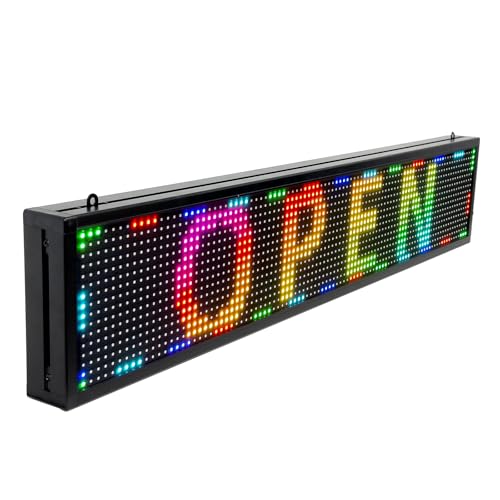
KHUSINA Programmable LED Sign Outdoor Full Color – 39"x8" Scrolling Message Board, Custom Digital Advertising Display, WiFi Control, High Brightness Neon Business Sign for Store, Bar, Restaurant
CONNECTION METHOD:our Slim Full Color outdoor led sign. with SMD technology. Seamlessly connect via WiFi to Windows computers…
As an affiliate, we earn on qualifying purchases.
As an affiliate, we earn on qualifying purchases.