
Mahjong’s cultural impact worldwide is profound. It’s more than a game—it’s a symbol of community, tradition, and social bonds across many regions. Its origins in China have expanded to Japan, Korea, Southeast Asia, and beyond, where local variations have developed. As a bridge between generations and cultures, it helps preserve heritage while adapting to modern life. If you want to explore how this ancient game continues to shape cultures today, there’s more to discover.

Play games on Amazon Luna for your game nights, included with Prime
- A rotating selection of games, no download needed
- Play on TV, laptop or phone
- Fast, free delivery for your gear, too
Key Takeaways
- Mahjong fosters cultural identity and preserves traditional customs across diverse regions worldwide.
- It serves as a social bonding activity that bridges generations and promotes community cohesion globally.
- The game’s variations reflect local cultural influences, showcasing adaptability and regional uniqueness.
- Mahjong’s popularity in diaspora communities helps maintain cultural heritage abroad.
- Its digital evolution enhances accessibility, ensuring cultural relevance in modern, interconnected societies.
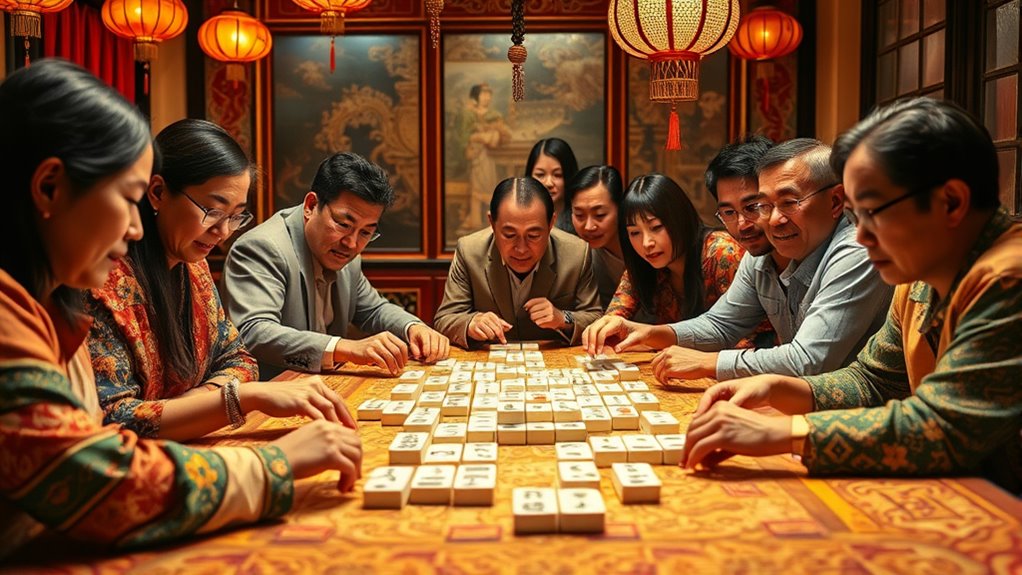
Have you ever wondered how a simple game like Mahjong has become a powerful symbol of cultural identity across Asia? Its history evolution reveals a fascinating journey, from ancient Chinese origins to a globally recognized pastime. Originally developed during the Qing Dynasty, Mahjong’s roots trace back hundreds of years, blending elements of Chinese dominoes and card games. Over time, the game evolved dramatically, influenced by regional variations and social changes, shaping its current form. Today, Mahjong isn’t just a game; it’s a reflection of cultural values, social bonds, and historical continuity.
The social significance of Mahjong runs deep. In many Asian communities, playing Mahjong is more than just entertainment—it’s a crucial social activity that fosters community, strengthens family ties, and preserves tradition. It often serves as a communal ritual, bringing together friends and relatives regardless of age or background. During holidays and celebrations, Mahjong tables become lively hubs of interaction, where stories are shared and relationships reinforced. The game’s social aspect helps maintain cultural cohesion, passing down customs and etiquette from generation to generation.
As Mahjong spread beyond China, its cultural importance expanded across different countries. In Japan, Korea, and Southeast Asia, variations of the game developed, each adding local flavor and rules, yet maintaining the core principles. This adaptation illustrates how the game’s social significance persists, adapting to new contexts while still serving as a cultural touchstone. In Western countries, Mahjong gained popularity through immigrant communities and media portrayals, where it became a symbol of Asian heritage and identity.
Throughout its history, Mahjong also evolved as a tool for social mobility and leisure. In urban settings, it offered a way for individuals to connect amid rapid modernization, blending tradition with contemporary life. The game’s popularity surged in the 20th century, particularly during times of social upheaval, providing comfort and continuity. Today, online platforms and digital versions of Mahjong continue to keep the game accessible worldwide, ensuring its cultural influence endures.
In essence, the history evolution of Mahjong highlights its transformation from an aristocratic pastime to a universal cultural phenomenon. Its social significance remains central, serving as a bridge between generations and cultures. Whether played in a quiet family room or bustling online forums, Mahjong continues to symbolize connection, tradition, and cultural pride, making it much more than a game—it’s a global emblem of shared history and social unity. Additionally, the game’s adaptability demonstrates its ability to bridge gaps between traditional values and modern lifestyles, further cementing its role as a cultural icon.
mahjong set with traditional tiles
As an affiliate, we earn on qualifying purchases.
As an affiliate, we earn on qualifying purchases.
Frequently Asked Questions
How Did Mahjong Originate Historically?
You might be surprised to learn that mahjong’s historical origins trace back to ancient artifacts from China, dating as far back as the Qing Dynasty. Originally, it evolved from traditional Chinese card games and was influenced by various cultural elements. As you explore its history, you’ll see how these ancient artifacts and gameplay traditions shaped the modern game, making mahjong a fascinating blend of history, culture, and strategy.
What Are the Regional Variations of Mahjong?
A picture is worth a thousand words, and regional variations of mahjong truly reflect this. You’ll notice differences in regional rules and tile designs across China, Japan, and the United States. For example, Chinese mahjong often uses more tiles, while Japanese styles incorporate unique rules like Riichi. These variations show how the game adapts locally, enriching its cultural tapestry and keeping the game fresh and exciting wherever you play.
How Has Mahjong Influenced Modern Pop Culture?
You see how mahjong influences modern pop culture through its cultural symbolism and artistic representations. It appears in movies, TV shows, and fashion, often symbolizing luck or strategy. You might notice its imagery in artwork or video games, connecting players worldwide. This impact helps preserve its cultural significance, making mahjong more than just a game, but a symbol of tradition, strategy, and artistic expression in contemporary media.
Are There Any Health Benefits Associated With Playing Mahjong?
Playing mahjong is like giving your brain a gym session, offering mental stimulation that sharpens your thinking and memory. It also fosters social bonding, making you feel connected and engaged with friends or family. These benefits can boost your mood, reduce stress, and even improve cognitive health over time. So, next time you play, you’re not just having fun—you’re actively nurturing your mind and relationships.
How Is Mahjong Integrated Into International Festivals?
You’ll see mahjong integrated into international festivals through cultural celebrations and festival traditions that showcase its significance. During these events, people often organize mahjong tournaments or demonstrations, highlighting its cultural roots. You might participate in traditional games or watch performances that feature mahjong, helping to preserve and share its rich history. This integration allows you to experience the game’s cultural importance firsthand and appreciate its role in bringing communities together globally.
Conclusion
You can see how mahjong’s influence spans the globe, connecting millions through tradition and social bonding. In fact, over 600 million people play the game worldwide, turning it into a cultural phenomenon. As you imagine bustling tables in China, cozy cafes in Europe, or online tournaments everywhere, you realize mahjong isn’t just a game—it’s a bridge that unites diverse communities and preserves rich cultural histories across continents.
Halloween Picks
halloween
As an affiliate, we earn on qualifying purchases.